
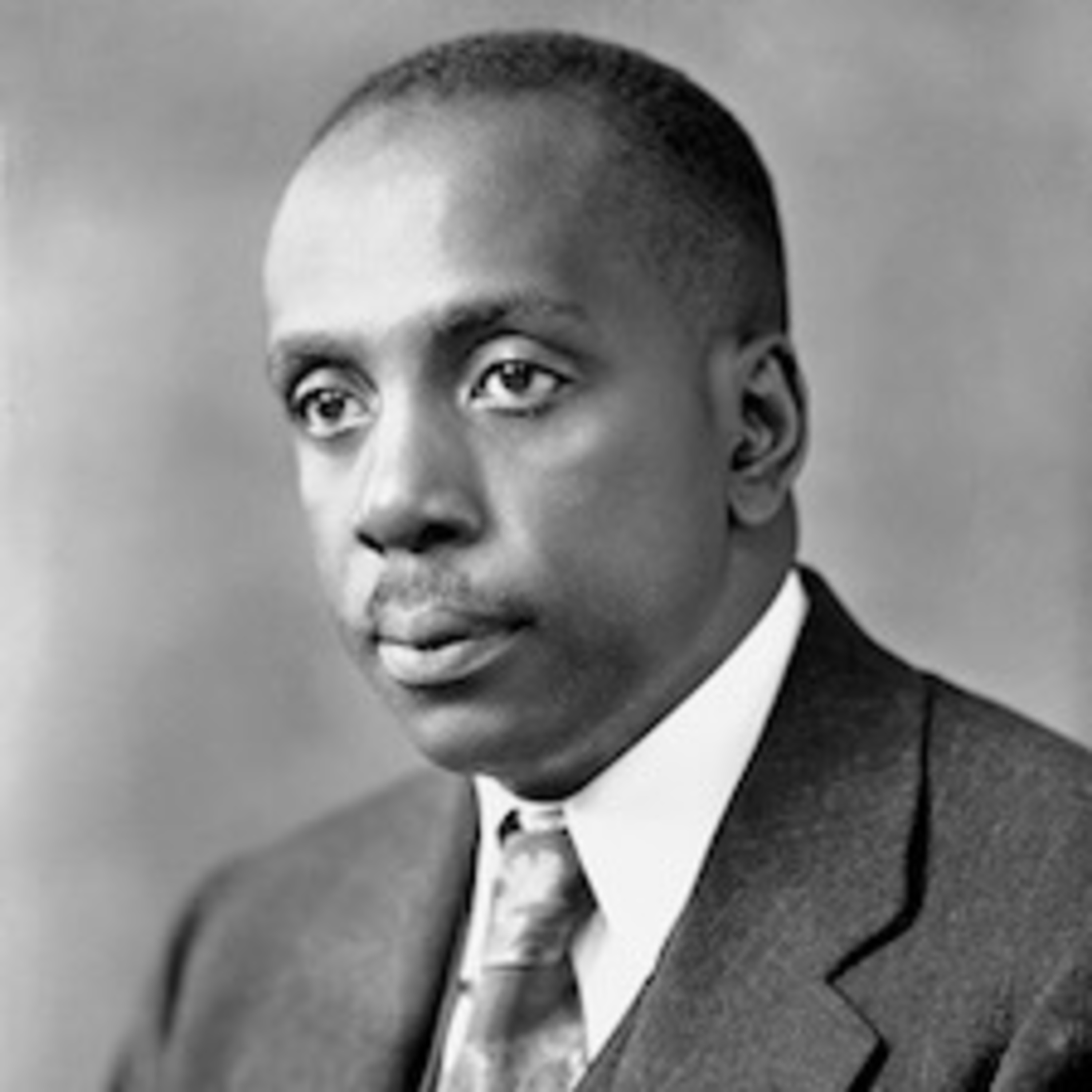
“Don’t ask what the world needs. Ask what makes you come alive and go do it, because what the world needs is people who have come alive” – Teach Different with Howard Thurman
In this episode, Steve and Dan Fouts explore the profound quote attributed to Howard Thurman: ‘Don’t ask what the world needs, Ask what makes you come alive and go do it, because what the world needs is people who have come alive.’ They explore the meaning of coming alive, its connection to purpose, courage, and social justice, and how self-knowledge can lead to a more fulfilled and impactful life. Check out teachdifferent.com for more resources on the Teach Different Method. If you are a teacher or parent, join our certificate programme by reaching out to us on our website. We look forward to hearing from you!
Episode Chapters
00:55 – The Power of Coming Alive
06:42 – Self-Knowledge and Purpose
15:21 – Teaching and Self-Actualization
21:12 – Courage and Civil Disobedience
Image Source: By Addison N. Scurlock – Smithsonian Online Virtual Archives NMAH.AC.0618.S04.01, Fair use, https://en.wikipedia.org/w/index.php?curid=69597951
Transcript
Steve (00:00)
Welcome to the Teach Different Podcast. Here’s our quote today from Howard Thurman. This is a quote that was attributed to Howard Thurman, and I’m going to get into exactly what that means in a moment, but let me read it a couple times so we can get it in our heads. It’s a little longer. Don’t ask what the world needs, ask what makes you come alive and do it, because what the world needs is people who have come alive. Don’t ask what the world needs. Ask what makes you come alive and go do it, because what the world needs is people who have come alive. And this is Howard Thurman attributed to him. He was an American author, philosopher, minister, and theologian. Some people called him a Christian mystic. He was instrumental in the civil rights movement and the social justice movement in the 20th century. And very famous because of that. Martin Luther King Jr. referenced him a lot as well. But here is how this was attributed to him. There was an author about the same time period who lived, I think, till the eighties, named Gil Bailey, B-A-I-L-I-E, and he wrote a book called Violence Unveiled. In the book, he talks about asking Thurman questions about his role in the civil rights movement and his belief on social justice, and he recounts this quote as having heard it from Howard Thurman. So this quote was never something that Howard Thurman said in a speech or his own book. It was from someone else who recounts this conversation. So that’s the context of the quote. I’ll read it one more time and then let’s get right into claim, counterclaim, essential question, and some experiences you know we can share on this. It’s a really, really good quote. I’ve got some good thoughts. Don’t ask what the world needs, ask what makes you come alive and go do it. Because what the world needs is people who have come alive. So what are your thoughts on this?
Dan (02:32)
So, you know, think of your life as a project that you yourself are creating for yourself. Find your passion, find your purpose, find your deep meaning for why you are alive. And if you find that and you go out and do that, then you end up serving the world in beautiful ways. It all starts with self knowledge of the individual. That’s what I would say the claim is. Start with your own self knowledge and passion and the world will become a better place.
Steve (03:03)
Yeah. That’s good. That’s good. And I think that it’s not intuitive necessarily to think this way. Because a lot of people who want to do good think that a big part of that is figuring out what the world needs and then figuring out your own role in it, how you can quote unquote help the world. It’s a very good sentiment. We have a lot of well-meaning people. This quote is essentially asking you to not so much worry about the things out there that seem to need correcting or fixing or all the injustices. Think about Thurman talking to someone like Martin Luther King Jr., the African American, you know, civil rights movement. There are lots of things about the world that are not right. So what should you do? It’s be alive. Come alive. Do what makes you feel alive. So this makes me think that it’s absolutely a belief in the goodness of human nature that this quote is talking about. Do what makes you come alive. Because if you do that, then you’re not going to do bad. You’re going to do good and you’re going to have power.
Dan (04:33)
That’s a different read. That’s definitely a different read of the goodness. I think it’s more about self-knowledge, self-discovery as being the focus of the world. The energies you should put in is into yourself. Don’t like you said, don’t go external. But see, I gotta, I’m gonna go right to the counterclaim here because.
Steve (04:36)
Why? Well, I agree. Go ahead, ’cause I got an essential question.
Dan (04:55)
Because the d because when it says don’t ask what the world needs, you know, don’t look externally for things. Ask what makes you come alive and go do it. So focus on yourself and what you’re really good at, and then what you’re really good at ends up making the world a better place. For some people, knowing what the world needs is the thing that reveals and activates who they truly are. It’s not an either or. It’s kind of a false choice to say it’s either what the world needs or it’s what really makes you come alive and you know whatever. There’s more of a symbiotic interdependence between the two. That’s what I would say, but maybe that’s I don’t know if that’s a counterclaim as much as just it’s a way to balance this a little bit.
Steve (05:47)
Well, I’m gonna throw out the phrase come alive and ask the essential question. What does that mean? What’s he mean by come alive?
Dan (06:01)
What makes you get up in the morning? You know, yeah, that’d be an you know, that would be an interesting question to ask. Is he saying what makes you feel human? What makes you feel like you’re giving meaning to the world? Is that what he means by come alive? And I like the last part of it, by the way, because what the world needs is people who have come alive. So if people are finding their purpose by themselves, that’s really what the world needs.
Steve (06:34)
So you just suggested the definition of come alive is finding your purpose.
Dan (06:41)
I would say that it kind of feels that way. Yeah.
Steve (06:44)
Self-actualizing. I’m trying to imagine what someone’s like who hasn’t come alive. They’re just up about compliance, they are boring, they are negative energy, maybe. They are trying to bring others down. I’m trying to, I’m really getting at this idea of coming alive. What does that look like?
Dan (07:11)
Maybe to build on that, being authentic and really enjoying what you do and knowing that what you do is a full expression of your authentic self. I think of people’s professions. I was just having this discussion yesterday with somebody about this. That some people view a job as sort of like a necessary evil to get something else out in life, just you know, help their family, means to an end, right? You do your job. It’s really not what makes you quote unquote come alive. It’s the thing that provides resources for you so you can go enjoy life on the weekends.
Steve (07:39)
And come alive on the weekends.
Dan (07:54)
And come alive on the weekends maybe, right? no.
Steve (07:58)
I don’t think he’s saying that obviously, but what I mean is coming alive is more of a part of your character that you would carry 24-7, seven days a week. don’t think of it as a means to an end. Think of your coming alive as just something that makes you. happy. And I keep thinking of the way the rest of the world perceives people who have, quote, come alive. And that’s what I think he’s getting at here in the claim. The world, if they see you happy and doing what you’re naturally fit to do, and that you’re doing what it takes to really show your humanity or whatever coming alive means. That’s gonna heal the world. You’re gonna have people that are depressed, you’re gonna have people that aren’t alive, they’re gonna see you. Now, this is where you got to be careful because some of them are gonna hate on you, I think, because they’re gonna realize that they’re chained. They’re not where they need to be. And as much as you’d like to think that it’s gonna motivate everybody to see someone that is actualized. and happy and alive. Sometimes it actually does the opposite. But I think that in general it is a factor in helping the world perhaps come alive and actualize itself, getting other people around you.
Dan (09:33)
Well, sure, you improve the world if if everyone in the world this is a pie in the sky ideal, if everyone in the world are are flourishing, to use Aristotle’s term, reaching Eudaimonia and flourishing as human beings, well you’re gonna have the world an amazingly good place. Let’s face it. You’re people are gonna be happy, they’re gonna be shooting for what fulfills them. That’s a good world. That’s a world I wanna live in. Counterclaim. Now, I’m just going to go to the counterclaim here. You know, sometimes the world needs people to do things and to be a certain way that doesn’t necessarily fulfill you as a person. There’s people that need to do things, tasks, whatever it is, that don’t necessarily fall into the category of coming alive. A pedestrian way of saying what I’m saying is that a lot of life is boring. you’re doing a lot of things out of habit and necessity, not necessarily out of a self-actualizing impulse. That would be one counterclaim I would use, because he’s talking about what the world needs. Okay, let’s see.
Steve (10:47)
Can you think of an example for that? Giving blood?
Dan (10:54)
Giving blood okay, how about this one? Ask what makes you come alive because what the world needs is people who have come alive. Well, no, I liked it. That’s a good that’s a good like
Steve (11:03)
I like giving blood. That takes life out of you on purpose.
Dan (11:11)
Parenting. For many people, parenting doesn’t give them the full actualization feeling that it does for others. But even though it doesn’t, and they don’t quote unquote come alive, there’s a certain kind of expectation and importance to parenting of being up late at night with your kid when he’s sick, having to miss work to be with your kid, going to that 15th baseball game in the last two weeks, going through
Steve (11:47)
Being tired.
Dan (11:49)
Being tired constantly going through drudgery. So I don’t know, maybe that I was thinking of that maybe as an example where sometimes a lot of what makes the world a great place is not necessarily people who come alive and do exactly what they’re suited to do, but people who are able to kind of suck it up and do things even when they don’t want to do because it’s so important on so many levels. I don’t know if that’s a good example or not.
Steve (12:16)
Yeah, it’s almost like it’s almost discipline. I would add to the counterclaim and say that this is on the verge of someone being selfish. You can get so much in your own world where if you’re just worried about coming alive and being happy and being self-actualized, you will gravitate away from the hard things at times for the same kind of reasons I think that you were pointing out. So I get it, but there are some valid counterclaims. Actually, to this. I’m trying to think of my own experiences as a teacher. When I kind of caught my momentum as a teacher and I figured out what I was doing, I did feel more alive and free in class, where I felt I was a more effective educator just because I was more comfortable and I was having more fun. with being there. You know, whereas when I was learning, I was worried about compliance, making sure that I got the right lesson and putting you know, getting down on myself if things didn’t go right, blaming myself, trying to be better at something, you know, not wanting an administrator to see me make all these these mistakes. And I wasn’t alive then. I really wasn’t. I was more of a, hey guy, this is my job. You need to do what I’m asking you to do. I know it’s not fun for us. But again, I put in work. And that helped me get to my self-actualization, where I knew what I was doing. And that wouldn’t have happened if I didn’t do the things that I needed to do when it wasn’t that fun. So
Dan (14:15)
Yeah, that’s interesting to relate this to teaching. Don’t ask what the world needs. Ask what makes you come alive and go do it. Because what the world needs is people who have come alive. To find what you’re really good at as a teacher to come alive in the classroom and to do things the way you want to do them. Ultimately, that’s what quote unquote the world needs. You know, you need to express their creative spirit in the classroom. That’s gonna end up making the world a better place. Rather than going to the next initiative. that you have to listen to and try to change your practice and adopt it for someone else’s needs. I’m trying to fit in.
Steve (15:00)
No, I and to to create a little bit more seriousness to it, think of the injustices that existed for African Americans that the civil rights movement was trying to address. You want to talk about growing up in a world where it’s difficult to be self-actualized and happy if you’re being discriminated against, if the laws in the system are not. They don’t seem to be made for your happiness and for the fairness, just human decency. How do you function in an environment like that? For Howard Thurman, who was African American and was part of the struggle, for him to say, come alive. I think he would say that same thing to an African American who was oppressed. You know, I don’t know what that looks like. Be happy, go to church, sing, go to a protest, smile, realize that this is you, and that yes, there are struggles, there’s a world that’s against you, but show the world that you can be happy. With who you are for whatever that means, you’re alive.
Dan (16:21)
I am watching a documentary right now on Muhammad Ali, and this captures him brilliantly, this quote. How he changed his name from Cassius Clay to Muhammad Ali when he joined the Nation of Islam, and he adopted a very religious stance on just about everything in his life, which ended up almost sending him to jail because he decided not to go into the you know follow the draft for Vietnam. He came alive in the spirit, I think, of what you’re talking about. He’s saying, here’s who I am, here’s what I believe in. I’m not gonna listen if I listen to the world, okay, if I ask what the world needs, all I’m gonna hear is injustice. It needs so much fixing. I’m gonna fix myself. And I’m gonna get it and I’m gonna be a spokesperson for all of humanity through my own individual spirit. That’s the coming alive, maybe that Thurman is talking about.
Steve (17:23)
I don’t know why I went here, but John Brown who was fighting against slavery, and you could even throw in a Nat Turner, who obviously was fighting against slavery and the unjust society. And both of those individuals took to arms. I can see an argument being made that part of coming alive might be a recognition that the struggle has to enter a new level. Part of coming alive is breaking away from being conforming to things and being. Compliant. Think of the American Revolution. Coming alive sometimes is taking up arms and going against an unjust force. I’m throwing that out just because I don’t think this is always a nonviolent coming alive, and it doesn’t have to be.
Dan (18:24)
No, I know. And so that reveals an essential question for me, and that is, should coming alive sometimes involve breaking the law? Or when should coming alive involve breaking the law? When is it right to break the law in order to quote unquote come alive in the thurman sense?
Steve (18:35)
Could yeah. An unjust law is no law at all, Saint Augustine. I think that that’s right. And he’s not saying that’s not true with this. He said, ask what the world needs. If you come alive, maybe his point is: if you come alive, you’re kind of beyond good and evil. You can’t make the wrong decision by coming alive. It might result in you putting yourself in harm’s way. You know, you could even lose your life potentially by coming alive. But the point is, you have done something that the world needs, and you aren’t compliant, and you aren’t negating your humanity. That’s the problem. When we negate our humanity, I’m suggesting maybe this is something that he’s implying here. When we do not come, yeah, go ahead.
Dan (19:46)
Yeah, coming alive at the civil disobedience, or in some cases when violence is necessary, I’m now seeing more of the civic engagement part of this quote, a way of thinking of this quote, coming alive being realizing you’re oppressed and doing something about it to to recapture you know your rights. So yeah, very much a civil rights quote. This is a civil rights quote.
Steve (20:09)
Right. Right. No, now I’m starting to actually feel this quote. Because a person who’s not alive is a person who sees injustice and does nothing. They put their head in the sand. They go along to get along. They comply with something that they might not even believe is right, but they do it because they’re either afraid or what have you. I’m seeing maybe where he was coming from here. You know, you gotta come alive, you gotta do what you know is right. Don’t let the filter get in the way of fighting for justice.
Dan (20:57)
Yeah. It’s more like get out of your head. Don’t ask what the world needs. Don’t get academic with things. Ask what makes you come alive and go for it. Who are you? You know, who are you really? And and and go do it. You know, so it’s very much a bias towards action, not towards reflection.
Steve (21:01)
Right. That I agree. And if the people who sit around, the eggheads who sit around and say, all these problems in the world, and then they do their action based on that, they kind of maybe miss the mark a little. This is a weird way to say this, but they’re maybe chasing after things that may not be the best use. Of their personality, of who they really are. They’re just trying to fix a problem that’s external and they think that the problem needs them. In a way, that’s egotistical. How about a counterclaim to the counterclaim? People who are gonna argue that coming alive is too egotistical. You could make the other argument. Stop being egotistical and thinking you can solve the world’s problems. Be yourself.
Dan (22:08)
Yeah, but by being yourself you are solving the world’s problems. Yeah. The world needs more people with courage to come alive. Now I’m seeing courage. How about this question? How is courage reflected in this quote? You know, maybe that’s a good one where you could ask for personal experiences of your audience. When have you come alive? When have you come to a point where you’ve seized the initiative and done something?
Steve (22:19)
Courage. Yeah. That I mean that’s…
Dan (22:42)
That would be a great storytelling example.
Steve (22:46)
And I would say courage is needed to come alive. I’m throwing this one out because when you come alive, are you worried about people’s perceptions? Are you tiptoeing? Maybe. Maybe.
Dan (22:58)
Could you be. Courage is not an absence of fear, it’s an overcoming of fear. I don’t even know if that’s someone’s quote, but I’ve heard that before. They would be afraid. It’s just their courage would be stronger than their fear.
Steve (23:16)
Kind of what I was saying. I think that people are paralyzed with perceptions. and that’s a different fear, obviously, than losing your life or being thrown into jail thrown into jail for fighting against unjust laws. That’s another fear that you’d need to overcome with courage. But courage, I do like that. I like that. So we our essential questions really you throw out, you know, how does courage fit into the the equation of a quote like this? What does coming alive mean? That one’s rich. That one really does almost need a conversation in and of itself. I’m picturing this in front of students. So that’s good. Anything else to add? This was a good good quote here.
Dan (24:07)
No, that’s good. I like how we landed kind of in the civil room, so to speak, with this quote, which is probably where it belongs with Howard Thurman as you describe the history behind it. It makes a lot of sense and it is really hope well it would hopefully get young people thinking about their own lives and where are they in the path towards self-actualization and understanding themselves and what they can bring to the world? That’s a fruitful conversation, no matter what the age, actually. But an important one to have. Yeah, really good.
Steve (24:36)
Yeah. Definitely. Adults are just as afraid to put themselves out there as kids, but for different reasons. So look, if you’re a parent or a teacher, you like this framework here: quote, claim, counterclaim, essential question, storytelling, sharing of experiences, then this is something you definitely want to check into at Teach Different. We’re doing trainings this coming school year. And you know, we could possibly get you into one of our trainings. They’re free. And you could learn this method, and we’ll give you access to our online community that has a list of quotes that you can use for either your kid at home or your classroom. So just contact us, just go to our website, contact us, say who you are. You heard this on our podcast, and we’ll see if we can fit you into one of our trainings. They’re free.
Dan (25:39)
Yeah, give a little bit of your background, what job you have, why you think this would be valuable. Do go for it.
Steve (25:47)
Yeah, tell us a little bit about yourself too, so we can, you know, know who we’re dealing with, thanks for the Teach Different Podcast attendance and we will talk to you soon.
Dan (25:49)
Yeah. Yep. Take care, everybody.