
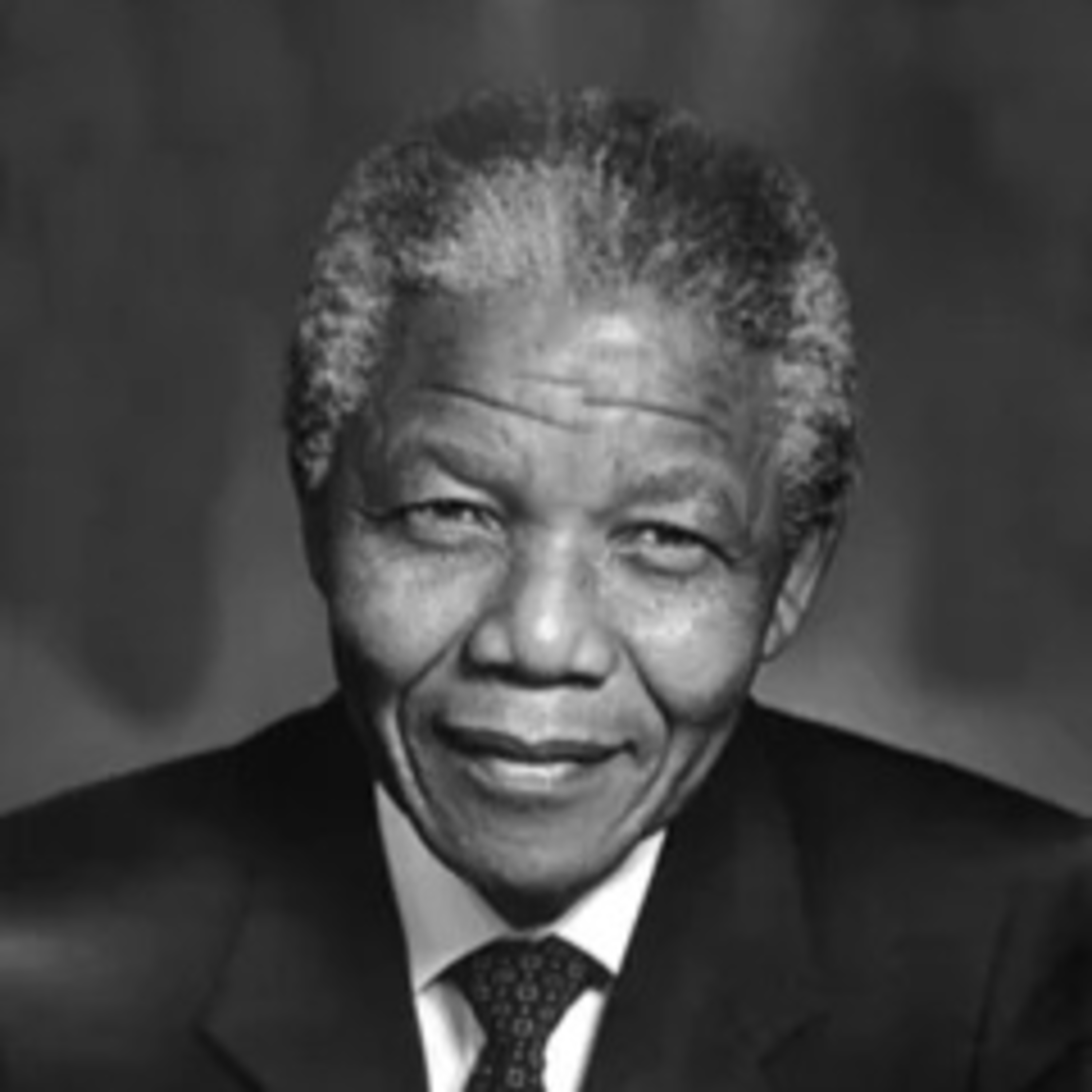
“I never lose. I either win or learn.” – Teach Different with Attribute to Nelson Mandela
In this episode, Steve and Dan Fouts explore a quote attributed to Nelson Mandela: “I never lose, I either win or learn.” They discuss the claim of the quote, emphasizing how reframing setbacks as learning opportunities can lead to resilience, growth, and long-term success. They explore the counterclaim, stating that accepting failure can motivate future success. Lastly, they provide some essential questions for deeper exploration.
Episode Chapters:
00:00 – Understanding Winning and Learning
02:37 – Personal Experiences with Failure
05:38 – Historical Examples of Resilience
08:12 – The Debate on Winning and Losing
11:19 – Emotional Acknowledgment of Loss
14:02 – The Complexity of Grief
16:36 – Global Perspectives on Winning and Learning
Image Source: https://ndla.no/r/engelsk-2/i-am-prepared-to-die-by-nelson-mandela/9c1529573a
Transcript
Steve (01:00)
All right, we have a really, really good quote today because it can be immediately applied to the major world events, specifically what’s happening with the Iran conflict and how divisive it’s becoming for all kinds of different types of people in different situations. The quote we have is attributed to Mandela, but there’s no exact record of him saying it. So it’s attributed to him. But I think that once you see this quote and you know a little bit about Nelson Mandela, who of course was fighting against the apartheid, he was in jail for 26 years, he emerged from jail, became a leader of the society. Here’s a person that knows what resilience is and knows what it means to win or lose. But more importantly, how you frame winning and losing, because that’s what this quote is all about. I’m gonna read it a couple times. I’m here with Dan and we’re gonna talk about it and we’re gonna use the Teach Different Method to break it down. Here’s the quote I never lose, I either win or learn. I never lose. I either win or learn. So, what is it saying here? I mean, it’s very personal.
Dan (02:26)
I think you said it really well in that this is that he’s trying to set up as a way people can think about setbacks, I guess, and that you don’t think of losing necessarily, you know, you either win or you learn. So if you if you can’t think of what happened as losing. It’s just a learning experience. And so you kind of move forward as a result. There is no such thing as losing would be kind of the claim I would say.
Steve (02:58)
I mean that’s a very positive way of looking at the world. I would add in that well, okay, here’s a personal experience. Just thinking about building Teach Different and all the mistakes you make in the process of doing it and all the things that you do that don’t work, and then you’re thinking, is this really an idea I should be pursuing? You know, I feel like I’m losing this. People, you know, aren’t becoming customers. They’re not telling me what I have is great. But I found that, you know, in at least in making a business, I would say if I were going to give advice to someone, I would say, don’t worry about winning and losing. What you need to do is fail as quickly as possible so that you can just stay in the game and then you end up learning from that. I’m giving my little spin on this, a quote like this, as it applies to how Teach Different has developed and how many you know things we’ve gone through in building it, but we’ve always had to reframe when something doesn’t go right. It’s not that you’re in the wrong business or you need to give up on your idea. You need to re-acquaint yourself and reframe what the problem is and then address it. And then you end up winning because you can actually solve the problem in a different way. Okay, so that’s my personal experience to kind of support this quote. It’s a reframing. I never lose. I either win or learn.
Dan (04:40)
Yeah, to build on that example with Teach Different, many times you might have an idea for what we’re doing at Teach Different, and it won’t work for a teacher or it won’t work for a strategy on getting teachers interested in learning the method. And then oftentimes what you learn is that it was just a mistimed idea. It wasn’t that it was a bad idea. It just didn’t come up at the right time.
Steve (04:40)
Yeah, to build on that example. Many times you might have an idea, a teacher or it won’t work for a strategy on getting teachers interested in learning the method. And then oftentimes what you learn is that it was just a mistimed idea. It wasn’t that it was a bad idea. Just didn’t come up at the right time.
Dan (05:07)
And so that’s kind of similar to this frame. You’re not losing if something doesn’t work out. You just have to be patient, learn, and wait for a time when it does work. And I agree with you. I agree with you about failing as fast as possible if you see failing as a learning opportunity. I thought that was really good.
Steve (05:19)
Yeah, I believe in that. And as far as the timing issue, again, go back to Mandela’s life. At the time he was put in prison, it wasn’t ready for a recognition of his leadership ability. The society wasn’t ready. But after 26 years in prison and emerging and putting his hand up, you know, with his fist, people see that and they’re considering reality in a different way. And they were ready for him. He paid his dues in a way, is one way to say it.
Dan (06:09)
Yeah, and and in prison he did not consider himself a loss. He considered himself somebody who is learning and preparing for another day, which is such a dramatic example of after twenty six years of doing that. pretty amazing.
Steve (06:17)
Well, we gotta use the Martin Luther King letter from a Birmingham jail as another example. Here he is thrown into jail. I can’t remember what the charge was.
Dan (06:38)
He was marching without a permit, if I remember properly. Yeah.
Steve (06:44)
So he didn’t have a permit, he was marching. And here he is in jail. He lost. He’s in jail. I mean, someone arrested you, showed their power over you, and here you are, you can’t go anywhere. But then he writes this letter that just sets up his, you know, kind of moral standards and what would end up being a lot of the justification of the rest of the struggle. And wow. If you look what, five years ahead, I don’t know how long it was from that moment until the civil rights legislation, like eight years, nine years. But you could argue that he won. He won partly because he was in jail. So you can’t say he lost then, and he shouldn’t say that he lost, because he’s not timing the statement in the right way.
Dan (07:41)
Yeah, the focus is on a long-term victory. When your mind is fixated into a moment in the future, then you suffer through these minor setbacks because you have a victory in mind for later. I got another connection. I read an article today on Jalen Brunson, and I’m trying to remember who wrote it. I believe it was in the New York Times magazine, they were talking about his views of failure and how he has an insatiable appetite for taking risks and to fail and to learn from failure. And his approach was the more I can put myself in a position of failing, the easier it’s going to be to be successful. Because I will be used to the feeling and then get used to overcoming it. It was a great article.
Steve (08:37)
Yeah, you live in failure. If you feel comfortable with that, you’re gonna be indomitable. You’ll take on risks, challenges. I’ve never thought of it that way, like you get so used to doing it, it’s like you can’t hurt me anymore. I never lose. I mean that is powerful. That’s powerful. I was thinking also of like in a debate or an argument. Someone who would think to themselves, I never lose. I either win the argument or I learn. My first thought is: would they actually admit it at the time that they were wrong or that they had to learn something that they didn’t know? If they were a good debater, they would make it seem like they were they always knew it and they were always right. So I just looked at a different, I looked at this quote in a different way. I never lose.
I either win or learn. And I could see it being kind of arrogant, confident not necessarily in a bad way, but arrogant or confident way of debating. where it always seems like it’s benefiting you, regardless of whether you’re right or wrong. You know, you’re just, you’re moving forward.
Dan (10:00)
Yeah, it’s like a bravado that could be carried in an unhealthy or healthy way. I think, yeah, it could be very arrogant and annoying, but it also could be very forward moving, a growth mindset and really like an excellent way of thinking.
Steve (10:17)
Let’s use that as a bridge to the counterclaim. Maybe emotionally acknowledging that you’ve lost is an important part of getting better and achieving more. Whereas if you say you never lose, in a way you’re you’re it does seem like you’re escaping the emotional pain of actually losing and overcoming that.
Dan (10:47)
Yeah. a student not doing well on an exam. Sometimes you just have to look at yourself if you’re that student and say, I didn’t study. I lost this one. And it’s on me and I’m not making any excuses. I’m not gonna arrogantly assume that, actually I didn’t lose. I just either win or I learn. Sometimes it’s kind of hokey to think of it that way. If you own your mistake and sit with it emotionally, kind of what you said, that can lead to growth as well. Sometimes more growth because you come to the truth and honesty of who you are.
Steve (11:34)
This is interesting here, because I’m agreeing with you now, but then I want to hop back to the claim and say, Don’t dwell in your loss. Okay, yeah, all right, you lost, all right, make that one second. Get your learnings out of it. Okay, don’t deny that you lost, but don’t dwell in it. You got to switch it up quickly. So I it like I’m the one who brought up the idea that you need to acknowledge your loss and the pain from that. But I don’t, I would never want to tell someone, yeah, you need to keep going through pain. It’s been a week. Give it another week of pain. I wouldn’t ever say that to someone. I would say, you know, have you gotten above this? Are you thinking about this like in a new way? Are you reflecting on it? What have you learned? That’s what I would say. So I don’t know if I’m making sense. I’m I’m going back and forth now about
Dan (12:32)
Sure. It depends on, I know, it depends on the context here. It depends on what the loss is. Go with this example. Let’s say an alcoholic. The first step in recovery is to admit that you have a problem and that you’ve come face to face with your demons. Now, I don’t know how long that lasts. Hopefully not not that long, but then from that point on, you go into a learning and a learning strategy to move forward. But that momentary burst of honesty is an important step in the process, but you shouldn’t maybe fixate on it, I can is what you’re saying.
Steve (13:07)
Good example. That’s a great example. Here’s another type of example where I think you could make the argument that living in the pain is a good strategy. Take basketball. Let’s take the Spurs. Wembinana. It hurt him to lose. That series and him living with that this summer and using that to build up, go hit the weights, you know, get even more ready for this next year. When the year starts, every game that goes by, you got 82 to play. But at the end of the game, you think of that pain that you went through when you lost. I could see that being a driver in not wanting to feel that pain again, but wanting to get to that point where you can overcome it. If you’ve already said to everybody, hey, didn’t bother me. I’m good. Like I got millions. I got a great job. I love the Spurs. They’re going to love me. We could win 50 this year. We could make the playoffs, maybe get out of it. It’s like resignation in a way. So anyway, that’s my example of where living in it might help.
Dan (14:33)
Yeah. And you could you could yeah. This is a really personal example, but it maybe students might bring this up, some might. What if you just think of grief of a loss of a friend or a loss of a family member through death or something else? If you think of that as a loss, then sitting with that and accepting that is a really important part of becoming healthy again. So a kind of a hokey gr growth mindset maybe isn’t the best kind of way to approach something like grief. So this is
Steve (15:02)
That actually that’s good. Growth mindset maybe isn’t the best kind way to approach something like grief. Yeah, when the loss is someone that is close to you.
Dan (15:17)
Yeah, sometimes you do lose people.
Steve (16:17)
Well, think of our sister and our dad. Yeah. In twenty twenty, within six weeks, we lost both. And I gotta admit, I haven’t really grieved, grieved yet, or whatever. I mean, I felt the loss, but it just happened. It’s weird.
Dan (16:37)
It comes in waves. And so this makes me think of maybe an essential question, like what does it mean to lose something? Or what is loss?
Steve (16:42)
And I was just gonna say the obvious, which would be, how do you know whether or not you should be acknowledging a loss and, you know, living in it a little bit? And how do you know when it should be just a reframing and you gotta stop beating yourself up?
Dan (16:13)
Yeah. How do I know how long I should sit with a loss? How do I know that before moving on?
Steve (16:27)
How do you answer that? I don’t even know. Well, it’s funny, we started and I was talking about we were gonna get into the Iran conflict. We really didn’t, you know, get into that, so let me just at least say one thing about it. People say that America won the negotiations, Iran won the negotiations. There’s this framing that everybody’s making about winning. We’re always talking about winning. Are we winning? You know, like that’s the thing that we should be concerned about. Winning. If we’re not winning, then it’s bad. Right, are you I’m going to this right now at least, you know, fingers crossed, knock on wood. I think the world is winning. There’s nobody that are using terrible weapons, for the most part, it’s somewhat controlled by the conflicts. It’s still bad, and it’s bad for a lot of people. I don’t mean to make this rosy. But what weapons are you talking about? Nuclear. Nuclear weapons. Yes. Yes. the ones that can end all of us. Like we’re still here. and that that’s not to diminish the fact that it’s a struggle for different types of people in this conflict. You know, we already know about the Israeli Palestinian question and and and what Iran is known for being a troublemaker and all this stuff. But putting aside blaming one group over another, the world needs to win. I’ll just put it out there. And winning means that Iran or America losing or winning, it’s less important. It helps me. ‘Cause I don’t think, personally, if America ends up being seen as losing this war, I don’t see that as a bad I’m seeing the benefit as long as we win again.
Dan (18:43)
Well, as long as we, again to the quote, as long as we learn. You know, if there’s learning that comes from whatever the outcome, it’s a benefit. And I do think perhaps with war that more is learned through defeat than through victory. Although that’s an interesting one. We we gotta find a quote on that one.
Steve (18:47)
Let’s find one about learning by winning, because you can learn through winning as well.
Dan (19:14)
Yeah, right. You can learn a lot through success. We have a quote like this in the library. It escapes me right now, but do you learn more from successes or from failures? That’s similar to that.
Steve (19:25)
Right. That’s a Churchill, that’s a Churchill quote, I think. Well, that’s good. I mean, that’s what I’m gonna I wanna leave with right now with Iraq. We didn’t really hit it early, so I don’t wanna try to push it in, but I really think that the winner, we need to not think of any one country. We need to think of the world getting better somehow. And that’s at least my hope with it. So that’s it for this one. We will see you soon. Teach different podcasts. Take care, everybody. Yep. Take care.
Dan (19:58)
Yep, take care.