
“Whenever you find yourself on the side of the majority, it is time to pause and reflect.” Teach Different with Mark Twain
In this episode of the Teach Different podcast, hosts Steve and Dan Fouts explore a quote by Mark Twain, “whenever you find yourself on the side of the majority, it is time to pause and reflect.” They discuss the psychology behind groupthink, the importance of critical thinking, and the potential dangers of majority opinion. The conversation also touches on practical applications of these ideas in educational settings, particularly in discussions about peer pressure and democracy. Throughout the episode, the hosts emphasize the value of reflection and the need to consider counterclaims in order to foster deeper understanding and critical thinking skills. The episode wraps up with some essential questions for further discussion.
If you enjoyed this episode please let us know by contacting us through our website www.teachdifferent.com and stand a chance to get access to all our program materials. We would love to hear from you
Episode Chapters
00:00 – Introduction to Teach Different and Mark Twain’s Quote
04:05 – Exploring Groupthink and Majority Opinion
10:10 – The Psychology Behind Following the Majority
12:42 – The Tyranny of the Majority and Critical Thinking
18:57 – Counterclaims and the Importance of Reflection
22:19 – Practical Applications and Conclusion
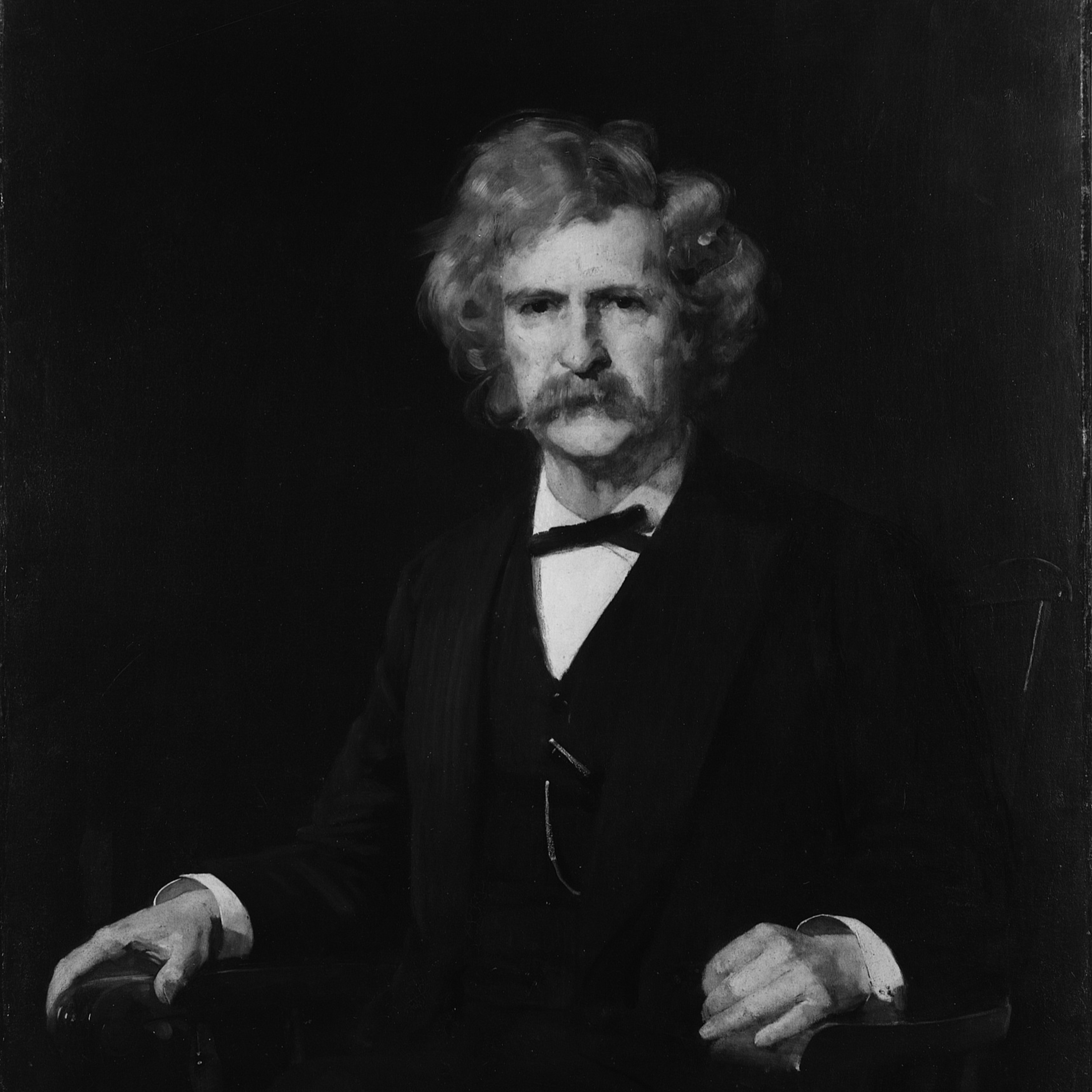
Image Source: Charles Noel Flagg, CC0, via Wikimedia Commons https://upload.wikimedia.org/wikipedia/commons/d/d8/Mark_Twain_MET_ap17.96.jpg

Transcript
Steve (00:00)
Welcome everybody. We’ve got Mark Twain today. I’m here with my brother Dan. We’re very active right now with state appropriation. We’re gonna be training teachers across the state of Illinois this school year and we’re excited about it. It’s a little daunting, but we finally have a system together where we get it for about 90 minutes, and we’re able to train teachers on the Teach Different Method and then we also give out access to our online community for a whole school year as well. So that has like all the curriculum and really, all these quotes that we do on the podcast, we immediately put it into our community for other teachers to use and weigh in on and to see how it worked in the classroom, you know, what kinds of aged kids or what types of classes it works really well on. That’s what we’re doing this school year. We’re excited. If you’re either a teacher or you know a teacher, and it doesn’t even matter if they’re not from Illinois, send them to the Teach Different website and just tell them to contact us. You know, and just say, hey, you know, someone told me about your podcast or I heard you on the podcast. Can I get into one of these trainings? And we’ll figure out a way to get you taken care of.
Dan (01:28)
If there’s a passion to learn the method, we’re ready to follow it. So don’t be shy.
Steve (01:36)
And you know, and even saying that, if you’re not like an official certified teacher, but you okay, my cat just showed up, I’m just gonna sit here and let him figure out that he’s not really you know, he’s gonna sit down for a second, that’s fine. But if you’re not a certified teacher but you work with youth or you work even with adults on a consistent basis and you feel like you could benefit from this conversation framework we’re about to model, do the same. Contact us. Just tell us who you are. We’re at the point now where we’d love to react to interest, you know, and people who like what we do. So that’s an open invitation. So here we go. We’re gonna model the method right now if this is your first time. This quote is from someone I know you’ve heard of, Mark Twain. His real name is Samuel Clemens. It’s paraphrased a little bit from his notebook that they retrieved from 1904 and it’s a really good quote for the theme of democracy and political legitimacy. But also I think there’s a psychology to the quote that’s really, really interesting. And I’m going to read it twice and then away we go. Whenever you find yourself on the side of the majority, it is time to pause and reflect. Whenever you find yourself on the side of the majority, it is time to pause and reflect. Mark Twain.
Dan (03:10)
I think this speaks to groupthink. When ideas are put out there in the atmosphere and more and more people start latching onto them and more people believe them not, there’s a sense, at least Twain is saying, that there’s a momentum behind the group thinking alike. And what that should pause in us is time to, well, pause and reflect. It’s almost saying the claim is, to me, it’s things are less likely to be good ideas the more people believe in them. That you should treat ideas that are popular with suspicion would be how I would articulate the claim. Whenever you find yourself on the side of the majority, it is time to pause and reflect.
Steve (04:08)
There’s something about when everybody agrees, or when most people agree about something, that’s when you have to catch yourself. See, this is where I feel it’s psychology here that he’s pointing out. You know, following the crowd. Not wanting to stand out, because let’s face it, most people are not leaders, they’re not unique individuals. They would rather be like others because there’s safety in it. Whenever you’re adhering to the majority opinion, there’s a great likelihood that you may be doing it just for cover, and that it doesn’t necessarily mean that. It’s the right thing to do. Hence, pause and reflect. So he’s not saying it’s wrong. Here we go. Are you with me there? He’s not saying it’s wrong to follow the majority.
Dan (05:10)
He’s saying that don’t let the psychology of wanting to be accepted, perhaps, and join with everyone else. Don’t let that obscure what might be a really bad idea. I gotta go, you know, I’m imagining a middle school class or even younger, high school as well. Okay, let’s just go any age. This would be a great quote to teach peer pressure. How would you introduce a conversation on peer pressure? This is how you would introduce a conversation on peer pressure. Asking the kids, when have you found yourself agreeing with everybody else and maybe pausing and reflecting on whether or not it was the right thing? And what are some situations where you’ve agreed with the majority and you haven’t paused and reflected? You just catapulted in and didn’t really reflect on it and maybe it didn’t work out or it got you burned. This is a peer pressure discussion waiting to happen with some good personal experiences.
Steve (06:22)
I would put some teeth on the storytelling prompt. I would say one of you agreed with the crowd on something and later regretted it. That’s gonna bring out peer pressure, you know, maybe even witnessing a bullying situation where you didn’t speak up, you just kind of stayed with what most everybody else was thinking at the time. And look, you got to see someone who got hurt, you know, maybe they were even someone you knew and you betrayed their trust, you know. But anyway, some type of experience where it didn’t work out, I think would be a good way to kick this off.
Dan (07:02)
Yeah, starting with personal experiences has been a technique that our teachers have used with success. Don’t even start with the quote. Start with a question about peer pressure and then bring in the quote. That’s a clever, we learned that by the way from our teachers. Steve and I did not ever use the method in that way, but the teachers did and it was a great, great idea.
Steve (07:33)
Yeah, it’s it, it’ll bring it out. I’m trying to think of it in some other way. I said psychology. You know, there’s just something about when a lot of people believe something, that’s when you have to step back. it almost becomes easier and easier to believe something the more people that believe it. you almost can get lazy, maybe, and start believing things and accepting them as true. Because they’re so safe. Everybody agrees. That’s the psychology he’s fighting, I think.
Dan (08:16)
this could really be taken quite naturally into the political realm. You take any kind of issue like the Iran war, let’s say, and public approval is strongly against the Iran war. Does that mean that the Iran war is the wrong war? Or does it just mean that a lot of people think it is, that pause and reflect what is it about the war that makes it wrong and so on because it’s easy to jump on the bandwagon and just say it’s wrong that’s simple to do
Steve (08:51)
Right. I’m just saying what complicates things like that is there’s so many preconceived notions going in as to why we went there and how it was justified. And it was almost baked in the majority minority, or whatever you want to call it, the opinions about it were baked in beforehand. That doesn’t really change his point.
Dan (09:17)
Right, and just to get real government here, I taught, I just retired after 34 years of teaching and I taught AP government for 33 years. And one of the concepts I bring up early in the course in my foundations unit is the concept of the tyranny of majority, which is something that James Madison discussed in the Federalist Papers. The idea that majorities, one of the costs of finding a majority and being convinced of something is that they often tyrannize minority opinions and the group think overcomes and suppresses other voices. So that’s when I think, you know, pausing and reflecting once a majority is gained is a really important thing to remember. Otherwise people will execute oppression on each other.
Steve (10:12)
Again, I would turn to psychology on that. The more people believe it with you, the safer you are. And the safer you are, the more you feel that you have some leeway in how you treat other people, because there’s going to be no repercussions. There’s that. So pause and reflect. Why are you doing it? Be a critical thinker. That’s his message.
Dan (10:36)
It might be a popular opinion and it actually might be the right opinion, even if a lot of people agree with it, but you have to reflect and send it through some analysis first before concluding that, or it can be dangerous.
Steve (10:52)
Can we think of a majority opinion where pausing and reflecting is unnecessary? How about you shouldn’t take advantage of a child? Should you be pausing and reflecting? Because most people don’t think you should.
Dan (11:11)
Yeah, that’s not one that a majority would typically embrace, but yeah, if a majority did, wait, did I understand you right there?
Steve (11:25)
Most people know that that’s wrong and believe it. Okay? And it is wrong. You know, taking advantage of innocence, that’s wrong. Right? I well, am I going out on a limb? Should I be pausing and reflecting?
Dan (11:41)
Yeah, certain beliefs don’t need reflection. They’re intuitively wrong. Killing, harming children and so on. I get that point.
Steve (11:52)
Yeah, I mean, but even with killing, that’s a mixed one. It’s because why are you killing? You know, self-defense, blah, blah, blah, blah, blah. But is there any other way to get to the counterclaim other than to say that not all majority held opinions need to be a reflection event?
Dan (12:14)
Another way I would articulate the counterclaim and you can, our listeners, it’s important to know you can play with the counterclaim in different ways. Oftentimes it’s not an opposite, it’s just a different angle that falls under the bucket of a counterclaim. So what if we said something like this, whenever you find yourself in the minority or thinking alone. It’s time to pause and reflect.
Steve (12:43)
Right. That’s what I was gonna say.
Dan (12:45)
Okay, I got it first.
Steve (12:50)
But no, that’s fair. That’s —
Dan (12:50)
I mean, that’s kind of a counterclaim.
Steve (12:54)
Fair. I mean, you know, a lot of people take weird positions on things, and it doesn’t mean that they are some virtuous, insightful character. Like, you know, some people are here’s the word contrarians. Some people make an entire ideology. Based on taking the opposite of what most people do. And that becomes a crutch in itself. That becomes kind of like it’s like groupthink, but it’s more like you’ve convinced yourself of this.
Dan (13:32)
Well, and you’re holding the opinion to just anger other people or to just be obstinate for no reason. We have friends who we talk to who are like this. Heck, I might be like this sometimes as well. Where —
Steve (13:46)
No, stop reflecting.
Dan (13:47)
Yeah, they’re, you know, they like to find themselves as the only one in the room with a different opinion. But the energy is they don’t really believe it. They’re just saying it to be different.
Steve (13:59)
Yeah. They’re steel manning it.
Dan (14:02)
And so that’s time to pause and reflect on that. Why are you back to psychology? Why are you doing that? You know?
Steve (14:11)
Funny, this is kind of what we’re doing with the counterclaim. Because you know, we tell the teachers, we say, you don’t want the kids doing groupthink on everyone agreeing with the claims of these brilliant people. You got to do a counterclaim just in case. And in a way, that’s a we’re forcing people. Wait a minute, this is what the method is. You force people to pause and reflect after you get someone else’s truth.
Dan (14:41)
Exactly what you do. And then you articulate another truth that you may or may not believe in, but that’s important to give your brain some oxygen to express. Because by doing that, it’s stretching your understanding in a way that is impossible without articulating an opposing view.
Steve (15:03)
And you don’t necessarily have to reconcile it, you just have to live in both worlds. I’d say the main difference between the Teach Different Method and what Twain is saying here is that in fact most of the quotes that we come up with, I think the most profound, are kind of insightful quotes. They might not be something everyone agrees on, but you know, the power of them is that they say it, you know, you say it like Gandhi when he said, you know, an eye for an eye makes the whole world blind. You know, there’s something so true about that that you have to acknowledge, but you also have to be careful. So I don’t know. I’m going back and forth.
Dan (15:48)
The method is very related to this. The spirit of this quote is very aligned to what we’re trying to do with this method. Pause and reflect and consider before having opinions and by doing that, again, why are we doing that at Teach Different? We’re doing it because it’s good for your brain. This is good for your mental health. This is good for your empathy, listening skills and general communication.
Steve (16:20)
And it gets you wise. I mean, that’s the main thing. I’m thinking of a essential question. And the essential question would be something something like you know, when everyone agrees with you, how do you know when that’s a danger? Or it’s something that you know you just can accept to be true and that’s okay. You know, you’re part of the herd on that one. That doesn’t mean it’s wrong.
Dan (16:50)
I know when it’s safe and okay to agree with the majority? How do I know when I should go against the majority? When should I go against the majority? There are a lot of spin-off questions here. When is pausing and reflecting a negative thing with beliefs?
Steve (17:13)
That’s another one. I was thinking something almost more nefarious. Something like, how do you know when the majority is becoming dangerous? You know, what the group think. Like, how do you know when something’s getting out of control when a lot of people believe something that is not right, you know, not true?
Dan (17:42)
Well, to answer that, it’s when…the minority voices are suffocated in ways that are intimidating, in ways
Steve (17:52)
Demonized.
Dan (17:53)
Demonized, there’s fear. Whenever it’s uncomfortable and unsafe to speak out against it, I think that’s a sign that it’s raging out of control.
Steve (18:06)
The majority’s trying to you know
Dan (18:09)
To suppress all opposition.
Steve (18:12)
Right. And there’s dynamics here, you know, because the majority of the people are different than the government that has the power at that moment that the people are propping up, you know, and in our democracy, whoever’s president is already propped up, you know, for four years. But anyway, there’s
Dan (18:31)
Right, but it could be the majority within the branch of government. Congress, it’s just a different kind of majority. This is a good one for government. It’s a good one for peer pressure. It’s a good one for everybody because we all in life are put in situations where we have decisions on whether or not to agree with the prevailing wisdom of something, or take a stand against it. So pausing and reflecting, no matter what you believe in, pausing and reflecting is an important virtue, a disposition to have as a good thinker, in my opinion.
Steve (19:13)
And you should have it going in regardless of whether or not it’s the majority opinion, ideally. You just later learn, that’s what most people think. Okay, well, I thought that through. I’m gonna stay with that. That’s an answer to how do you know if you should go with the majority opinion? If you thought about it first before you worried about other people, it’s a good sign.
Dan (19:37)
Yeah, although you might’ve thought about it without evidence and careful reasoning, but yeah.
Steve (19:44)
All right. I mean that was worth it. That’s definitely usable. You know, this is where I’d love to hear some people try this with some of our young people or with some other adults. We love to hear stories about things like this. That’s something you definitely share with us as well. In fact, if you share a story about how you used one of these quotes and you contact us on our website and share it. I’m gonna say it, we’ll give you access to this professional learning community, this bank of quotes and where all these teachers are all we’re we’re gonna give you access to that for, you know, what, six months, something like that. We’ll take care of you. Just show us that you’re trying this stuff because this is why we created Teach Different to get these conversations going. So, anything to add?
Dan (20:42)
No, all good. It was a good quote.
Steve (20:45)
All right, I love the quote. We’ll see everybody soon. Take care for now.