
“One Finger Cannot Lift a Pebble”: Why Asking for Help Matters
In this episode, hosts Steve and Dan Fouts explore the profound meaning behind a Native American proverb, ‘One finger cannot lift a pebble.’ Using the 4-step Teach Different Method, they discuss the importance of interdependence, humility, and the limitations of individual effort through engaging metaphors and real-life examples.
Episode Chapters:
00:00 – Introduction and episode overview
00:27 – Native American quotes and their significance
01:53 – The four moves: claim, counterclaim, essential question, storytelling
02:30 – Exploring the meaning of ‘One finger cannot lift a pebble’
03:24 – Literal and metaphorical interpretations of the proverb
05:36 – The futility of doing things alone
07:26 – Examples of interdependence in life and sports
10:42 – When to do things alone versus with support
13:05 – The importance of asking for help and trusting others
17:26 – Humility, overconfidence, and the limits of individual strength
19:18 – The beauty and ambiguity of Native American quotes
20:27 – Using silence and storytelling prompts in conversations
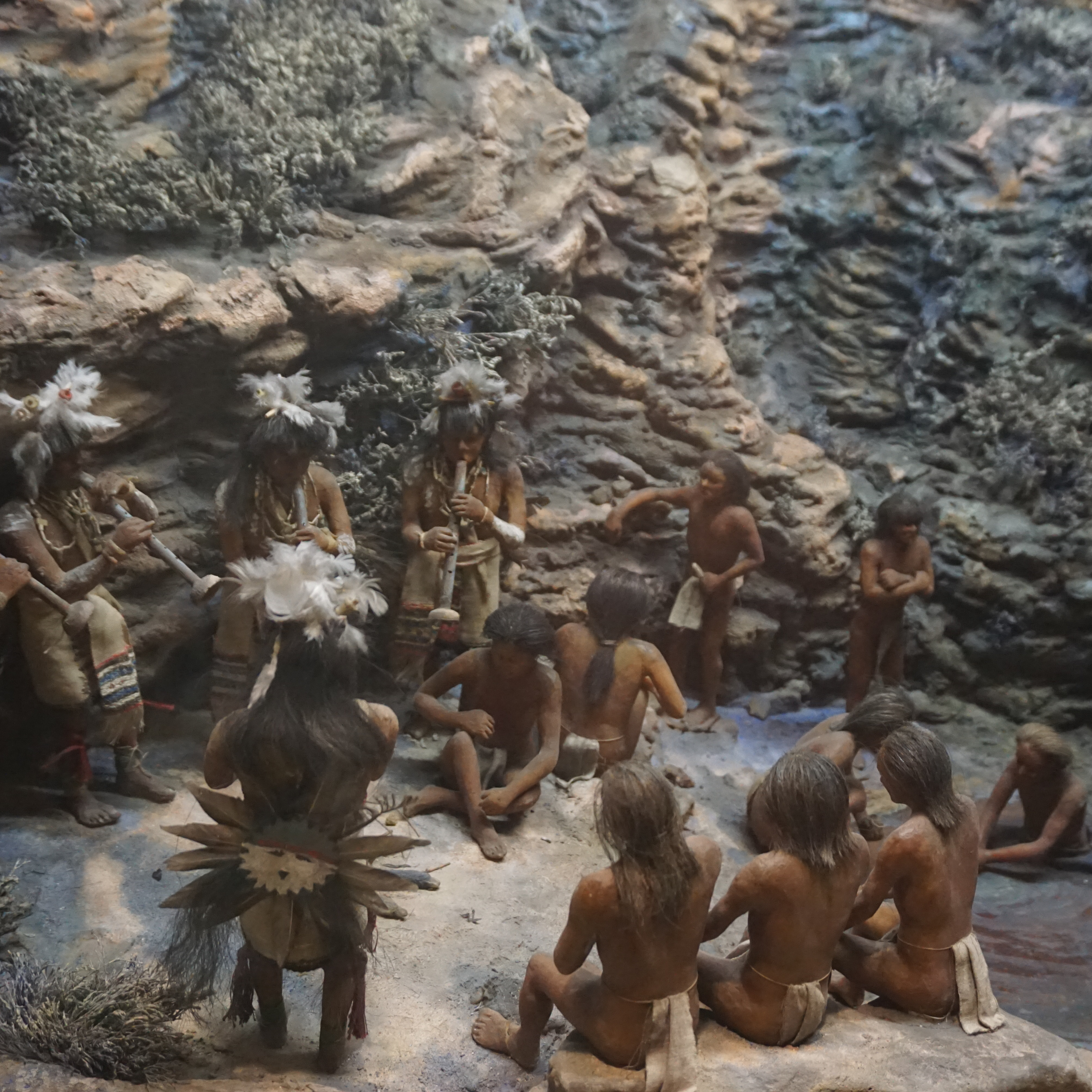
Image Source: Michael Barera, CC BY-SA 4.0 , via Wikimedia Commons
Transcript
Steve (00:00)
Well, welcome everybody, Teach Different Podcast. I have Dan with me. We’ve been doing the
last few podcasts together, and we’re picking back up with our meaningful routine that’s gonna
be at least one a week. That’s our goal. We don’t wait for New Year’s resolutions. We have so
much going on at Teach Different. When you’re doing so much, sometimes it’s hard to get to
everything. But the podcast has been around since 2020. And here we are. This is the most fun
or one of the most fun things about Teach Different, just having a conversation and you know,
sharing it with other listeners. And we love to have people weigh in. So let’s get going here. We
got Indigenous month coming up, in October. And we had, actually, a Hopi Indian proverb a
Show notes + transcript (Hopi Tribe).docx
couple weeks ago, I believe. And we have another one tonight. Some of the best quotes out
there of Native American people. And I’m just excited to read it. It’s so short and it’s very, very
thought-provoking and metaphorical.
Dan (01:18)
In our online community we have that monthly event where we’re gonna pick a quote from a
Native American and then use it as the basis of our community conversation. So that’s gonna
be really cool this month.
Steve (01:31)
Yep, that’s really what we’re looking to do with teachers, parents, anybody ready to try these
conversations. You have a community that you can join where you can have these
conversations more and more. And there’s so many resources in there for conversations. We
love modeling it. In the podcast, and that’s what we’re gonna do. So, our four moves are claim,
counterclaim, essential question, and storytelling. And we’re gonna try to incorporate all those to
model this for you right now. It used to be three steps, now it’s four moves because we added in
the storytelling part and the importance of bringing out experiences when you’re trying to
understand these brilliant quotes from these famous thinkers and these leaders and so here we
go. One finger cannot lift a pebble. One finger cannot lift a pebble. What does this mean?
Dan (02:36)
What a metaphor here. One finger cannot lift a pebble. So I’m going to go with an interpretation
of one person can’t accomplish a task to generalize this that an individual can’t be successful
alone. There has to be more people with them, supporting them to get a task done. I’ll start
there. That’s the first thing in my head. The value of having other people working with you to
accomplish some task.
Steve (03:24)
Okay, to accomplish a task, in this case, lifting a pebble. Yeah, I guess you personify it in a way.
One finger cannot lift a pebble. What was my first reaction? I actually thought about the truth of
that. I because I’ve never I I’ve never really…
Dan (03:51)
The literal truth.
Steve (03:52)
Yeah, like I was thinking of couldn’t I pick up a pebble with one finger if I absolutely had to? And
I realized that it wouldn’t, I mean, I could push it all the way to a to like a wall and then push it up
the wall. And then turn my finger underneath it so it’s resting on my finger, and then kind of hold
it up. And you could argue I picked it up, but I guess you not really. You just spent a lot of time
doing something that would have taken, you know, two seconds. My thought about this was, a
pebble is small, light, meaningless, or inconsequential. I don’t, I went immediately to that
because he didn’t say rock or boulder or lift up a chair. It was like a pebble. That’s what I read
Show notes + transcript (Hopi Tribe).docx
into this immediately was something that is small, so small, you still can’t pick it up without more
than one.
Dan (05:15)
And a pebble is round and smooth too. A pebble is round and smooth. I think that’s an important
part of this as well. Because if you imagine your finger trying to pick up something that’s round
and smooth, and it might be small, but I mean some pebbles are, then you just can’t do it. It’s
the futility. There’s something at the claim of this, and as I’m thinking about this, is the futility of
thinking that you can accomplish something with one thing. One finger.
Steve (05:50)
I was gonna go back to “you’re alone.” You can’t accomplish something alone. I did personify it
as well. I went to the people, to a person. You can’t accomplish something alone. You have to
have more than one. Now you of course could argue that we have more than one hand, we
have more than one finger. You know, so again, this is the metaphor part. What do you do with
this? It’s got us talking and thinking about something.
Dan (06:29)
So, depending on your interpretation, if I’m just working off my interpretation that you can’t do
something alone, you need support, you need other people to help you, you know, what are
some examples where that would be true in my life, where I couldn’t do something alone? The
sports analogy is always a good one. You can’t volleyball, you can’t do sports alone.
Steve (06:50)
Volleyball. You can’t hit it more than one time.
Dan (06:58)
You know, a group project at school, you can’t do it alone. It requires the efforts and energies of
multiple people to do it. You can’t lift the pebble. You can’t finish the project. You can’t conduct a
good experiment alone by yourself without the help and support of other people. I mean, I would
say most of the things that we do in life have a kind of interdependence where we have to rely
on people, like and we can’t do things alone.
Steve (07:39)
Yeah. So you and you took like one finger to mean alone. That’s what someone is when they’re
alone. They’re one. They’re outside of the whole, the group. In this case, one finger is alone,
you know, from the hand. Like the hand has five fingers, and those are useful. You know, that
was one of the main developments in our development as humans. What do they call it?
detachable thumbs or or the thumb is like a really important part of our development. If you don’t
have a thumb, it’s hard to, you know, you could pick up a pebble, but the thumb makes it just
possible to do so much.
Dan (08:27)
Show notes + transcript (Hopi Tribe).docx
Yeah, you need help. You need the help of multiple things, in this case fingers, to pick
something up.
Steve (08:33)
Okay. To do work, you need to think of it as multiple things acting on something. You need to be
resourceful. You can’t think of it as something that you can do with just one thing.
Dan (08:51)
Let’s make this more practical for people though. Like what would be examples where that is
true, where that’s the case? Someone who’s graduating from high school, let’s say, and they’re
getting a job, they need the help of maybe multiple people in order to help them be successful
getting a job. They have to rely on friends. They have to rely on family. They have to be
courageous themselves. It’s not one thing. It’s not, they’re not doing it alone. There has to be a
multi-force effort towards something. I’m trying to just bring an example that would make this…
Steve (09:29)
Just growing up, yeah. I mean, we come out of the womb. Like you need people immediately
for your survival. If there were twenty people in a room right now having a conversation, I’ll bet
you we would have twenty different reads on this.
Dan (09:48)
Yeah.
Steve (09:49)
You know, and I like the smoothness of the pebble. I do like that and what that might mean.
Because you can pick up a leaf because it’s not round and smooth. You can kind of get under it
and you can pick it up. So there are certain things that you can lift with one finger. But not a
pebble. So maybe an essential question might be what are some things you can do alone that
you don’t need anyone else for? What things should you do alone when you shouldn’t be relying
on others? Because if you rely on others, you’re not going to get the value out of the task, out of
the activity. You know, I’m flirting a little bit with the counterclaim here, maybe.
Dan (10:45)
No. Yeah, yeah, we kind of we it’s interesting we did the essential question, which really feeds
into the counterclaim, which I think is that doing things alone sometimes is more doable, more
possible, more realistic.
Steve (11:09)
Well, an example. I mean, sports analogies are so great. Because some sports are conducive to
individual greatness and taking over games. You know, basketball, Michael Jordan taking over
a game. But even in games that he took over, he wasn’t the only person out there. You know,
there was someone in his ear, and you know, maybe at a certain point. It needed to be him, but
I’d say sports is the b the easiest analogy to this. When should you do something and not be
thinking of the rest of the world and other people? You know, what kinds of things can you pick
Show notes + transcript (Hopi Tribe).docx
up with one finger? Where if you tried to bring in like your other hand or your entire hand, it
wouldn’t help. You know, when is using one finger exactly what you should do?
Dan (12:15)
Right. And again, that we’re speaking in metaphors here. I know you’re being very tangible with
actual fingers. And I think that this, at least I’m interpreting this as much more abstract and
metaphorical, that it’s doing things as an ind doing things alone as an individual is a futile
exercise in life. You can’t do it. You can’t lift the pebble with one finger. You have to figure out a
way to do it that involves other people. Again, the metaphor, other people. gosh, I just thought of
an, back to the claim. I thought of an example where if you let’s say you have a drug problem or
a gambling problem or Anxiety or a mental health issue or whatever. The way to think about it
is: you know, you can’t lift a pebble with one finger. You have to figure out ways to get help and
have multiple people help you through something. If you think of it as a singular project to be
done alone, it’s going to be a futile exercise. So train your mind to think of interdependence and
help. I don’t know. This is how I would go with this. I would be so curious as to what kids would
do with this metaphor.
Steve (13:45)
I do like that. I like the interdependence, like building the habit of not thinking that you’re doing it
alone. Because it creates the wrong understanding of who you are and the value that you’re
providing and the things that you’re doing if you’re thinking you’re the only one doing it. I thought
of another aspect to this, a pebble, and I alluded to this earlier, a pebble is small. When you say
one finger cannot lift a pebble, it really is telling us that you need more, you need more. No
matter how small the task, you have to remember that you know you can’t do it alone. You can’t
do it with just one thing. You have to think, you know, holistically and comprehensively about
something.
Dan (14:51)
And the counter claim is, some things you have to do alone.
Steve (14:55)
Well it seems like everything. I mean not everything, but it seems like most things you do alone.
And you also should want to be efficient with what you’re doing. You don’t want to break, think
of the group project back at school, right? Everybody’s getting a grade, four people in the team,
three people don’t want to do anything, two people don’t want to do anything, let’s say, one
person will do everything, and one person’s kind of in the middle. You know, what do you do
with that situation? You do it alone. Like if you’re worried about your grade and no one else is
worried about their grade, they’re gonna bring you, they’re gonna hurt you. Sometimes it hurts
you to be thinking always of inclusion and other people, and not you know, having an
independent existence.
Dan (15:55)
Right. It takes patience. It takes patience to allow other people to come in and help. You want to
do it the easy way and just rely on yourself. You know, there’s all kinds of spin-offs now as you
Show notes + transcript (Hopi Tribe).docx
dig deeper in this. You can talk about the trust for other people. You know, what are the, how
about this question. What are the barriers that we put up when we try to accomplish things in life
and we can’t rely, you know, and we struggle relying on other people? Why is that a barrier for
us? How is it a barrier?
Steve (16:30)
It drives you insane when you take on all the burdens and you know you don’t know how to ask
for help. I would blame myself on that one. I’m not really good at asking for help. And it is a little
bit of a pride thing. And that’s not really good because if you need help, you should ask for it? Is
that true? If you need help, you should ask for it. How should you know when you should ask for
help?
Dan (17:02)
Yeah, a lot of people struggle asking for help. Some people it’s a pride thing, other people it’s
just habitual, they’re just used to doing everything alone, some people it’s a trust issue. They
don’t trust other people’s capacity to do things. Interesting, so trust again back to trust could
come into this. We got some essential questions in there, definitely.
Steve (17:26)
Also, what this is saying, which would be a claim, is that we’re not as strong as we think we are.
Dan (17:37)
And we’re not as capable. Maybe to spin off here, not as capable as we think we are. We’re
overconfident. How about that? What if overconfidence is kind of the theme here?
Steve (17:50)
Right.
Dan (17:52)
Stop with the overconfidence, have a little humility. Some things just aren’t possible. You gotta
accept it. Be humble.
Steve (18:01)
I mean another direction you could go is say, be smart. Use two fingers. The Native Americans,
it’s almost like their quotes are they’re just deliberately ambiguous, but they speak to something.
It’s like they’re communicating in code.
Dan (18:27)
Right, and you said deliberately ambiguous. One way to think about that is that life is
ambiguous. These quotes really reflect the ambiguity of life. So they’re very authentic in that
way. They’re they’re not they’re not saying actually there’s a clear idea here and we’re just going
to be deliberately ambiguous about something. It’s literally a portrayal of the confusion and
uncertainty of life, which is what makes them just beautiful. Native American quotes are
incredible.
Show notes + transcript (Hopi Tribe).docx
Steve (19:03)
They are beautiful. This one I want more people with this. You know? I’d love to have more
people, more perspectives on this. And that’s what’s so nice about a conversation. We wouldn’t,
you know, you and I went back and forth and we’re brothers, you know, so we kind of think the
same already. And it was already layered. You know, can you imagine just having people of
different ages, different demographics just talking about this in a safe environment? What would
come out of this? I mean, I’d love to talk to a Native American about this. They’re powerful. One
finger cannot lift a pebble. I feel like this is an open ended podcast. I hope everyone can tolerate
that for today. this is what we got.
Dan (19:58)
This is a good one to use if you want something to splinter in a lot of different directions. that’s
how I would use this one.
Steve (20:07)
And sit with this one. Let silence reign in a conversation like this. Because you’re gonna have
people that will say this over and over again. One finger cannot lift a pebble. Okay, I get it. You
need two fingers to pick up a pebble. What’s the point? Let silence go. You know, and again,
really quick, a nice thing about the resources we have for these conversations is we have some
storytelling prompts, we call them in the community, you can get some ideas for how to spur a
conversation and get people really thinking about it, even though they might not have started
with thinking about it in the in the you know the the right way. So that’s something to think about.
I love Native American quotes. Thanks for being here for the Teach Different podcast. We will
be back, definitely next week, if not before. Take care.
Dan (21:12)
All right, take care, everybody.