
“Leap and the net will appear” – Teach Different with John Burroughs
In this episode, Steve and Dan Fouts explore the profound quote by John Burroughs, “Leap and the net will appear.” By using the Teach Different Method, they discuss risk-taking, support systems, and self-confidence. They also share some personal stories to unpack the power of taking leaps of faith.
Chapters
00:00 – Introduction to the metaphor ‘Leap and the net will appear’
02:00 – Risk-taking as faith and trust in support systems
04:00 – Support networks in education and personal growth
05:51 – Building self-confidence as a personal net
07:54 – The role of kindness and authenticity in support
09:00 – Support in sports and everyday life
10:49 – When falling is part of learning and growth
13:04 – Deciding when a leap is worth taking
15:00 – Self-confidence and perseverance as internal nets
15:56 – Encouraging others to take their leaps
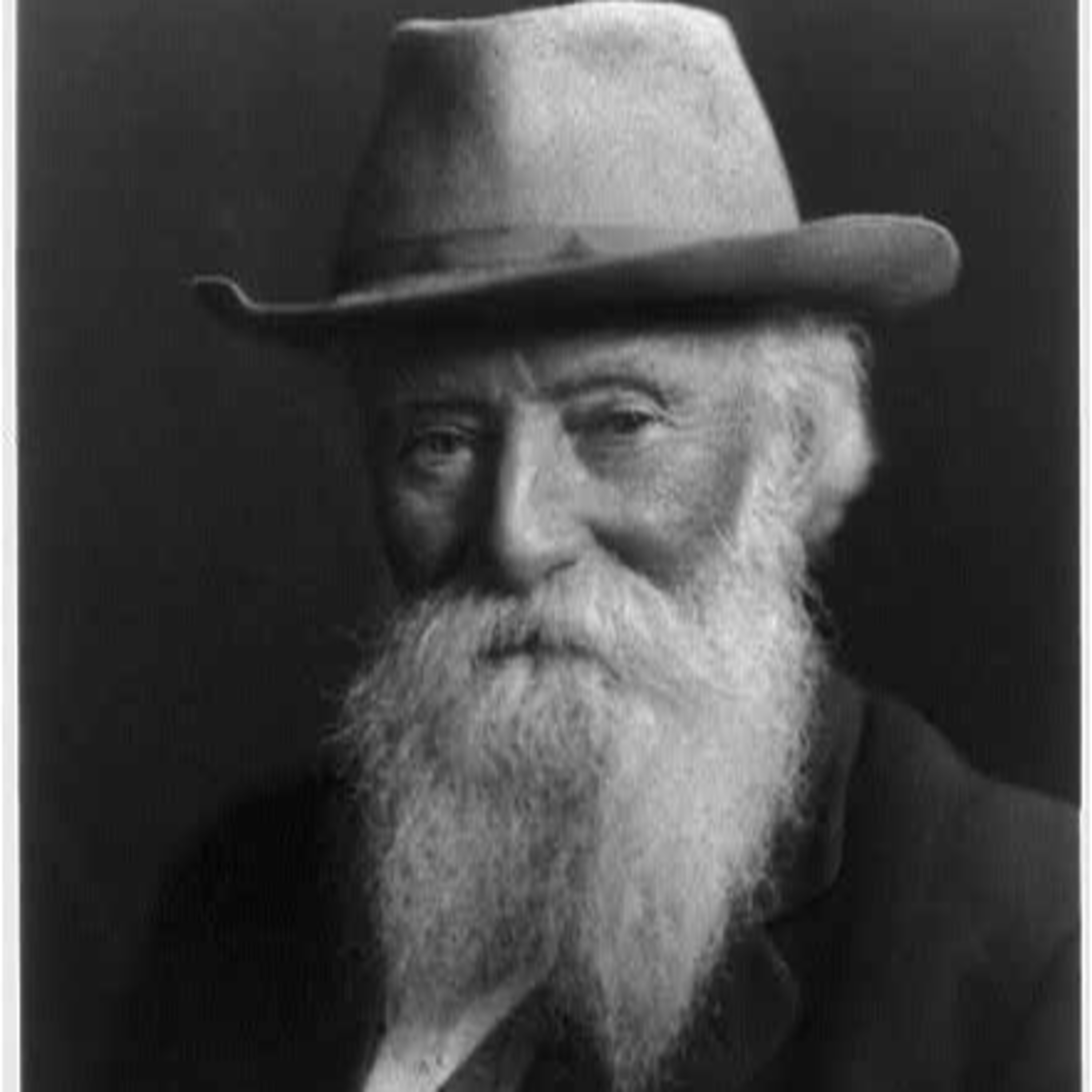
Image Source: https://picryl.com/media/john-burroughs-1837-1921
Transcript
Steve (00:32)
American naturalist and essayist John Burroughs, who lived from 1837 to 1921. And 1837 was the year that Knox College was founded, where I went to school. I remember that year. He was a naturalist, like someone who was a big conservationalist, part of the conservation movement, and an essayist. So my first thought is he definitely knew about the famous Walden, Henry David Thoreau. Which we have a few quotes on Henry David Thoreau as well in our library. But he’s got a real simple one here, and I’m gonna call the theme faith. And Dan, you can tell me, I got Dan here with me, my brother. You can tell me whether or not faith is a good capture of what this quote is about. Here it is. I’ll read it a couple times. We’ll go right into the Teach Different Method and just have a conversation. Let’s see where it leads. Leap and the net will appear. Leap and the net will appear. Claim. What does this thing mean?
Dan (01:19)
My first thought is that the theme of this is risk-taking. That if you take yeah —
Steve (01:26)
Well, that’s related to faith. Yeah.
Dan (01:28)
Yeah, it’s similar to it, I think. if you take a risk, a net will appear. There will be people who support you, ultimately. There will be events of the world that kind of conspire to help you because you took a risk. And that you will be, it’ll be okay. I mean, to make it in a very, explain it in a very basic way, take a risk, everything’s gonna be okay. Let’s just start with that simple way of thinking about this.
Steve (02:02)
Well, I would add that the word net, like the net will appear. What is the purpose of a net after you leap? It’s when you fall, you fail. Right? And the way that you characterize the claim, I heard it being closer to a little bit more general support that you can rely on people to like push you forward and you know, believe in the best of you and support you. And I would just kind of tweak that and say, Take a chance. If you fail, it’ll be okay. You know, you can’t necessarily rely on anyone per se, like different people, but you’re gonna be okay. You won’t fall totally.
Dan (03:00)
Okay, that’s interesting. I didn’t see it as falling. I saw it as the reward for taking a risk is that others will support you. My brain goes to a classroom. If a student takes a risk and let’s say puts themselves out there in a discussion or does something courageous in class that they’re not used to doing, that the teacher and the class will be that net for them. They will come in and support and encourage and foster a belief in themselves that they did take the risk and that it’s okay. And that, you know, if they did fall, kind of going with your theory a little bit, if they did fall a little bit, they fallen in the arms of people who care about them and want to contribute to their self-development. So the risk was worth it.
Steve (04:00)
I can see that actually, because in a group, when someone puts themselves out there and is vulnerable and obviously had some courage and took a leap, you want them to do well. You know, you want to be a fan. You don’t want them to stumble around and look awkward because you picture yourself in that situation. Think of public speaking. When someone’s up there public speaking, what everybody wants is for them to just chill out and say what you gotta say. Don’t get overly focused on the fact that you’re the one speaking. Everybody else here is listening. The minute you see someone’s self-consciousness, you feel uneasy. But I think that in general you root for people who are taking a leap.
Dan (04:56)
This Teach Different Method, this is a such a nice quote for what I actually try to do with students when they learn about this method. I say, take a risk, say something. We are here to support you. We’re here to ask you questions. One of the things we do, remember, Steve, at the end of this method often is we have the people in the conversation. Express compliments to each other about something they said that had an impact on them. And in that way, that’s the net that’s kind of supporting their risk taking. And I often get those compliments when kids take a leap and share a personal experience in the conversation that is particularly sensitive and puts them in a vulnerable situation. So I really like how this quote fits with how this method works.
Steve (05:51)
It is inspiring. I mean, I would say from a personal experience, going to Chicago for my first teaching experience, that was a leap, you know, because everybody was like, Why are you not teaching in Springfield, Illinois? Or why aren’t you going to the suburbs of Chicago? But I said, No, I want to teach in the city that I know that’s kind of where the needs are, or At least that’s where I thought, and I still believe this, the intelligence is. And I taught there for 20 years in Chicago. I’m so happy I did that. But my best friend told me, you know, you don’t want to go and teach in certain areas because it’s going to be, you know, not safe, or you’re not going to get anything accomplished there. You can make more money in different places. But I just love the challenge of it, or I don’t even know. You know, I was so young.
Dan (06:47)
What was your net? What was your net?
Steve (06:51)
You know, I would never refer to it as a net ever. I would say my protector was just me being there for the right reasons. That was my protector. You know, because I believed in students and I always wanted to be there and do as best as I can. I felt limited sometimes with the job, but I thought it was just really, I felt lucky to have had the opportunity to do it. So I would say I almost made my own net in a way. That’s
Dan (07:22)
That’s interesting. Should yeah, should self-confidence and belief in yourself be a sort of net where you’re developing a confidence and in developing a confidence you’re able to persevere over the difficulties. So the risk, yeah, I like that. I never thought of it as you being your own net. You’re You know, your belief and mindset being a net. Hmm.
Steve (07:52)
And again, I’ll say that I really think the most, the strongest net, the most reliable one, is being a good person. Because if you care about that and you’re doing that every day, you’re gonna be protected in the long run. I believe that. not right away, because it’s gonna be seen as a weakness. You know, kindness is a weakness. That’s one thing that’s definitely true. And I kind of learned that the hard way a little bit. I got I don’t know what the word is, just perceived, I think, in a certain way of you can just run over this person. And I mean, on some level, that’s just my personality. You have to get to know me. I’m not gonna be someone who’s gonna go up and act with a bunch of machismo for no reason to someone. But after a while, people don’t want to. To fight against or, you know, be mean to people who are obviously there for the right reasons or aren’t giving it back. That’s what I believe.
Dan (08:57)
Yeah, they just have to be consistent and authentic and the kids have to sense it. That’s it, it is very hard. It’s very hard.
Steve (09:00)
And that’s hard. That’s hard. Right. It’s very hard to stay consistent with that.
Dan (09:07)
Sports, this applies to sports. Leap and the net will appear. Take a chance, go out for a sport, or try harder in a specific sport, and your coaches and your teammates will pick you up. You know, there’s a lot of examples of encouraging support networks that magically appear when you develop the confidence to get yourself out there. Counterclaim?
Steve (09:35)
Leap and good luck.
Dan (09:38)
Leap and hopefully it won’t hurt too much when you fall.
Steve (09:43)
Yeah, get ready for any consequences. If if you’re gonna leap leap You can’t rely on anything. And what does leap mean? It’s funny. Net is what I wanted to know in the claim. And leap is what I want to know in the counterclaim. Because you can act bold and rash and not think things through, and you know, ride your bicycle off a cliff and see if you can survive it. But, you know, what’s the motivation behind the leap? That’s what I would w here’s an essential question.
Dan (10:19)
okay.
Steve (10:20)
What’s the motivation behind the leap? That’s gonna determine whether or not this comes true or not.
Dan (10:29)
I think what is the leap back to what you asked before is important too. I mean, what is it that you’re doing? I mean, some risks we take, some ways we put ourselves out there, you don’t have a net to support you. You just fall. In the claim, we’re talking about a net supporting you. Even though you put yourself out there, you took a risk, and you have these people encouraging you and helping you move forward. Sometimes just leaping and falling ends up being a better way towards self-development than having someone come in and I don’t want to say bail you out, but support you when you’re falling. So this is kind of now that I think about this. This quote assumes that you have to have a support network to catch you. Where some lessons in life you don’t. You gotta just fail, period. And you end up being a better person as a result.
Steve (11:31)
And again, spirit of the counterclaim, that’s okay, that there is no net. That doesn’t mean that you shouldn’t have leapt. Is that the word? You know, because if you really believe in something and you have faith in it, you have to do it. It’s got to be right in and of itself. You gotta forget about consequences, you’ve got to believe in something. I mean, this gets a little bit almost religious. I can see the faith overtones here, where this idea that if your conviction is so strong, and even though you’re not sure of the world. You don’t know what’s gonna happen. You gotta do it anyway. You just gotta make the leap. What’s important is you know, in this case, God is on your side or you know you’re doing the right thing.
Dan (12:27)
Leap of faith, Seren Soren Kierkegaard, the famous phrase, the leap of faith. I wonder if that’s what it’s obviously what if that’s what it’s alluding to. And yeah, I mean you have to make some motion towards the future. Whether you’re caught or not, the action has to be taken or things do not develop. Yeah, I’m trying to think of an example where you would take a leap where you’d actually learn more by falling and not being caught.
Steve (13:04)
You always can learn with failure. Okay, here’s my little example. Going out for the basketball team in middle school didn’t make it. pretended like it didn’t matter. But then when it actually happened, I just, I was kind of crushed. Well, only for two days, but that was an example of like something that failed. I don’t know what I learned other than it wasn’t that serious. But you know, I failed. There there there’s
Dan (13:34)
Yeah.
Steve (13:34)
I think you learn from failing all the time.
Dan (13:38)
Yeah, I just had another essential question pop in my head. You know, when is a leap worth it? When is it worth it to take a leap?
Steve (13:47)
That’s definitely good.
Dan (13:49)
The way that we’ve been talking about it is that you should take a leap regardless of whether or not there’s people to support you sometimes. You just need to take it.
Steve (13:59)
Right. And you could fall, but does the net always appear? Or what determines whether or not the net is going to be there for you. I would say, to answer that essential question myself, I would say it’s if you can learn from your mistakes and you’re a good person, you’ll always have a net. You can take as many risks as you want.
Dan (14:24)
And so another one is can your own self-confidence be an adequate enough net? Can your own belief in yourself be a strong enough net to support you? There are so many, so many spin-offs to this.
Steve (14:43)
Yeah, I guess some people could be their own cheerleader, fake it till you make it. You could fail, over and over and over again. But if you keep getting up and keep leaping, maybe the net is your perseverance. It’s your grit.
Dan (15:00)
Yeah.
Steve (15:01)
You won’t quit. Well, look, Teach Different. We’re nine years old. You know, it hasn’t been really easy the entire time of Teach Different, but we’re lucky in that. We just love what we’re doing. But it’s still something you gotta wake up and reaffirm every day ’cause nobody else is gonna do it until you get some momentum behind you. So
Dan (15:24)
Yeah. I just thought of another question that would open up, I think, a very nice side discussion to this, but very much connected to it. And that is to simply ask the students, what is your net?
Steve (15:40)
That’s good.
Dan (15:42)
Some are going to talk about their family, some their friends, some their teammates, some, you know, the school itself, that would be a fascinating way to get to know the people in front of you.
Steve (15:56)
That is good. And you could maybe even ask what would you leap toward and what would your net be? But I like the simplicity of the net, but I can see them wanting to contextualize it and say, Well, it depends on what I’m risking.
Dan (16:13)
Well, there you go. There you go. And then they could critically think through the different contexts when the net would be this, when they took this leap, and so on. But they’d be critically thinking. They’re thinking, they’re sharing personal experiences, they’re seeing nuance. It’s great.
Steve (16:32)
No, that would be a really good one actually. I do think this could be a really good storytelling quote where you could get some kids talking for sure. Anything else?
Dan (16:45)
No.
Steve (16:46)
John Burroughs.
Dan (16:47)
This is a one that could get really personal in a beautiful kind of way.
Steve (16:52)
Leap and the net will appear. Good, take that with you. Think about it. And definitely try this out. You know, find someone and just give them that quote. Leap and the net will appear. And just ask them to say what it means and you know, try the counterclaim. Just you try the method out on somebody. You’ll be surprised. You can get people talking. Take the leap. Yeah, take the leap. Right, right.
Dan (17:23)
We’re encouraging people when they first get exposed to this method to take the risk, take the leap. And there’s a community of people that will support them when they do that. So the spirit of this quote is the spirit of what we do with conversations. Awesome.
Steve (17:37)
Amen. All right. Take care, everybody.
Dan (17:42)
Yep, bye-bye.