
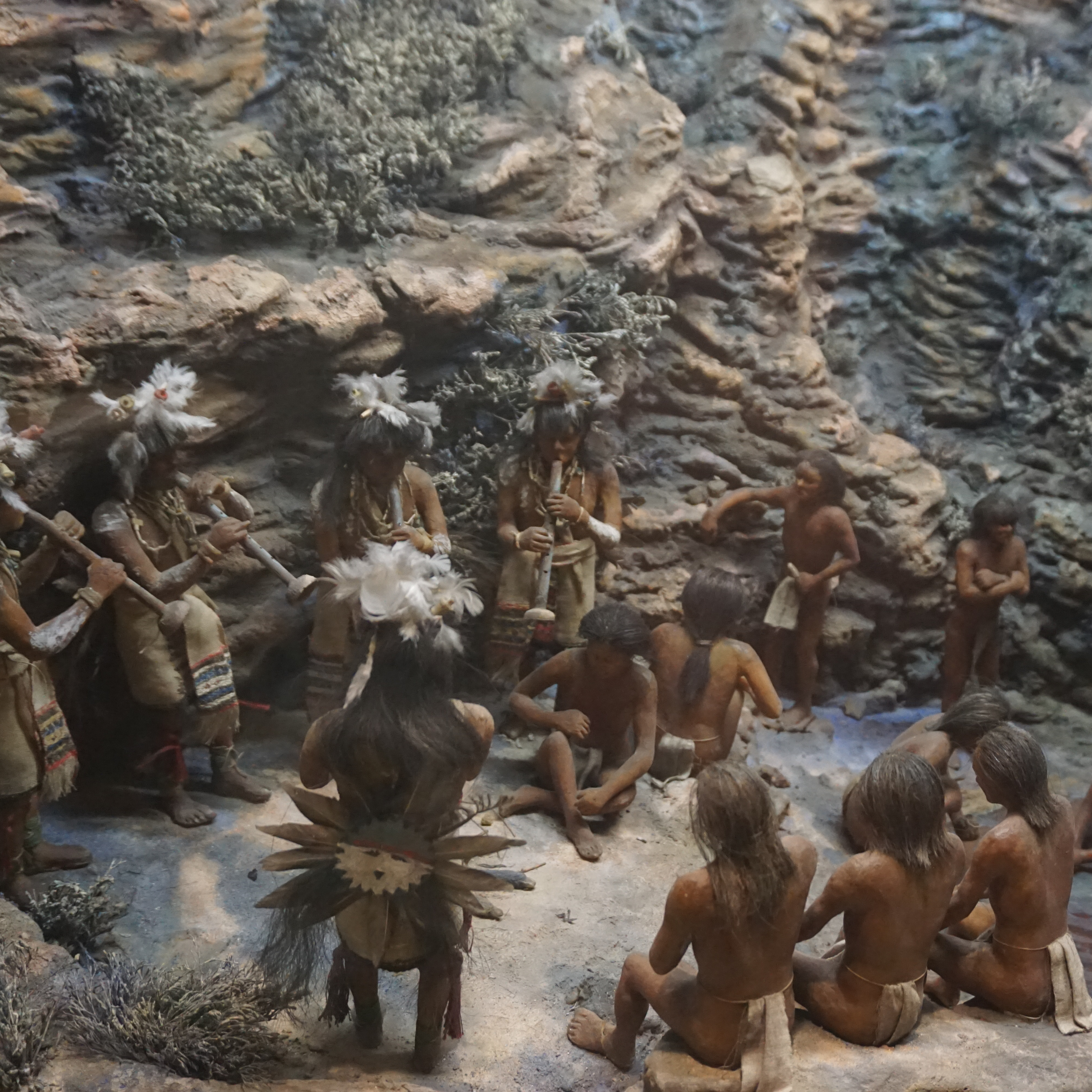
“All dreams spin out from the same web.” Teach Different with attributes to the Hopi Tribe
In this episode, Dan and Steve Fouts explore a quote attributed to the Hopi Tribe stating, “All dreams spin out from the same web.” Using the Teach Different Method, they unpack the claim of the quote, noting that all human dreams and desires originate from a shared web, reflecting our universal connection and common aspirations. They dive into some counterclaims about different dreams from difference which sparks some essential questions on what is a dream and what is a web? Listen to learn how to apply the Teach Different Method and engage in conversations and explore complex ideas.
Chapters:
00:00 – Introduction to the concept of dreams and the web
02:01 – Interpreting the metaphor: Dreams from the same web
04:11 – Personal stories and the web of shared desires
07:28 – The impact of environment and life circumstances on dreams
10:37 – Counterclaims: Different webs, different dreams
12:58 – Universal human needs and the web of human flourishing
14:42 – Personal reflection on dreams and overcoming fears
16:42 – The threat of sameness and the desire for individuality
18:54 – Moments of collective unity in adversity
20:34 – The value of conversation and storytelling in understanding the web
Image source: Michael Barera, CC BY-SA 4.0 , via Wikimedia Commons
Transcript
Steve (00:00)
Welcome to the Teach Different Podcast quote from something that’s attributed to the Hopi tribe, which is a one of the oldest civilizations known on earth and part of the indigenous people in the United States, the Hopi Indians. Here’s what I know about the Hopi Indians, not that much, but they settled in northeastern Arizona. And again, they’ve been around for as long as anyone in recorded history, and they were eventually consumed by the Navajo Nation, which is a larger reservation that includes the Hopi tribe now. And I think there’s maybe 20,000 Hopi Indians left. I might be wrong on that, but they’re quite a part of American history and the quote that we have really reflects the way that they see themselves, I say, in a state of nature, and how you know there’s a blurring of distinction between humans and the natural environment. It’s always a theme you get with Native Americans, which is why I think they have some of the best quotes. We don’t know exactly who said this. And I guess we can’t even really say we know it was from a Hopi tribe or a tribesman, but this is what it’s generally attributed to. And I’m gonna read it a couple of times and then we’ll just get right to it and we’re gonna do the Teach Different Method. I have my brother here, Dan. Here’s the quote: All dreams spin out from the same web. All dreams spin out from the same web. What’s being said here?
Dan (02:03)
This is so metaphorical. Don’t know exactly where to take this. I can just give an interpretation. All dreams spin out of the same web. There’s a claim here, it seems, that I’ll go with just human beings. What we aspire towards, what we long for, comes from the same web. If we think of the web as human desire and longing for things, then what we dream about comes from the same desire. So I think there’s a claim that all of us in the world are more similar than we are different in the sense that we dream in the same direction from the same web. So it’s trying to unify, it’s a unifying message here.
Steve (03:03)
No, no question. You feel that connection. You know, think of the African proverb, I am because you are. It’s the same type of yeah,
Dan (03:12)
The Ubuntu philosophy, yeah.
Steve (03:14)
Ubuntu, yeah, right. Attributed to ubuntu. You know, you just don’t know because Africa is mostly oral tradition. Same thing with Native Americans, though. But this is very non-individualistic. You know, ego is thought of differently with Native Americans is one thing I’ve noticed. And dreams, you think of dreams as being something that is so personal and unique to you because you’re the only one that’s experiencing that. Then you wake up and you just say, hey, I gotta tell someone about my dream, as if no one else was there for it. You got to tell them. But this is saying that dreams, and again, a wider definition of dreams. Your desires, your aspirations, what you want for the world, your personal experiences all come from the same, you said, desire.
Dan (04:11)
Yeah, or longing the nice part about these conversations is when you bring them up with adults or students is many times people will reference a very current personal experience that they just had because it’s front and center in their mind. I just got back from a visitation. One of my former students’ father’s father passed away. She was in my class of 1998, I believe, or 1997. And her father was very well known in the community. And going to this visitation, I saw all these people around honoring this man who had a huge impact on everyone’s life. And I’m thinking of this quote in relationship to that experience I had. All dreams spin out from the same web. If we think of our desire to be remembered as something that we dream that we want, that we desire, it’s something we dream about to be recognized as somebody who had an influence on other people. And I felt that energy of people in this this visitation we felt like one that there was no division between people at this ceremony everyone was one we had the same kind of desires.
Steve (05:39)
His life is what brought you all together. So that’s the dynamic I’m hearing from you: the same web, the same life. Okay, I’m getting you now. All dreams spin out from the same web. Think of changing that and saying something like, all dreams spin out from the same life. There are certain people that inspire other people. And they create dreams in people. They’re the one person that they listened to somebody who no one else got anybody else to listen to them. And they were part of their success. And when they get into life, they want to pay it back. You know, and when someone like that has had that impact on you passes, you know, you want to come in and give your condolences, you know, and you want to let that person know and let the other people know that love the person, what impact they had. But it’s all centered around that life, you know, that gave that inspiration. I mean, it’s beautiful.
Dan (06:48)
So you’re saying the same web was the life of the person who passed?
Steve (06:51)
Yeah, yeah.
Dan (06:53)
Okay.
Steve (06:54)
Doesn’t have to be that.
Dan (06:55)
Yeah.
Steve (06:55)
Was that not the way you were looking at it?
Dan (06:58)
No, it was not a little bit. It’s just different. It depends on like what the same web is. We don’t know. And I guess that’s what makes this quote so interesting. You can substitute so many things for this idea of the same, what the same web is. Okay, well let’s go with that. What’s another I use that visitation as an example where this quote resonated.
Steve (07:26)
Well, I just say: Living a life of struggle, some people have more struggles than others. Some people are born into situations where it’s not fair, you know, it’s not equitable. They’re born into like poverty, let’s say. And you have other people that are born into affluence. When you look at those two lives, understandably, the way they start thinking becomes different. Okay, why? Because they’re so fundamentally different as a person, as a human being, maybe, but it’s probably their situation that’s making their dreams look different. Right? One is gonna just say, My dream is to have a yacht, have my own island. My dad does, you know, and another one might be my dream is to get out of a situation where I’m always reacting and I’m always struggling. I just want peace and tranquility. I don’t even need that much. I just want to not suffer. But this quote I was gonna say dreams spin out of the same web.
Dan (08:38)
Being alive.
Steve (08:39)
The web would have to be, yeah, just the experience of life because our circumstances are different. I mean, I don’t know if I’m backing into a counterclaim here. But if you think about a web, can I switch this up? I’m gonna think about the web as your environment. And I’m gonna argue just for a moment, not argue, but just say, I’m gonna say different dreams emerge from different types of webs. What our environment is. is not because we’re different as people, it’s that we experience different things. That’s where dreams come from as much as internal. I just walked into the counterclaim a little bit.
Dan (09:26)
A little bit. The same web.
Steve (09:31)
I mean, no one’s experienced the exact same thing if you believe that web refers to, you know, your environment. No one’s lived the same life. No one. In fact, everyone has their own web. And they spin their dreams out of it. which is what? A combination of who they are as a person and what they experience. That’s what creates a dream.
Dan (09:57)
Sure. Yeah, if you define web as your own upbringing, then naturally you’re going to have different dreams based on your upbringing and how you were treated and where you grew up and what religion you are and what ethnicity or race you are. If that’s your web, your base, your foundation, the same web. Then your dreams are going to be different. I mean, this kind of a this seems to be a counterclaim here. All dreams spin out of the same web. Well, no, different dreams spin out of different webs because people are from different situations.
Steve (10:37)
We don’t have the same dreams.
Dan (10:39)
And which is okay, so back to the claim here. It makes me want to understand the claim more. They’re saying that there’s things universal about humanity here. And of the same web, but the desire to be recognized, the desire to be loved. If you have a desire, if everyone has a desire on the same web, everybody wants to feel like they’re special in some way and loved and understood. Right. So their dreams flow from that. So some, so one person might want to be an athlete, another might want to do great in business, another might want a teacher. So but they’re all they’re all after the same feeling that is their web. It’s all the dreams are an extension of that deep-seated desire of them. And that’s what’s common. It just looks different.
Steve (11:38)
That’s good. I just used the word happiness that helped clarify it for me. If everybody wants to be happy, completely different things make us happy, but that doesn’t take from a quote like this. You know, at least wanting to be happy comes from the same human need. You know, that it’s like it’s almost like they reduce the Hopi tribe here. If they actually said this, they’re reducing us. Down to something that a common denominator almost. We think we’re all different, but in the end, you know, we’re all kind of pursuing the same thing. That sentiment scares people. Some people. Some people just want to be individuals. They just want to have their own kind of journey, story, overcoming. I want to feel special.
Dan (12:36)
This makes me think of Aristotle and his idea of eudaimonia, and that human, all human beings, because they are human beings, are such that they strive towards a purpose in life, eudaimonia, which he called human flourishing. That because we are alive and because we’re human, we’re all actually en route to the same thing: human flourishing in a, in the perfect world, you know? And in that way, that fits this Aristotelian way of thinking here, that all of our dreams flow from this desire of ours to reach our potential, our telos, in order to flourish. That’s our same web. We’re all kind of hardwired to want to be actualized in some way. This is abstract. This is why I love Native American philosophy. it’s so all-encompassing and universal and beautiful.
Steve (13:52)
Exactly, exactly. It’s metaphysical. I’m blown away by it. I didn’t come up with an experience that speaks to this yet. All I can think about is the one dream that changed my life when I was being chased by someone and I had to face basically my the guy, the the aggressor, and I got cornered and I just had this situation where I thought I was gonna just go, you know, I was gonna die because this person was attacking me. And I ended up just like with my mind overcoming them and doing some crazy things that were just like I couldn’t believe that I was able to do it. And then that person ended up running away from me. And I’m just using this as an example of a dream. That dream impacted me. It continues to. I just talked about it. It happened 25 years ago. the same web, know, if other people, and I know they have, have experienced fear like I did, and other people have hopefully experienced some redemption at some point. And this feeling that you’re overcoming your fears and the power that can give you, you know, that that’s all I got. Like. I I took it literally. I just said dreams.
Dan (15:09)
Yeah, now yeah, in fact, I think the literal interpretation, some of our listeners might be like, I wonder if they’re gonna actually bring the literal interpr, literal interpretation of dreams here. I think you’re spot on. Maybe what they’re they’re saying is all of our dreams that we have at night, some fearful, some happy, some weird, some just crazy, spin from the same web. They come from the fact that we’re all alive, we all experience life in certain ways. And so our dreams are very connected in that way because we’re all experiencing life together. So maybe it is referring to literal dreaming.
Steve (15:56)
Yes. We should have started there, but we got so metaphorical because we’re philosophy majors. We start with the con, we start with the metaphors, then we get back to, yeah, that’s what they were saying.
Dan (16:00)
Yeah. I know. ‘Cause we’re philosophers, right? Yeah, exactly. How many angels can dance on the head of a pin? That’s philosophers, right? No, I’m kidding. I’m kidding.
Steve (16:13)
no, it’s not that bad, but as far as essential questions, we’ve already talked about one, like what is it, what is a web? Okay, what does it mean to say a web? And also, I think what is a dream, because we show there could be different ones. I’m gonna add one in, and it’s this. I’ve always wanted to know this. Why is it so threatening for some people to feel a common destiny? With other people. Why is that threatening just on its own? It seems like that threatens people.
Dan (16:50)
Why is sameness scary for some people? And I think of political polarization now and how divided we are as a country on so many levels.
Steve (17:00)
It goes right into politics.
Dan (17:03)
It goes right into politics and the idea of sameness not existing, that you have to be, you have to create others and join your tribe. We literally talk about joining social media tribes and having these acrimonious, angry exchanges with one another, not recognizing that we’re all part of a common fabric of humanity.
Steve (17:29)
People love to be individuals, unique, different, gang, you know, tribe, something that’s different than another. We love that too. I just asked the question because I just don’t know the answer to it. You know, why do we struggle? What makes people so afraid of having a common destiny?
Dan (17:55)
Yeah.
Steve (17:55)
You know, I guess it’s because you want to just have something that’s your own as well. You know, you don’t want to feel like you’re the same as everybody else. You’re unique. You’re you.
Dan (18:06)
And back to the visitation today, I just felt like there was none of what you’re talking about. No one was in there being individuals. They were all they had a common purpose and everyone’s humanity shines so brightly. It’s unfortunate that death has to evoke that in us, but it does.
Steve (18:28)
Well, you know, you just made me think of a really quick experience. In Quincy, Illinois, 1992, the Mississippi flooded. You remember you and I went, Susan went, our sister, her boyfriend, and then our cousin. We all went to fill sandbags on the Mississippi. In Quincy, Illinois. And that was absolutely one of those experiences where. You’re standing here with people in a very small town in Illinois, just these lines of people that are just picking up sandbags, passing them to other people, digging into the dirt hill or the sand hill, giving it to somebody. And nobody is questioning anything. Like no one cares what your individual, how do I say it? You’re there because of the common reason.
Dan (19:27)
9-11 25th anniversary just concluded. Think of the common humanity that came together in that situation. You know, all dreams spin out from the same web. This is a great quote. And if you’re listening to this and you’re saying, you know, Dan and Steve, they’re really going on different tangents with this, it doesn’t seem to be centered. In a way, this is what happens in conversations with some quotes. They do take you on journeys. And we, I don’t want to speak for you, Steve, but you probably agree. I can say I gauge the success of a conversation by where it takes us sometimes, even if it’s a little bit off what it originally means. People are sharing their stories, people are listening, people are empathizing. They’re learning about each other through face-to-face conversation. So even the difficult quotes like this are beautiful in their own way.
Steve (20:34)
And of course, this doesn’t happen randomly. That’s what this is what the teach different method does, right? There’s four moves. If you’ve heard us before, you know what they are. But anybody first-time listener, it’s claim, counterclaim, essential question, storytelling. Those are the four moves. We just weaved in and out of all those four moves, and it kept us kind of corralled a little bit, even though we wandered a bit. And you know, you need that framework. You need a little bit of constraint to keep the conversation kind of productive.
Dan (21:13)
The conversation method and the framework is kind of like the same web in com in the communication. It’s the same thing that we’re kind of working from. If we wanna connect it to the quote. Yeah.
Steve (21:27)
Yeah. So you could say all good ideas come out of good conversations or like come out of like structured conversations, like whatever. I love it. I love it.
Dan (21:35)
Yeah. And also it’s plural. It’s claims, you know, there’s a lot of claims, there’s a lot of counterclaims, there’s a lot of questions. We treat it like it’s singular, but it really isn’t. Once you get talking, especially in a big group, all of these things are plural, including the stories.
Steve (21:52)
With that, we will leave you for now. Thank you for being part of the Different Podcast. We’ll be back soon.
Dan (22:00)
All right, take care everybody. See you soon.