

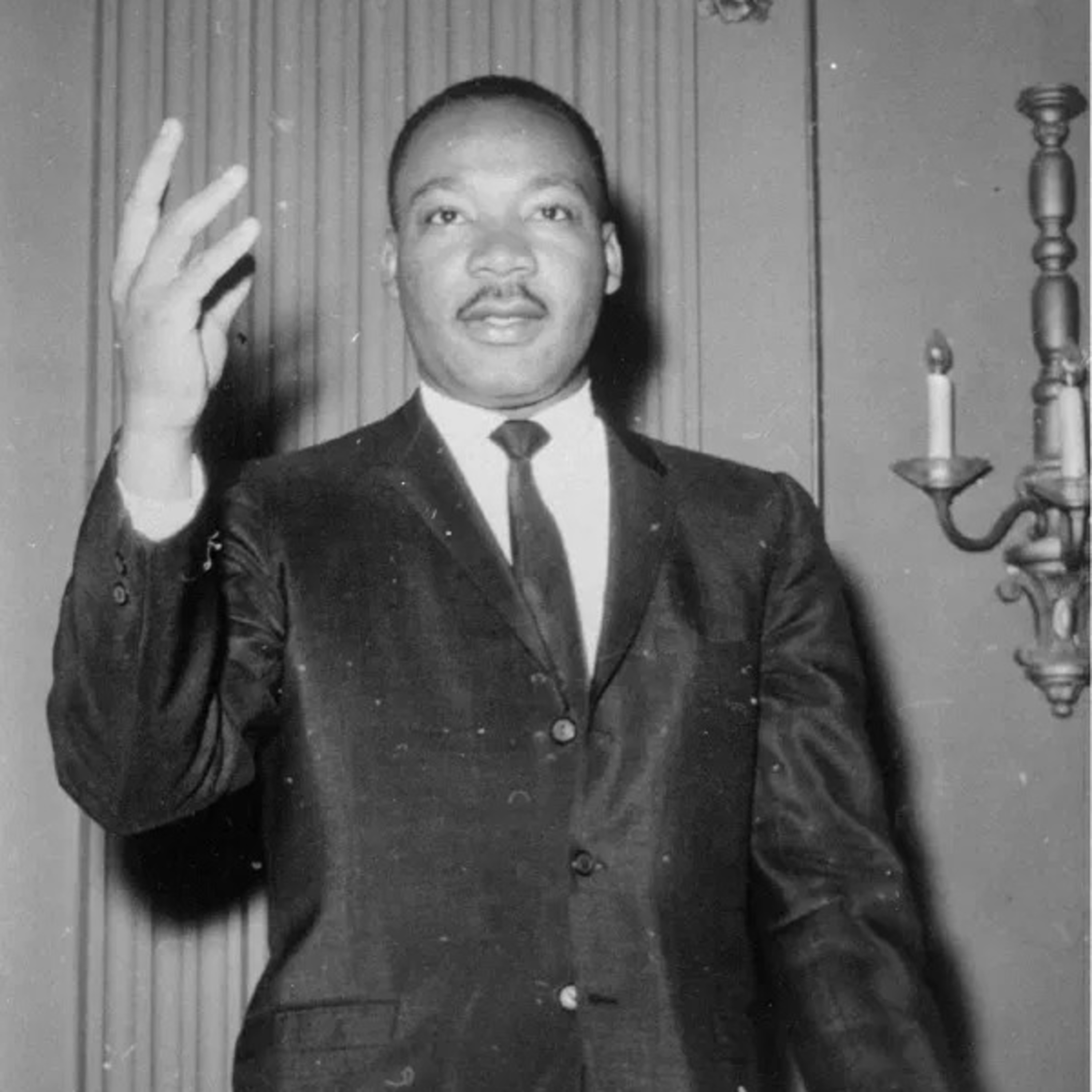
“Returning violence for violence multiplies violence, adding deeper darkness to a night already devoid of stars.” – Teach Different with Martin Luther King Jr.
In this episode of the Teach Different podcast, host Steve and guest Bully discuss the principles of nonviolence inspired by a quote by Martin Luther King Jr: “Returning violence for violence multiplies violence, adding deeper darkness to a night already devoid of stars.” Using the Teach Different Method, they explore the mission of the Institute of Nonviolence in Chicago, Bully’s personal experiences with violence and loss, and the importance of community support. The conversation unpacks the challenges of navigating violence, the impact of personal trauma, and the necessity of positive influences in the community. They also address counterclaims regarding the need for protection in violent situations, emphasizing that nonviolence does not equate to weakness. Lastly, they pose some essential questions for further exploration.
Chapters
00:00 – Introduction to Nonviolence and MLK’s Influence
14:23 – The Institute of Nonviolence: Mission and Impact
25:06 – Exploring MLK’s Quote on Violence
26:10 – Personal Reflections on Violence and Loss
30:59 – The Importance of Community and Positive Influence
40:03 – Counterclaims: Navigating Violence and Protection
Image Source: https://www.georgiaencyclopedia.org/articles/arts-culture/martin-luther-king-jr-1929-1968/martin-luther-king-jr_002/
Transcript
Steve (00:00)
Welcome to the Teach Different podcast. It is, what is it? Early February, Black History Month’s just started. And we’re doing a quote by Martin Luther King Jr. So we’re going to be doing this all month. And we actually have quotes from African-American authors quite a bit. And this one is a really, really good one. It’s obviously got the non-violence theme. And I’ve got a guest that you’ve already heard from Bully from Chicago, who’s a community organizer and activist. He works for the, it’s called the Institute of Non-violence. Correct Bully?
Bully (00:40)
Yes, that’s correct. I’m an outreach, I’m the lead outreach worker for the Institute of Non-violence, the Austin sector, where I was born and raised.
Steve (00:48)
Austin sector, which is for people who don’t know Chicago, Austin is on the West side. It’s far enough West where it’s really bumping up against Oak Park. So this is a, an Institute that’s been there about, I want to say 10 years or so. I’m going to have Bully talk about it a little bit, but it’s appropriate because this quote is from Martin Luther King Jr. And Martin Luther King Jr. is part of the inspiration and the mission of the Institute is my understanding. So we’ll hear more about the Institute and for anyone else who’s here for the first time, let me just give you the cursory description of how this works. Teach Different Method. We’re going to use this conversation method where we’ve got a quote and I’ll read it a couple of times. And then we’re going to go over the claim. The quote is making. We’re going to go into some counterclaims to the quote. So we’re going to be pushing up against it. Even though it’s Martin Luther King Jr. We’re going to be challenging his ideas like we would challenge anybody’s ideas ‘cause it’s going to strengthen belief systems when you challenge your ideas. Right. And that’s the point. We’re going to have some essential questions too, that are going to be coming out of this. So that’s how we roll here. We’ll, I’ll read the quote a couple of times and then Bully, maybe you can talk a little bit about the Institute before you weigh in on the quote for the first time.
Bully (02:24)
Okay, for sure, yeah. Institute of Nonviolence, for Nonviolence Chicago was founded by Teny Gross in 2016. It’s actually our 10 year anniversary. We work out of Chicago. We have the Department of Seniors, West Garfield, Back of the Yards, Brighton Park, and of course Austin which had the highest murder rate. It was once called the Murder Capital of Chicago, Austin. Steve’s familiar with that, used to teach there when he started. When Teny came from the East Coast, he did violence prevention in Rhode Island, Providence. Then he did nonviolence, successful violence prevention in Boston, Massachusetts. He was asked to come to Chicago because around 2016, I was still in prison myself, the violence had rose like tremendously, especially in Austin, where we had the highest number of murders in years. So he wanted to come where the heart of the murder capital was at. So Austin was the original site for the Institute for Nonviolence. Then we expanded to West Garfield, Back of the Yards and now Brighton Park. The Institute for Nonviolence Chicago is a violence prevention where we try to reduce violence, where we offer like reentry for people coming home, case management, services. Like we are first responders on the scene, because anybody know when somebody gets shot, the chance of retaliation is so high. So we try to meet them while we there. We actually worked through COVID and all. We are like first responders. We first on the scene. We work with the Chicago Police Department. We get the CPICS in when there’s a shooting. And then we roll to the scene, try to check on the people, check on the victims, check the temperature. And if we got relationships, try to calm people down, try to take their minds off things. We first at the hospital, try to support the family, if they need any services and wrap our arms around them and just give them love and care. Most of the people on the team are from, we pretty much got every neighborhood in Austin covered, every neighborhood in West Garfield covered. We got at least one person from the team there that has a relationship in that neighborhood. Cause you know, Austin is big and it’s like 20 different communities in his own with 20 different cultures, 20 different structures. So we got guys with influence from the neighborhood and their communities. So therefore if something happened in one of the guys’ neighborhood, they’re responsible for the mediation. They’re responsible for doing the data, only they’re responsible for responding. We are responsible as a team though, because sometimes it can be hostile. We got victim service out, because they’re there to support the family any way they need, whether they need somewhere to go, if we need to move the family away, if they need assistance with front rule, God forbid if someone pass away. But our main goal is trying to stop retaliation. So retaliation happens so fast when somebody gets shot on the West Side of, well, anywhere really, when it’s gang related or street violence. The first thing comes to people, manage retaliation. So us being on the scene, we try to like stop it or whatever. We’ve been doing this work for, this is our 10 year anniversary now. You know, Chicago has had its lowest number of murders and shootings since 1965 or something like that. We’ve been boots to the ground, CVI.
Steve (05:28)
Wow.
Bully (05:31)
It’s grown so big where, along with the, thanks to the work of Teny bringing the Institute to Chicago, we have generated over $2 billion in violence prevention money. Now violence prevention is a big part of public safety. We have employed over 2,000 people from the community that was in the community, that was part of the struggle, part of the stuff going on. Over 2,000 people from the community have been employed through all the various organizations and our partner organizations throughout the city.
Steve (05:43)
Yeah. Is that just in Chicago or is that the entire, my goodness.
Bully (06:03)
That’s in Chicago. That’s in Chicago. Teny, man, Teny good at what he do. He is a very passionate man. And we have brought over $2 billion in resources with our stipend programs, with the employees they hire, with the trades and jobs. I mean, we got GED programs. We got workforce development programs. We got CBI. That’s carbon behavior. And the CBI works. I use CBI myself unless you identify when you in the room, before you get to it. A lot of times before we get to it.
Steve (06:31)
Wait, what’s CBI? Bully, what’s CBI?
Bully (06:35)
CBI is like another form of therapy. CBI calls it alternate behavior, you know? It’s like it helps you think more. And then when you use your CBI, because a lot of times get the red and once we in red, we out of control. So it’s like, now you get to notify, like for me, you get to notify before you in gray. We start my state our day in green, we might go to yellow, then we might get to orange. When you can identify like when you in orange, because once you get to red, it’s really hard to calm you down when you furious and you upset you, your mind made up. So it’s a good thing to identify, you know what saying? We have wellness, where people have people to come talk to, we have people with houses. I mean, it’s awesome, like, when I first signed up, I was from the street. The Institute came looking for me, because like I said, the Institute looks for people of authority or people who are influencing the communities, and I had the most influence in my community. I said, I was, I thought I was gonna be driving. I thought I was gonna be doing, it’s crazy. I was gonna be doing the work. I thought I was, my outreach worker, Sam Castro, who I’m gonna introduce you to, he the director of strategy now. He was an outreach worker back then. He used to come talk to me, bend on me. I didn’t know what he was doing until I got the job. He was being an outreach worker. I thought he was just being a friend, but once I got in, I see his stuff work. So when I got my driver’s licence he like, I’m gonna get you an interview at the job. You can drive the pot today. We had a ready program where we was partnered with Heartland Alliance. You heard of Heartland Alliance? It was a ready program where they go to CBI in the morning and then they go out to work through the day. It was like a one year program where they complete the program, then we send them off to another job. So I’m thinking I’m just gonna be driving people to work. It’s so funny. So I’m like, yeah, I can do that. Make sure you match the money. ‘Cause I’m on the block doing my thing. I’m still in it. I never, I never imagine me being up here.
Steve (08:19)
Did you just get out? Bully, did you just get out like when this was happening? So you were just like, hey, any job, I’m good. Like, okay.
Bully (08:24)
Yeah, I had just got out of prison. Yes, I had just got out of prison. Yeah, that’s what I said to be funny, because one of my fellow friends introduced him to me, and he was like, he was like, one of good brothers, wanted to meet you, Sam Castro I’m like, he Puerto Rican. He like, yeah, he’s one of the guys, he Puerto Rican. So the first thing I’m thinking when I think Latino, I’m thinking cartel, I’m thinking like, it’s a plug. I’m trying to get back to it. I just did five and a half years in joint. I got kids to take care of. UPS wouldn’t even hire me. They sent me a 10 page packet of why they couldn’t hire me. I went on a tour, orientation, everything. Thought I had a job and UPS sent me. That was the most disrespectful right there I ever felt in my life. For y’all to send me a 10 page…
Steve (09:02)
Well, at least they send something. Some people don’t send anything.
Bully (09:05)
But to send a 10 page packet in the mail just to tell me you can’t have me because I was a felon, y’all could have kept that. A simple text or a phone call would have sufficed you feel me?
Steve (09:12)
Okay. Well, that was the first thing, Bully. But the first thing I noticed when I visited the website was the board and the other people that are, have leadership roles in there. Some of them are former, you know, convicts, you know, 25 years.
Bully (09:31)
Yeah, a lot of them, a lot of them we do date. And that’s one thing about the Institute. They’ll hire in-house first before they hire out-house. Our development is everything. I get my bachelors in May, they paying for half of my schooling. We done had several people from the Institute get their bachelors already. And most people, like Sam, he was an outreach worker. He developed a supervisor, program manager, now he the director of strategy. My director of outreach is Makenya Harden, he was a regular outreach worker, a lead supervisor program, and we all work our way up. You know what I’m saying? Like right now I’m the head of a trauma education program that we put together from the jump. And I’m the lead on that too, as well, what we do. We partnered with Rush Hospital, where we’re gonna put a trauma education program out in the community for the people, because a lot of people in the community don’t even know they dealing with trauma or how to deal with trauma. If you know what I’m saying?
Steve (10:23)
Amazing, it’s great, it’s great. And you said that before. I love it, beautiful.
Bully (10:23)
I just fell in love with the work. I fell in love with the work. I get paid to love damn, it’s full circle now, because now I’m on here with you and Jarvis put me on him. But if I didn’t have the CBI and the training and the knowledge that the Institute taught me and how to control myself, me Jarvis could have very well been enemies. Because we bumped hands at first, but the training and the CBI knew I knew to talk to him. Then rather than have problems with my old self, it could have went some whole other way. So everything just come a full circle for me.
Steve (10:47)
Yeah Well, really looking, I’m definitely going to try connect with Sam on Friday. And if it’s not Friday, it’ll be soon. Cause I want to learn about different partnerships. And I’ll just put this in your mind right now, Bully, cause it’s not going to surprise you. When I talk to him, I want to talk to him about thinking about a partnership of some type or like working together with Teach Different and the Institute because one thing that Teach Different could help with, whether it’s this podcast or the work we do with students and teachers, is we can platform some of the wisdom and the voices that are coming from this organization in these neighborhoods because a lot of the world doesn’t hear it. They hear the negativity. They hear the stereotypes. They don’t hear about these types of positive influences that are working against the negative. And I think the more that people hear it, the more they’re gonna realize that the Institute can play a role in today’s society much larger than just Austin neighborhood is what I believe. We are in a society that is experiencing violence in places that it’s not used to and you need people that are conditioned to know what to, how to act, you know, and how to not, like you said, go red so quickly. So anyway, I could go on about this, but I can’t wait to meet him.
Bully (12:21)
Mm-hmm. Yeah. Yeah. Yeah. We go, we go, we go. We gonna have so many conversations. I can just see this get bigger and bigger with your passion. I see you got the passion with my passion. I drive, we can take this to the next level. That’s why I wanted to introduce you, see my professionalism stepped up. ‘Cause it’s like, I know the proper channels, the proper channels. That’s why I point you in the direction. Cause I already kind of figured when you said you wanted to meet what you want to do. So I put you with the right people and that’s the direct strategy.
Steve (12:40)
I love it. I love it. And for now, let’s. And I’ve learned that you take this stuff methodically, step by step. You don’t have to get ahead of your skis. You just have to just, and I’m looking forward to it. I’m at the right time, the right place to do this. So, all right. Are we at the right time and the right place to talk MLK Jr.?
Bully (13:08)
Yes. Yes. Yes, that’s our slogan. That’s like the chief of the Institute for Nonviolence. We go off the six principles of nonviolence. We got our literature off of him. Everything we really do is based on MLK teaching and work.
Steve (13:30)
I love it. Yeah, I saw it all over the website. So, and it’s again, it’s Black History Month. So we’re doing it. I’m going to read the quote twice. Let’s just launch right in. You tell me what you think about it. We’ll do the claim first. And then you know what? Whatever. Bully, you’ve done this enough. You know the drill. If you want to flip to the counterclaim whenever it feels natural, go ahead. But let’s, let’s just, you know, talk about a quote here. Here it is. This is Martin Luther King Jr. Returning violence for violence multiplies violence, adding deeper darkness to a night already devoid of stars. Returning violence for violence multiplies violence, adding deeper darkness to a night already devoid of stars. What’s this saying?
Bully (14:22)
Man, this one hit me so deep because it almost brought tears to my eyes because you don’t understand. Being a violence prevention worker, I had to change some of my ways. And me doing this work, I’ve been doing this work for like eight years now. I have lost so many friends to gun violence. Friends that I grew up with. Friends that I see every day. Friends that I call brothers. I lost my best friend two years ago. Like somebody I was with every day, someone I called a brother. And it’s so hard for me sometimes when I was they protector, I was the leader, I was the one who go get people. And I’m the one talking about turning the other cheek now. And I had to sit and watch my people die. And it hurt me and I had to figure it out because I couldn’t retaliate. I wanted to retaliate. Now it was rough when I first started because I had conversation with Sam and all them. Sometimes I would have to step away from the work because it was too close and personal. But as I got more deeper and talk to myself and I educated myself more on it. It’s like two wrongs don’t make it right. It’s simple as that. It’s like me killing, me killing, my homie killer, that’s just some street bullshit and I’m sorry for cussing. That’s not gonna bring my homie back. I might feel good like, I got them people for you, but I’m still not gonna see my homie back tomorrow. And then I had to justify, I had to talk to myself because I’d be mad at myself like. Man, they killed Shayk. Man, you ain’t finna do nothing. Like, and I been thinking, like, he mad at me, like, you bitch ass, sorry, my language like, you didn’t do nothing, they killed me, I battled with this, it brought tears to my eyes brother, because our battle is a strong battle, because I’m coming from a culture. You kill one of them, I’m killing three of you. This is how I’m trained and manipulated. I been in that game since I was nine years old, so I got this way of thinking. So it’s got 35 years of bullshit thinking in my head, fighting these eight years of logically thinking. So it’s like, it’s a fight with me every day. But now I came to the reason, like, I was just able to pay for his son’s school. I was just able to get his son the game he want for school. I can get revenge for my homie and there can be some street bullshit, because I got back, I got back for mine. But my homie still dead. But if I’m staying out of prison and I’m thriving, I’m doing better for my homie. And I’m pushing the peace and I’m getting the message out there, you feel me? Like whereas, I get sensitive when you talk about this type of stuff bro. I lost so many friends bro. Like in the streets bro. Like, it is like, the work I’m doing now is to make nobody else lose friends like me is more important. It’s bigger than me and my personal revenge. And if I go to jail or I die here. I can’t do nothing for my homie kids. I can’t do nothing for my homie’s family. I can’t do nothing for my friend’s family. So at the end of the day I’m only making it worse. Cause when I get revenge I’m hurting somebody else’s family too. Somebody else is be crying like me too. Another family is gonna be hanging in a tree and never stop and it continue. So at some point some people gotta say enough is enough. Cause a loss is still a loss no matter how you put it. I can go kill 300 people my friend not gonna be here tomorrow brother.
Steve (17:30)
Yeah.Yeah, you know
Bully (17:36)
So I’m only making, like he said, I’m only making a dark night that’s darker, more darker by making more people cry like me. And I feel like I can help my brothers that’s gone more by being successful in life and making something out of my life and making them proud and bring attention to what’s going on out here. Nobody else did this. I tell you, I lost my best friend, bro. He the first person who came and got me when I got out of jail, bro. Like he the first person who took me shopping, like, but I’m able to be here for his kids. I ain’t in jail. I ain’t dead. I’m able to be here for my kids. And I’m shooting with his kids. Some puss, they look up to me. If I out here shooting people, now his kids gonna be out shooting people. But his son, see, oh yeah, my uncle, my uncle doing this. He doing that and they know they still got somebody. So I feel like I’m doing my better justice doing that. If you can understand where I’m coming from, for real. That’s real man, it’s real. I fight demons bro, it’s real. And it was hard for me at first because I was one of them ones. And then I felt like at first I felt like I was letting my people down because it was like when somebody mess with my people I was there protecting them. They come get Bully, they’d come get me when somebody mess with them so now got to, somebody got to kill them and I got to mediate and squash this? Man, it was hard bro, it was hard. Sam, I love Sam, bro. I tell you, man. They’ll come, and I ain’t trying to hear that shit. I just had to step away from my job at times, because it got so close and personal. And then me working in my community, I’m working in my own community, it’s still close and personal, because now there are babies out here, but these are all my friends’ kids. These are all babies I knew since they was little. I had died, I going to jail, and I’m watching them throw their life away. The most thing it’s about is revenge. Because when somebody, when you kill somebody, somebody feel like somebody else got to die and it just makes it darker and darker and darker. Martin Luther King was really ahead of his time, man. For real.
Steve (19:32)
Yeah. Yeah. And, and thanks for sharing that stuff. Like I don’t, I know it’s like just natural at some point, like you just gotta, but I really like, I’m a little humbled by it. And the one I just picked out one thing that you said, about how at a certain point you realize that, if you’re going after the revenge and you’re going to try to return violence with violence, in the end, someone else is going to be crying.
Bully (20:13)
Never end this cycle, man. Somebody else did something.
Steve (20:13)
You know, it may not be you. It’s going to be someone else and it’s going to be someone else’s family member who didn’t do anything. They’re going to lose somebody that they love. Like the minute you can get on that plane where it’s just human beings that are suffering from this, that aren’t part of the spat. I don’t know. It’s a–
Bully (20:26)
Mm. But I just took the positive out of it. The more I’m here and not out there, the more I can make his name live on. The more I can make him remember him and I can make him proud. I can say I’m here and all his kids, they can call my friends’ kids. They can call me. Then I help their kids get jobs with the institute. I get them in programming. I just put four of my little guys that was out there. The one that thought they started them in workforce development this week. You know what saying? Then they like it, they just tell them, a lot of them don’t know no better. All they see is on the internet, rap like these rappers and kill and kill. That’s how you get known. So they said, when you show them another part of life, you can have all the cars, all the grills, all the fame and all that. You don’t have to kill nobody, rob nobody, or shoot nobody. You can go to work and it. You can start your own business and do it. It was crazy. I was doing this paper for college earlier and I was thinking like, I done asked so many of these young guys when I been on them, what you want to be? And they don’t have no clue, be like, you tell me what I want to be like, ‘cause they don’t know better. ‘Cause it’s like, they can’t go outside like, we can go outside, Steve. Our parents was okay with us letting us, how you think you would have been this far if your parents just kept you in the house all the time? You wouldn’t even be culturally aware of what’s going on in the community. But you got out and saw the world like, our parents, can just go outside, be in that now. You can’t do that now, it’s too dangerous. You can’t just tell your kids to go outside, be in the house and now and they missing out on the culture like, like, like. I had friends that worked on bikes and stuff, then they end up working on cars, then they end up working on beer. You never know what your passion is, like, because you don’t get a chance to see the world and see what you like and what you good at and see different things. I seen this thing, they played it, they played it, they played it, I was at a MLK event we had. I was, and then they played the guy, he a gardener, now he a farmer, he a black farmer from Greenie Green. And they say, how did you get into farming? And he like, just one day I was outside, we was just in the projects and I just seen some white people down the street behind the block and they was like growing stuff and fruit and stuff. So I just went and asked him like, what y’all doing or whatever. And he like, they told me and stuff and then he got into it. And now he’s one of the biggest farmers in the world and now he got a program where he’s getting young people to farm. And he a black boy from Cabrini Green. He’s a real farmer. They grow oranges, tomatoes, peppers. It’s like, somebody from Cabrini Green, come up, farm. But he was able to go out and explore the world and find his passion.
Steve (22:45)
It’s cause he was outside.
Bully (22:51)
God, sent my passion in me.
Steve (22:51)
You know, another thing, another thing Bully about like what’s happening with like with the phones and just everybody having to stay inside. You’re not getting socialized. You know, you’re not, you’re not like confronting a little bit of uncomfortableness with someone you don’t know. What am I going to say? You’re just at home and you’re not having to face any of that.
Bully (23:04)
Yes, you-
Steve (23:16)
And it just, it stunts you. You know what I’m saying? It makes it harder when it shouldn’t be hard.
Bully (23:21)
Yes, because it’s like, at me, look at me, I got spread out, I didn’t hide. What’d I do? I was right back on the block. But I got this job, was still out there. I was on the block. I was trying to get heroin and cocaine from my outreach worker. I thought he was a plug because he was Latino. I thought he was a cartel. But he just played, he worked relationship with me and it was like crazy. Like, none of this is me. This is the out of body that experienced me. I was the most violent and the most person you ever meet. Like, my best friend would have died, the news would have heard about 10 people dying. You understand? But it’s like. This was God. God took the wheel with this. God brought me here. But me fam, I told when I was going through the trainers, Benny Lee, he an old gamer. He got a lot of documentaries out. You probably heard of him. He one of the original vice lords and like he got a lot of documentary stuff. He trained, he was training us. And then he was saying like the non-violence, the Martin Luther King, somebody hit you, turn the other cheek, crazy. And I’m thinking to myself, who the fuck, this ain’t for me. And then I told her, I asked Lisa what the offer was. And it was the money that drew me and she gave me the offer. I said, you know what, I can be non-violent. Cause at first I wasn’t even gonna do it. But she gave me a job, but she told me I had a salary. I never had a job with a salary before. Well, my pay was guaranteed. got 401k, dental, medical, all this for my kids. And I’m like, you know what? I can turn the other cheek. So I wasn’t even really in it. I was just in it for the money and the benefits and fell in love with the work, found my life calling. This is what I’m gonna do forever. was just like, and I just keep getting big. Like I’m building relationships. And I told y’all I’m starting a whole trauma education program. with Rush Hospital for my community. A lot of us, like, like it’d be crazy. We’d be at work, like, and it’d be a shooting. And like all the people from the hood of us, we’d just be knowing everybody going by the day. But like all the people from, not in the community, like the white people and all other people, they’d be, y’all, they’d be dramatic Like what’s going on? And they’d be like, man, they’d be worried. They checking on us. Y’all all right? Y’all all right? can be like, I will say, check, y’all need to talk. We look like normal. And they say that’s not okay.
Steve (24:49)
That’s right. That’s right.
Bully (25:16)
It’s not okay for somebody to get shot right there and you just feel like just going on about your day like nothing happened. But in our head, that’s what we used to, it’s just okay. But to them, they ain’t experienced that. They come from the suburbs, they like, this is crazy.
Steve (25:26)
You know what? Okay, can I, let me go with this a little bit before we get into the counterclaim. I want to, I don’t know where this idea is going. You ever start talking and you don’t know where it’s going. I’m going to start something.
Bully (25:39)
Yeah, we just babbin’ off of it,
Steve (25:42)
This whole thing about you being conditioned to this violence, right? If you hear someone get shot, they get shot, you’re like, all right, well, what am I doing here? I gotta go along with my day here. It doesn’t really affect you the way it affects people that aren’t conditioned to it. So just follow this logic here. I don’t… I’m looking at America, okay? This country that is becoming more unstable and violent in places that people are not used to it, Bully. It’s new for them. Like, know, the Minneapolis, the two people that were shot. Minneapolis is a very primarily, you know, white, These are white neighborhoods, I guess is a way to say it.
Bully (26:37)
I know my sisters live up
Steve (26:38)
but it’s a, my point being that this conditioning of like your life and people that have experienced the types of things you have, think personal opinion, I think that there are some competencies and some skills and some abilities that you have developed and people have developed who have to raise themselves in this mess that are really, really needed. And when I say needed, I’m really referring to people that know how to remain calm during chaos and know how to navigate a situation and don’t go and lose their minds when the stuff starts getting real. I’m saying that there’s an ability that you have that you probably don’t even think of it as an ability. You just think of it as what you’re used to. But the more chaotic the world gets, the more people we’re gonna need like Bully. Like it was sense, people who have had to deal with the smoke, but they have sense. They have another way to approach a situation that could go really bad. So anyway, that’s where I’m going with it. It’s a… It’s a skillset and a competency. It’s like your degree that you got that you didn’t get in a college. You grew up. And now you’re just catching up with the college degree, but you’re already a doctorate.
Bully (28:30)
Right, that’s what, that’s, yes. Yeah. Yeah, then it’s like, it’s crazy. Like, I spoke at our MLK event last year. I was on that with doctors, people with master’s degrees, authors and that. And I was on my panel and I stole the show. Like everybody, like all the funders was there. All the rich people was there. It was like, they take me out to the speakers and I’m in the room with people with master’s degrees. Like I got a good friend, Dr. Sal, he the head, they brought to Chicago, he the head of the trauma unit in. They brought them here to USC Medicine. I have friends, doctors, business, and meeting here, and I can sit in the room and talk to them and hold my own. And I did the panel last year, because we do an MLK panel every year, and I stole a show, all the funds, all the effects. Everybody wanted to talk to me, how I talk. It was just like, they was like, man, you been through that. And I hold my own in any room, just off of, and Tinney always say that. He say, you got a street degree.
Steve (29:29)
You gotta speak. Hey, I mean.
Bully (29:31)
You got a master in the street.
Steve (29:34)
But here I got a way actually to get into the counterclaim so we can wrap it up because I’m going to start with a question. I’m going to start with an essential question for you. We went over the problems with returning violence with violence and how many people get hurt in it and how it, you know, it just stops people from becoming everything they could become. And it’s tragic, right? So my question is this, sometimes when violence is being perpetrated, on you or maybe even on someone you love and you know is your friend. you don’t do something… going to continue. All right. Think of like, no pun intended, a bully in school who is always testing. They’re always pushing limits. They’re, they’re using violence as intimidation and they want to get to see who you are. And if you keep kind of slinking back, turn the other cheek, what it ends up doing is sending a message that says, You can keep doing this to me. I’m just a punk. I can’t defend myself. So my question is, how do how do you manage those situations? Is there a way to respond that’s… I’ll stop. How do you manage that?
Bully (30:52)
Mmm. That’s the thing I was battling with when I first got in the work, because people was doing things that I knew they wouldn’t have been doing if they knew I was around and active. That’s what was killing me the worst. People was killing and doing stuff to my friends, and they know I’ll Bully doing violence prevention, he doing this. But when I was out there acting, people wouldn’t even come through there. So that’s what the battle was. That’s the hardest battle I had to do. So I had to let my faith deal with it. I had to let my faith deal with it and I had to just protect my friends at all costs. The people I love because I couldn’t do it with violence and right now because it’d be everything I’ve been. So I see them out there, why y’all out here? Or I’ll be like, y’all got something on y’all? Y’all protecting y’allself? I just made sure my friends was okay. I was like, don’t hang out here. I come get them from over there. I just try to like, if I see them hanging out, I go hang out with me and all my people. Ain’t nobody gonna do nothing. All these green shirts and stuff out here. I had to find other ways to do it and I just felt like and I truly believe like when you do the devil’s work God gonna come get you eventually I just got to spare my people out where they don’t start doing this devil’s work So I had to find out what kind of ways to counter the violence I get my people from out there for make my people go in the house make sure my people checking on themselves cuz I got been on why you out here or what you doing out here that’s the only way I could counter it cuz I didn’t want to do the devil and slowly for sure the people didn’t see them out there they killed to any The people that was doing the killing, they just got to killing anybody and they end up going to jail for a long time for senseless murders on innocent people for the simple fact of just doing it just because they think they can do it. I’m a firm believer in God. I believe the life I’m living now, I had no control of this. I had some decisions I played a part. You seen Tom Brady, one of my favorite athletes, and I follow him like my whole career, that’s how I get back. He motivates me and I listen to him a lot and he say like, everybody gotta make like 12 decisions a day. Not like little simple stuff like I’m finna wear this is with that. But everybody has to make 10 real decisions a day that’s gonna impact your life. And the smart people will normally get eight or 10 of them decisions right a day. know what saying? So it’s like, how could I stop my people from getting hurt? But I can’t go hurt nobody with whatever I’m doing. So my thing was to protect them and you got to have, and with everything you have to have faith. You have to have, without faith, is nothing. That’s why I.
Steve (33:31)
Okay, I got it. I got what you just said. Here’s your counterclaim. The claim, know, returning violence for violence multiplies violence. And we were saying, yeah, that does create all these types of problems and all that. But you can put your energy toward protecting, because that’s different than violence. But it might involve a gun. You know, it might involve
Bully (33:34)
Yeah. Mm-hmm. Yes. my self-defense, now protect yourself. Yes, yes.
Steve (34:01)
Okay, so this is subtle Bully, but it’s important because if you can ⁓ get someone to be afraid of you, That stops the violence. And then if you don’t come back at him, there’s no violence happening there. Violence is squashed
Bully (34:17)
Yep. They won’t have to come back. That’s how you do it, no sliding. And that’s what we do. Most of the mediations we did were major groups. It all started with a no-sliding agreement. Like we had a gang-related shit with this group. We done stopped major wars. I’m talking about major gang wars that been going on for years at the Institute. We got over 40 active mediations right now, peace agreements in Austin. You know what I’m saying? And we came with a no-slide agreement. Like, y’all don’t slide over there, they won’t slide over there. Everybody has a right to protect yourself.
Steve (34:26)
There you go. That’s, I got you.
Bully (34:52)
Because at the end of the day, the judge, the police, the president, Donald Trump, at the end of the day, we all answer to God. And I’m a firm believer that I’m the perfect person that I lived this long in the streets. I’ve been in the streets since I was nine. I’m 43 years old. I have 12 kids. I’ve been shot and I’ve been in prison. I’ve got Colbert guns. I’ve been shot. I have did it all. And my experience in the streets, whenever somebody came messing with us and I did what I had to do. I made it home. Whenever I was out just doing some bullshit I didn’t have no business doing, I went to prison. So I’m a firm believer in only one judge and that’s God and I believe firmly because I wouldn’t be here today if it weren’t for him because I didn’t ask for none of this. I ain’t think none of this would ever happen. I never think I’d be in a situation where I’m out. He took the wheel and now I’m driving.
Steve (35:44)
Protection. There’s the counterclaim. Protection. can have your dignity and your respect. Just because you’re nonviolent doesn’t mean that you’re weak.
Bully (35:57)
Nothing, don’t let nobody do nothing to me, yes exactly. There are a lot of times, there are people you rock with, people like when it’s easy, they all just go shoot at them every day. But they come shoot and you shoot back. But I’m like, I ain’t finna be too quick to do that. But yeah.
Steve (36:00)
Billy this – Yeah, that’s the catch up. You get caught up so quickly.
Bully (36:15)
Yes, the time goes so fast when we talking man. We got a lot of work to do.
Steve (36:21)
And that’s it for the Teach Different podcast. You got some real life wisdom here Bully. And I’m just, I’m excited to have, you know, another chance to talk, Bully, and thanks for just being open and kind of vulnerable. You know, it’s not easy. It just kind of happens sometimes.
Bully (36:24)
For sure. It’s just real to me and it just hit me like that. Because I dealt with it, it’s a struggle. It’s not just easy to just up and say I changed my life. I’m just done. And plus, I’ve done stuff to people too. They don’t just let it go where I just walk with it. They don’t care because I’m nonviolent or CPI. If they see me, they still might want to do something to me. So you got to look at it from all lenses. Yeah, for sure.
Steve (36:45)
Yeah, yeah. No. Right, well there’s the protection. Yeah. We’ll do it again soon. Take care.