
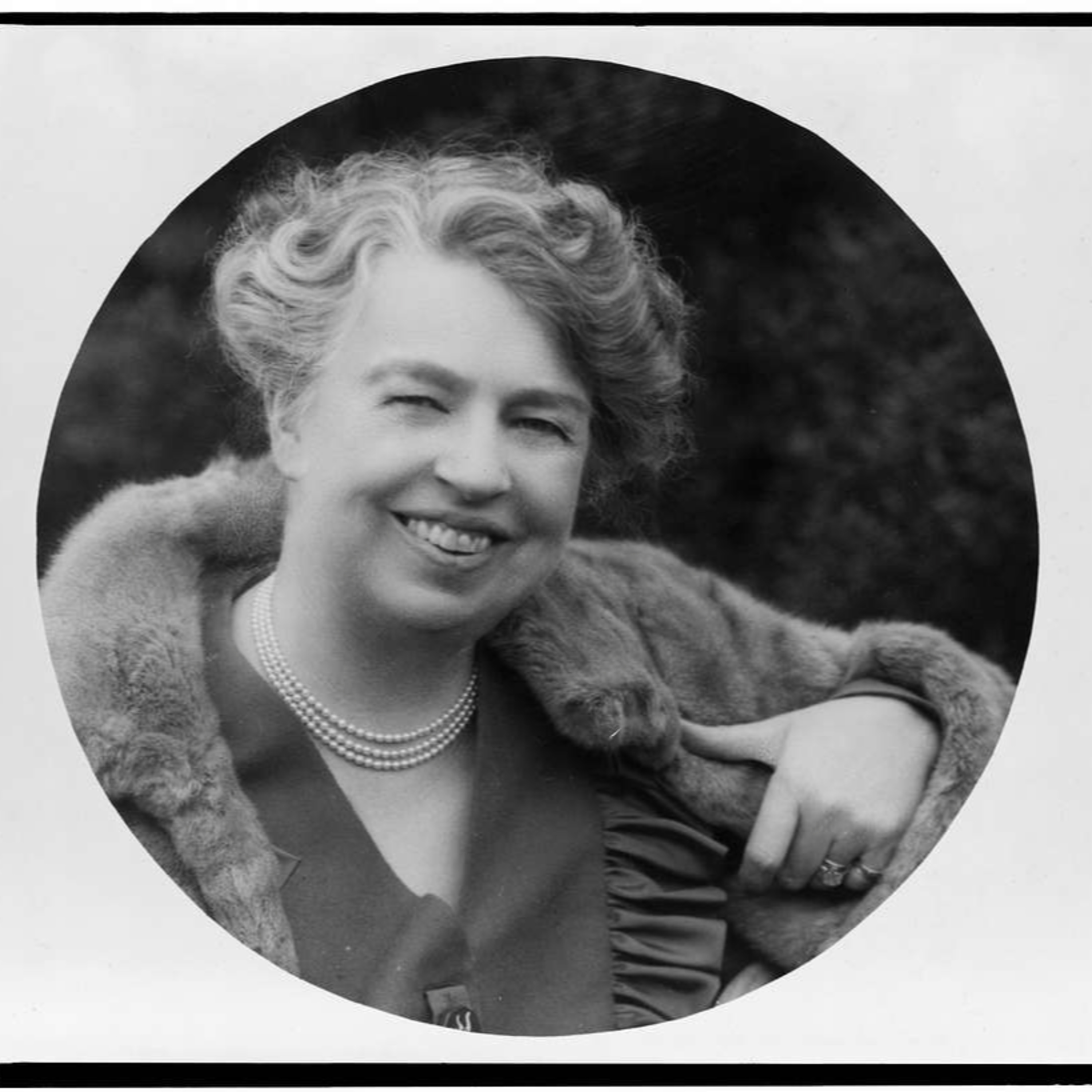
“Justice cannot be for one side alone, but must be for both.” Teach Different with Eleanor Roosevelt
This episode explores Eleanor Roosevelt’s profound quote: “Justice cannot be for one side alone, but must be for both.” Using the Teach Different Method, Dan and Steve Fouts unpack the claims, counterclaims, and essential questions presented by the quote. This discussion investigates the meaning of justice, balance, and shared understanding in various contexts.
Chapters:
00:00 – Exploring Justice: An Introduction
02:35 – Eleanor Roosevelt’s Perspective on Justice
05:42 – The Balance of Justice: Examples and Implications
08:42 – Counterclaims and the Complexity of Justice
11:49 – The Role of Conflict in Achieving Justice
14:26 – Negotiation and Reconciliation in Justice
17:24 – Conclusion: The Pursuit of Justice for All
Image Source: https://itoldya420.getarchive.net/amp/media/eleanor-roosevelt-head-and-shoulders-portrait-facing-front
Transcript
Steve (00:10)
Welcome everybody to the Teach Different podcast. We are in the middle of Memorial Day weekend here and I’m here with my brother, Dan, and we’ve, of course, got a really good quote to discuss today and the theme is going to be justice. So that’s actually always a good theme, always interesting. And I really like the angle that Eleanor Roosevelt takes on this idea of justice and what it means after conflict where you have two opposing sides and people that have developed some resentment probably toward each other and have been in conflict. A really good quote is coming up. Teach Different, a quick update just from the Teach Different side that we want everybody, all of our listeners to think about and reach out to us at our website when you can, if you’re interested in a training that we are now providing. Primarily Illinois teachers is where we’ve started doing it just in the last three or four weeks now. But we’re gonna be moving it out really to other states and anyone who wants to participate. Get on a list and long story short, this training is about 90 minutes. And it’s where we really teach this method to people
who have a use for students, or maybe they’re a parent and they have a kid that they wanna practice it with, but we have opportunities to learn it. So we really encourage you to reach out to us right now personally so we can fit you in somewhere. We’re keeping the sessions really short for this training, but we’ll mention it again at the end. And…Other great things going on with Teach Different as always but here we go. Let’s do this quote.
Dan (02:05)
Share the opportunity with a teacher you know, if you’re not a teacher yourself.
Steve (02:09)
Yeah, definitely, definitely. And just reach out and say, Hey, Steve, Dan, you said this on the podcast about this training. And then, you know, we’ll figure out a way to get it to you. We’re excited about it. It’s really fun for us to do it. So away we go. Let’s go. Eleanor Roosevelt. I think everybody knows this is the wife of our president, of course. who was very instrumental in women’s rights in the 20th century. And she has a lot of really, really insightful comments, great quotes. This one is about justice. And I know we’re gonna come up with some current events to connect this to, but here’s the quote, I’ll read it a couple of times. Justice cannot be for one side alone, but must be for both. Justice cannot be for one side alone, but must be for both. So let’s break down what this thing means first. Dan, thoughts, claim.
Dan (03:16)
Well, there’s an evenness in justice. It’s not one group dominating another. And I mean, my first thought was like in a revenge situation where you have one person ending up dominating another and there’s an uneven distribution of power and influence at the end of the day. She’s not talking about justice that way. She’s talking about It can’t be for one side. It has to be for both. So there has to be some sort of equanimity in the result of whatever it is. That’s what I think the general claim is.
Steve (04:00)
Justice is such a big word. What I mean is that when you think of justice you think of scales balance.
Dan (04:02)
Sure.
Steve (04:14)
The right thing, the way things should be. Yeah, I guess whatever happens, whatever the conflict or whatever the situation, justice has to mean the same thing for everybody in some way. So take for instance, somebody who maybe picked a fight, a bully who picked a fight with someone who couldn’t defend themselves. And maybe the person that got picked on, you know, stood up and, you know, punched the bully in the mouth. Okay. They got their revenge in a way, but at the end of the day, was that just? Was that a good thing to have happened for both? It’s gotta be good for both. And if it’s not good for both, it’s not justice.
Dan (05:13)
According to this way of looking at it. It can’t be for one side. I mean this quote is one of those that calls out. What is justice? What is justice of balance? Can justice operate with one side ending up being more more powerful? Yeah, what yeah more right what what is the balance if she’s talking about a balance here not cannot be for one side alone, but must be for both. What does that look like in a given situation? This is a hard quote to do without examples.
Steve (05:55)
Yeah, it is. Well, I gave one. You know, if you are treated unjustly and you end up kind of getting a lick in to the person who is hurting you, to me, that feels like a way to talk about justice. You know, that’s what should happen, because the person shouldn’t have been picking on you. So, you know, the person getting, you know, embarrassed or hurt a little bit. There was some justice there. There was some balance. But think of maybe civil rights in our country. A lot of people believe it was just for everyone to get their civil rights. And I don’t know how you can argue it wasn’t, but Eleanor Roosevelt would say that it’s just not only for minorities who got their rights, but it’s also just for the racist, you know, white southerners who were trying to impede it along the way. It’s got to be just for them as well. I think I’m starting to feel like she’s trying to say that we’re all connected.
Dan (07:06)
Yeah, that we all should have a shared understanding of justice. I mean, you mentioned the civil rights movement, know, the things that are going on now with voting rights in light of some of the recent Supreme Court decisions. There’s definitely a re-examination of what justice is when it comes to like drawing political boundaries, the whole gerrymandering thing and what’s permissible, you know, when lines just to get really granular here when political lines are drawn in the gerrymandering context does that provide justice for both for all racial groups or or political groups or whatever or is it skewed one way or the other or is it unjust if it’s drawn in a certain way i mean both sides make an argument that what they’re doing is promoting justice and that the other side should promote the same view of justice. So there’s an attempt to have kind of a shared definition of it, but we don’t have a shared definition of it. You know, and she’s saying it cannot be for one side alone, but must be for both. It’s almost like she’s beckoning us. We have to come to an agreement with what it is and then accept whatever the decisions are made. Now this is seeming almost, I don’t want to say naive, but this is a hard one to bank on.
Steve (08:42)
When I thought also you could actually say injustice cannot be for one side, but must be for both as well. In other words, if you mistreat someone, they get treated unjustly, but it affects you. It affects the transgressor as well. It makes them depraved. Their life now is depraved. I love that word. It’s like without right, without morality. So I don’t know, I just use injustice because I think she would probably argue the same thing for the opposite of that. But I don’t think that’s a counterclaim to this. So let’s talk about a counterclaim. You know, justice cannot be for one side alone, but must be for both. I think the counterclaim is that some people are on the right, in the right. And other people are, I don’t know if evil’s the word.
Dan (09:45)
Well, oppressors in some way. I’m thinking of the letter from a Birmingham jail. AP government teacher, I teach this, what Dr. Martin Luther King did by going to jail to protest, not being able to, you know, you could not get a permit to, you know, to, be on the streets and to exercise his first amendment rights. He didn’t have that power. And, and so, the counterclaim might be that he was in the right. You know, it doesn’t, the other side doesn’t have to sit there and say, okay, now it’s complete justice for me as well. Everything’s balanced. We both are just, sometimes you gotta take it. You have to take the action and impose your version of justice on another group because you are in the moral. and legal right to do that.
Steve (10:42)
And they might not agree or understand. But again, the way she wrote this, you could argue that it doesn’t matter if they agree or understand. You know, when you win and you know, your side wins, the other side has to deal with you. They can’t get around it.
Dan (11:13)
Right, right.
Steve (11:15)
You can’t get around it. I’m really wondering what she is saying here.
Dan (11:19)
This is where I would, and we didn’t do this purposely because a lot of these quotes, we take them out of context and talk about them and get philosophical themes and apply them to our lives and other settings. This is a quote I think would be a great one if you use it in class. Have the kids go and study what was the context that she was using this quote in. I think that would be really interesting. So what are you saying? Yeah, go ahead.
Steve (11:50)
Justice, I was just going to say that’s the big word here. What is justice is the essential question, I think. I mean, that’s the question that’s so obvious here. Because that word, I mean, look at Plato’s Republic. They spent time trying to define it. What does justice mean? There’s different ways to think about it.
Dan (12:11)
Yeah. And I think in a larger way, I’m now seeing her quote, I’m going to read it again and I have a new take on this. Justice cannot be for one side alone, but must be for both. Maybe what she’s saying, and I’m going to do more research on this one, is that if you want peace and harmony, you have to have both sides perceive that justice has been done. Otherwise you’re going to have conflict. And so what a society…
Steve (12:38)
Yeah, that’s good. That’s good.
Dan (12:45)
should do and what people in a society should have the responsibility to do is create collective shared definitions of what justice is because that’s the only way to peace and harmony. I mean that’s my revised take on it. Back to the claim.
Steve (13:00)
Yeah. You know, and back to the bully example, the bully who got kind of their, somebody got their revenge on them. The bully will admit that they knew what they were doing was wrong. So them having, they having to go through this basic punishment in a way is part of justice. And they kind of acknowledge it.
Dan (13:26)
Reconciliation, right, right. It’s almost like a reconciliation and acknowledgement, like you’re saying, of a wrong done. And so in that way, it creates peace and harmony in the end. So that would be a good example of how both sides walk away with an understanding of what was right and what was wrong. And there were mistakes made, but there was resolution that moves something forward. I really like this quote.
Steve (13:56)
Yeah, it’d be interesting to see how this quote could be applied to the Iran conflict. Because there was a transgression. There was an attack to start that conflict. And of course people in America, some are going to say this has been 47 years and, even go back to 1953. know, when, when we got rid of Mosadek. Their democratically elected leader and we kind of installed our own because we wanted to take their oil and I mean, it’s been a constant conflict and tragedy by the way. I think it’s tragic that we are not friends with Iran, America, but how does that conflict kind of solve itself with a quote like this? Justice cannot be for one side alone, but must be for both. Both sides have to feel that they’ve been vindicated in a way. I don’t know what it looks like.
Dan (15:01)
Well, that’s the art of negotiation to end conflicts. In a negotiation, which is going to have to happen eventually in Iran, both sides are going to have to say, OK, we got what we wanted out of this. I don’t know if they would agree that justice has been served on both sides, but at least they’re looking for balance and harmony and reconciliation. That’s a tough one. That’s a tough example to use.
Steve (15:30)
You know, because, yeah, it’s very difficult.
Dan (15:32)
I mean, and maybe back to the counterclaim, maybe the counterclaim would be in the pursuit of justice, you have to accept conflict over harmony. You have to see conflict as being more of a, of an engine for change than expecting in a naive way that people will come to an agreement on things. So maybe that’s a counterclaim.
Steve (15:47)
Yeah. That’s interesting. I just thought of another quote. I don’t know who said it. Peace is not the absence of tension. It’s the presence of justice. I might have butchered that. But the point being conflict is not necessarily a deal killer. To achieve some type of greater sense of justice. It’s such a big word.
Dan (16:37)
Well, and back to the, know, when you use war to try to achieve these ends, it’s so much harder. Obviously diplomacy and talking things out is going to be, I mean, that’s hard enough. But you know, but sometimes war is necessary, you know, and then there’s a whole new question of when is war necessary and diplomacy not the right way to do things to achieve justice. know, World War II, could, I mean, who would not argue that the ending of the reign of Hitler was not a just ending? And that required a lot of military might. so, yeah, wow.
Steve (17:07)
Right, right. You know, but I really like this. I am, I’m liking this quote more and more because if it truly is justice, it has to include everyone. You know, you can’t leave people out of justice. It’s how everything should be and everybody should want it to be. And if it’s not, then it’s something less than justice. It’s weird to think. that you might actually need a consensus through all the conflict, through all the wars and the battles to really get justice, you need some type of consensus. You don’t have to love each other, but you need to have some awareness of this is the way things should be.
Dan (18:14)
Right, and the difficulty is when you’re on the losing side of a battle, to acknowledge that and to embrace peace despite the fact that you lost, that’s very difficult to achieve.
Steve (18:29)
That’s difficult.
Dan (18:34)
But again, a great thing to strive for. Eleanor Roosevelt.
Steve (18:39)
This was good. She has a lot of really good quotes.
Dan (18:41)
Lot of great quotes. Justice cannot be for one side.
Steve (18:44)
All right, all right, we danced around a little bit with a few things. And for people who are first time listeners, there was a structure to our conversation. It obviously started with a quote, but it had the claim and the counterclaim that we went into that created that tension, right? We were trying to figure out what she was saying, then try to figure out whether or not it’s valid. There’s another way to look at it. And then we have those questions we were trying to ask. So that’s the Teach Different Method. That’s what you learn in this training that we had referred to earlier at the beginning of the episode. So once you learn how to do this, you can have conversations with anyone and really take them and challenge yourself with people that you might not agree with and have conversations because you can do it. But you need a structure. You need a framework for it.
Dan (19:45)
And for teachers out there, as we said, contact us over the website and we will give you information about this to support and strengthen your curriculum. It’s not a curriculum. This is a way to drop this into what you’re already teaching and make it better.
Steve (19:58)
Yes. Get people engaged.
Dan (20:07)
Yep.
Steve (20:09)
All right, thank you everybody. We will see you soon on the Teach Different podcast. Take care.
Dan (20:15)
Alright, take care.