

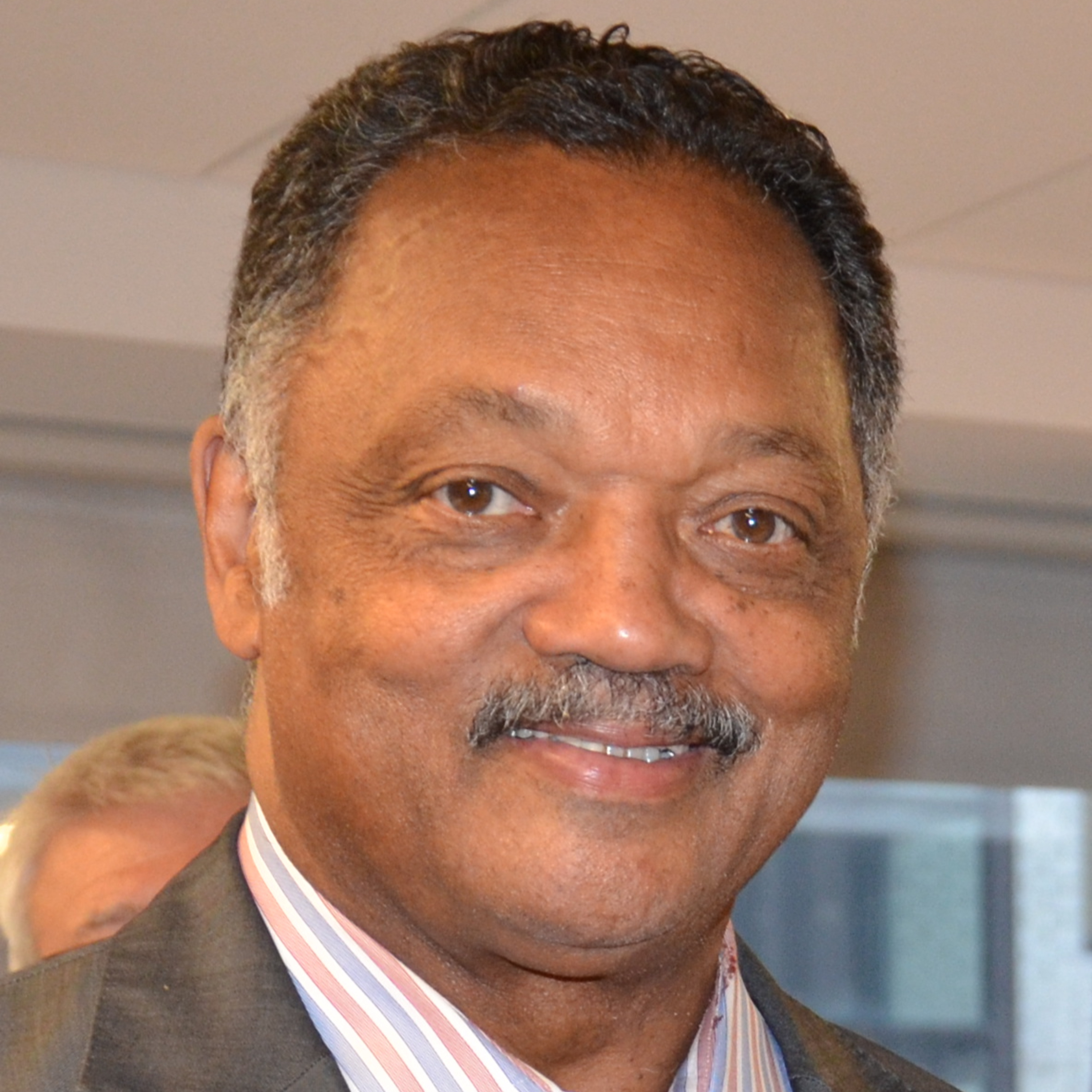
“If you fall behind, run faster. Never give up, never surrender, and rise up against the odds.” Teach Different with Rev. Jesse Jackson
In this episode, Steve Fouts and Jesse Risley, a seasoned social studies teacher from Illinois, explore a powerful quote from the late Reverend Jesse Jackson: “If you fall behind, run faster. Never give up, never surrender, and rise up against the odds.” They unpack the claim of the quote, emphasizing the power of perseverance. They then explore the counterclaim, suggesting that there is power in knowing when to quit. Lastly, they present some thought-provoking essential questions for further discussion.
Chapters:
00:00 – Exploring Jesse Jackson’s Quote on Perseverance
02:47 – Personal Experiences with Perseverance in Teaching
08:59 – The Impact of COVID-19 on Students
14:05 – Counterclaims: When to Know When to Quit
21:33 – The Worth of Perseverance and Essential Questions
26:03 – The Role of Quotes in Education and Student Engagement
Image Source: AFGE, CC BY 2.0 , via Wikimedia Commons
Today’s Guest(s)
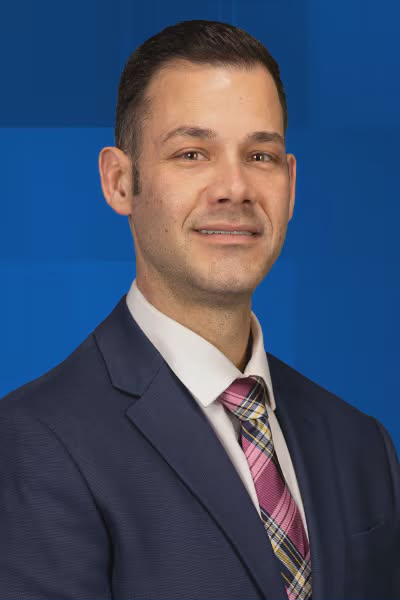
Jesse Risley
Jesse Risley in a full-time social studies teacher in the Macomb, IL school district where he has taught various social studies courses since 2003, including both U.S. history and AP European history, sociology, psychology, street law (civics), and geography courses. Jesse also serves as an instructor for the School of Education at Western Illinois University (WIU) instructing pre-service teacher education coursework, including education law and teacher education methodology in the social studies for elementary and secondary education majors.
Transcript
Steve Fouts (00:00)
Welcome everybody to the teach different podcast we’re in the middle of African American history month and We’ve got what I guess it’s our third or fourth quote this month on Reverend Jesse Jackson, that’s going to be our quote. And of course, we’re interested in a vibrant, exciting, authentic conversation. I’ve got a guest with me, Jesse Reisley, and Jesse is a teacher from Illinois. I met Jesse back about this time last year because he participated in Teach Different’s first inaugural cohort for our certificate program. So Jesse was one of the first 10 teachers to really kind of go through our six to eight week program where we did some conversation cycles in the classroom, tried out some quotes, got a chance to just kind of see how the kids reacted to it. And maybe I’ll let Jesse just share when he can in our conversation, how that went, how kids react to conversations like this when they can get challenged with a big quote. So I’m just thrilled to have Jesse with me and the drill. It’s really straightforward. I’m going to read the quote a couple of times. We’re going to do the claim, counterclaim, and essential question of the quote. So we’re going to start off by just talking about what it means. We’re going to push back a little bit as to the truth that Jesse Jackson has here. I think there’s a lot of truth in this quote, but I’ve been kicking around some different ways to look at it. And I’m sure Jesse, you have as well, and we’ll explore those. Come up with a few questions and then, you know, we’re gone. It’s only Monday, right? This is the weird – Jesse and I were talking about how this is the time in the school year where this is what makes it makes people right here you get that little hint of spring you get spring break coming up but this is really a grind right now and I’m really glad you you took some time just to to join us so with that I’m gonna read the quote a couple times and then Jesse you can weigh in and just share you know where you teach and where you are from in Illinois and away we go. So here it is, Jesse Jackson, if you fall behind, run faster. Never give up, never surrender, and rise up against the odds. If you fall behind, run faster. Never give up, never surrender, and rise up against the odds. Reverend Jesse Jackson. Jesse, thoughts on this and welcome.
Jesse Risley (02:47)
Okay, thank you. Yeah, as he was saying, I am a social studies teacher, long time social studies teacher from McComb High School, West Central Illinois. Also a half time instructor with the School of Education at Western Illinois University. McComb’s campuses are satellite campuses up in the Quad Cities in Moline. And yeah, the first thing, the one word I think of that comes to mind when I hear this quote is perseverance. To me, it’s, and of course, knowing, you know, being a history major, understanding a little bit of the background of Jesse Jackson, I don’t know what year this quote emanates from, but I’m very familiar with his background in civil rights work, but to me, it speaks about just running to the tape and the concept of perseverance, like pursuing a goal, chasing after it, you never give up, that type of mantra.
Steve Fouts (03:46)
A lot of people talk about perseverance and they talk about not giving up and it is difficult though, right? Obviously that’s why you need quotes like this because I don’t know what it is. Maybe the fear of rejection. When you get used to not accomplishing things, it’s demoralizing. But if you stick with something, you know, is there anything right now Jesse, think about your own kind of experience, maybe even as a teacher. Was there ever a point where you wanted to maybe try something else? You know, the first year teacher, we always talk about the nightmare that is when you realize, oh my God, these adolescents are eating me alive. I don’t know what I’m doing. Was there ever a time where you just kind of wanted to quit? I’m just, it doesn’t have to be teaching, but —
Jesse Risley (04:18)
Yeah, I mean, I think we’ve all been there in different facets, in different capacities, and it can be career wise, can be, you know, interpersonal relationships, can be something, you know, side gig hobby, something. Yeah, absolutely. I mean, I can absolutely relate to the quote and being of the mindset that it’s just, you know, let’s throw in the towel and then trying to help have these conversations with yourself about, you know, you really aren’t going to accomplish a goal if you don’t work at it. And hearing that voice in the back of your head saying, have to run to the tape. You got to run to the tape. You got to see it all the way through me. Yeah, absolutely. I’ve had, there’ve been several times in my professional capacity or thought, you know, I just don’t, even right after COVID was really difficult coming. Things aren’t the same. So yeah, I can relate. Absolutely.
Steve Fouts (05:43)
You know, talk to me about that a little bit. How are the kids now after COVID? You say they’re not the same. You’re still seeing it, right? How would you describe what it is?
Jesse Risley (05:56)
I felt, actually, this year, this last year was the first year things seemed to have been getting a little bit better for me. Those first three, four, five years after dealing with a lot of device issues, gaps with learning, with reading, spans have seemed to have got, had gotten better, and I’m not the only one. Like I talked to a lot of people in education who see it. And at least now I think we’re getting the students that were a little bit younger when it happened. So we’re six years, what we’re six years out now from when things shut down. So the kids now that are in high school were younger and have now had a few years back to the traditional schooling, you know, trying to corral everybody back to let’s get something back to a sense of normalcy a little bit here. And so I felt this year has been better than prior years had been for me.
Steve Fouts (07:03)
I just did the math, Jesse. Eight years old, were how old the freshmen are this year. Do you teach mostly, what do your classes look like? What ages and what subjects?
Jesse Risley (07:16)
So I have two sections of street law, which fulfills our school civics requirement for Illinois State civics. You know, we have a, there’s a mandated civics requirement that went into, that’s been about 10 years now. And that is mostly freshmen and sophomore, a few juniors peppered in, but it’s probably 95 % freshmen and sophomore. Then I have two sections of psychology, which are junior and senior only. So they are, they are upper secondary students, you know, later high school. And then I have two sections of geography, which are freshmen through senior. So it’s a little bit of everybody.
Steve Fouts (07:56)
Man, those are three legitimate preps. For everybody out there who’s not a teacher, when we say prep, all it means is classes you need to prepare for. Different teachers, I guess, I think differently about it. I preferred fewer preps having the same drill so I could perfect it throughout the day, but some teachers would rather have like, you know, three or four preps, because it keeps your day a little bit, you know, more dynamic, right?
Jesse Risley (08:24)
Absolutely. Everything has trade-offs.
Steve Fouts (08:31)
Yeah. So, okay. So you’re seeing a little bit of, you know, and when you look at students who are, what’s the word, lethargic, apathetic, they get discouraged easily, and they don’t seem to have this grit, you know, that Jackson’s talking about. I use the word grit. I like perseverance, but it’s the same. What do you… What’s your medicine, Jesse? Like, I don’t even know if there is one, but…
Jesse Risley (09:06)
Well, the candid response of course, is that no individual instructor will always get every kid over every hump. And that’s just part of, you know, that’s part of teaching, but you don’t, okay, here again, my mantra has always been while I may not get everybody to where I want them to be. And my first few years, it was kind of trying to save the world and had trouble kind of accepting that as a reality, like coming to the, you won’t get every student to where they need to be. Every kid’s not always going to get a passing grade. But, with that having been said, if you continue to encourage, you continue to coach, you continue to be that person who’s there, who’s supportive, who’s caring, who’s just doing everything they can to help this person get to where they need to be. You will have plenty of success stories and you know, kids will come back and thank you later. You will have a positive impact, but you can’t take it personally when there are situations where some kids just at that moment in time can’t, don’t or won’t get to where they need to be. That’s, you know, that’s okay. Humans are unique and that’s just, that’s part of the game. But I’ve seen plenty of success stories where there’s an aha moment and you really do help carry that kid across finish line.
Steve Fouts (10:42)
And some of the kids are used to negativity. And so they’re almost waiting to hear you turn negative on them. And they’ll push your limits. And they wanna see who you really are. We’re getting a little psychological about how to teach and how to mentor, but I think you’re absolutely right that the timing’s off for some of them and you can’t take it personally. It’s not about you. What can you control as a teacher? You can control your attitude toward them and you can be that kind of steady thing in their life. And like you’re saying, they come back later. And I know you’ve had this experience, but the students that you didn’t even think were listening necessarily or had kind of were affected by your class, they come back and it’s just amazing. It makes you feel like it’s all worth it. You know, like all the tough moments to bring out. Yeah, but perseverance, like the thing I would add about it would be this. If you persevere in something, like let’s even use teaching, you get so good at it that it seems like it’s easy because you’ve gotten past the hard parts. You broke that kind of rite of passage where you stuck with it long enough where you actually can control your days. You can set your moods. You are a happy person. You can project that to others. Cause you got over the negativity and the struggles. And I’m bringing that up because I think that when people who conquer this grit and they have this perseverance, they project an ease that I think is misleading for people who are trying to break in and get past those hard moments. They look at someone who’s conquered it and they’re like, well, it looks like it’s easy for him. It’s not easy for me. What am I doing wrong? I’m gonna quit this. I don’t know if I’m conveying this. It’s almost something you have to figure out on your own. You have to be that person that sticks through it.
Jesse Risley (13:34)
Sure. Yeah, I agree.
Steve Fouts (13:37)
You know, but I don’t, there’s no advice to give. Like you’re saying, you wait for certain timing for certain kids to figure it out on their own. Let’s push against it. We’re going to get into a counterclaim. I don’t know if there’s something kind of popping up. I’ll read the quote again. And then, you know, maybe give me another way to look at this and we’ll, we’ll discuss. If you fall behind, run faster. Never give up, never surrender, and rise up against the odds.
Jesse Risley (14:15)
So the first thing that popped out to me, I’m thinking about a counterclaim is that nothing in life is always certain or true 100 % of the time. And there are certainly times, I remember my boss at my first job used to say, there’s a time when I was a teenager, there’s a time to check and there’s a time to raise. And where I circle back around to this is, there certainly can be times, and this is me thinking like a little bit of an economist model, you know, with sunk costs and so forth, that there certainly are times when a person needs to take inventory of what’s at stake here and say, it’s time to cut my losses. Like this isn’t worth pursuing anymore. And certainly you don’t want to live in a world or a mentality of defeatism. I can’t, I don’t, I won’t. But there’s certainly nothing wrong with saying, you know what, this goal isn’t, or whatever it is that I’m pursuing here, isn’t worth what I’m going through to get there. I don’t have to do this. I don’t need it, what have you. And it’s okay to just be like, I’m done. Like, I’m checking out on this one.
Steve Fouts (15:33)
Well said. I was five feet freshman year in high school. Tried out for basketball, favorite sport. Didn’t make the team. And I think I did say that to myself. Like you’re not an NBA player. I know it’s disappointing and you could persevere. And I ended up growing a foot in high school. Okay. But that’s still only six. Okay. But the point is, I kind of made my basketball a hobby. And it was defeatism. Let’s just call it what it is. It was you got cut. You’re not there and you got to reset yourself. You know, and I could have persevered what I could have never gave up. I could have never surrendered. I could rise up against the odds. There are, are NBA players under 60 that get it, right? But I didn’t and I ended up doing, you know, my thing. I don’t regret that. already thinking of an essential question. How do you know when to quit?
Jesse Risley (16:52)
That’s good. And I talk about this a little bit. Once in a while, I do teach a section of economics if the numbers are there and we get enough kids to sign up for it. And I talk about the concept of specialization in a market economy. And we have a very spirited discussion about, you know, is it really true that anybody can do anything they want? Well, maybe theoretically. Anybody could get into that position, but it doesn’t mean everybody’s going to be efficient and successful at every single career option that’s out there. I mean, practice makes perfect. You can try. I could quit what I’m doing. I go to medical school, but it doesn’t mean I’m going to make the best doctor, you know, or I don’t know how it would go. You know, I could, I could burn myself out 80 hours a week and still who knows? I feel like I’m suited to what I do, but I’m not gonna sit here and pretend I could walk in and do absolutely any career.
Steve Fouts (17:57)
Right. And because of that, this advice, you know, never give up, surrender, it could actually send you down perhaps the wrong path and not find your true like ability or role that you can play in society where it almost comes as second nature to you. It’s natural. You’re exceptional at it, almost without trying. And the only way to find that is to find out what you suck at. And that’s okay.
Jesse Risley (18:30)
Right. And I see it as being like any quote, anything, any little tidbit, whatever, any truism saying most of them aren’t meant to be taken literally to be true 100 % of them for everything. Like in this case, it’s about avoiding a defeatist mentality. And you know, with the so-called zig-ziglar. The old Zig Ziglar, you say the stinking thinking, like there is a lot of power in positive psychology and perseverance and having a positive mindset, but that doesn’t mean you’re going to positive mindset your way into every single, and no one’s ever going to probably achieve a hundred percent of the goals that they set in life. You know, sometimes we just don’t get there and that’s okay.
Steve Fouts (19:31)
And that’s okay. Speaking of contextual, Jesse Jackson, civil rights. That one gets real challenging to think about because that’s an uphill climb. And it’s always been that, but there’s a justice that they were seeking, you know, and when you do have your eye on the prize and there is a way you want the world to be, even if it appears almost impossible during your time and your epic, you know, and you’re mistimed in a way. You have to look at the situation and say, I can just do a certain amount here to push this forward. That’s where I’m going to flip back to the claim for a moment. If it’s worth it. Because it wasn’t worth it for me to become an NBA basketball player. That’s just frivolous. But if there were something that I believed in, I think maybe giving up would be the wrong thing to do, even if I didn’t achieve exactly what I could have. And I’m thinking of Martin Luther King now, Jr., where he always talked about how he wanted to be a professor. He loved ideas and he could go to college and just have students and be in an ideas land all the time. This is what he loved and he was brilliant. But he was brought to this fight that had so many obstacles in the way. So anyway, I don’t know if I came back to the claim or not, but it almost, maybe an essential question would be what’s worth it?
Jesse Risley (21:34)
Yeah. And when, in how, when, or where do you know when to maybe cut your losses versus keep fighting for something.
Steve Fouts (21:46)
Yeah. When is it worth it to keep fighting no matter what happens?
Jesse Risley (21:49)
Right.
Steve Fouts (21:53)
Well, we lost Jesse Jackson. I just watched a bunch of YouTube videos on him when he was younger. Man, that guy, he was just brilliant. You know, he just had that insight. He had the passion and he just, he was just part of such a tumultuous time and a time that really pushed our society forward and got us closer to something. I know some people might think we’re going back in a way right now, but I’m going to keep it optimistic and say you can’t go back really. It’s just about when it’s going to be revealed and yeah anything else that that any thought any more thoughts this was this was productive this was good you know it’s perseverance is important these kids need it everybody needs it
Jesse Risley (23:05)
Yeah, I agree. You got to Maslow before you can bloom.
Steve Fouts (23:11)
There you go.
Jesse Risley (23:13)
And that, didn’t ring, is true to me when I was younger and getting into, know, you all have these little cliches and so forth, but it, know, and obviously the longer I’ve taught, the more I, especially with all the baggage, some of the kids are bringing with them into school that has become a lot more real and evident to me. Maybe the last five or 10 years of my career than it was, you know, early on.
Steve Fouts (23:46)
I think I know why. You’ve learned the craft of teaching and you have more awareness and energy to see the more human. You know what I’m saying, Jesse, we start teaching. It’s like, what’s my curriculum? What do I have to do? What’s my lesson plan? There are human beings in the room. Well, okay. You’re becoming more. I would say a better teacher. You know, do this as we end up here, Jesse. The method that we’re using here, the quotes, the claim, counterclaim. You’ve had experiences sharing this with kids in class. Some of them are not used to thinking in deep ways about things, but I always remember some of your reactions when we first caught with you in the spring about how there’s certain kids that just get, they surprise you when they get into conversations like this. Can you just share, it doesn’t have to be a specific kid, but just what this type of, I don’t know, education brings out in some of these kids when you can really challenge them with these quotes.
Jesse Risley (24:49)
Well, I think it gets more like a humanist philosophy in so far as, you know, back to like Maslow that you are having conversations about meaning. So quotes that connect to truisms and things that happen in life that are meant to give people, you know, deeper thought both personally, but I also think that a lot of them tend to connect to civic themes or like how I fit in, cause we live in a world, but we’re not isolated for the most part. mean, sure. There’s always a kid that’ll bring up somebody like Ted Kaczynski or somebody like that. But I mean, we live in a, we’re social beings. We’re, actually some of our quotes deal directly with that. There’s such a wide variety of quotes. And so especially for me as a social studies teacher, we’ll like kind of who am I, but then how do I fit into something bigger? How do I fit into a bigger picture? Because a lot of these deal with human relationships and being social, living in like a society, being part of a country, you know, and how do my actions impact other people? And how do other people sometimes impact me? And so I think they get a lot of conversations going that get, I’ve seen a lot of kids make connections to interpersonal things. Like I had somebody bring up, this reminded me of, I got in a fight with my mom about picking out a prom dress. But it all goes back to social, human interaction, and how I can see this playing out in my own, or how this could have gone different. So a lot of conversation, and also from a teaching standpoint, cross-curricular, because kids will bring up, we were talking about something with, like we were reading Animal Farm, or a Hemingway or something like that, or an art project we were doing. It’s just interesting to sometimes see the kids bring in interdisciplinary comments, so connecting it, but really going back to that social interaction component.
Steve Fouts (27:18)
I know exactly what you mean. Your relation to others. And you know, we kind of take it for granted. You know, we’re thinking, okay, it’s a school. You’re in there with other people. You’re obviously social, but it’s more of a processing of it and a relationship. As you know, these kids are developing, so they’re getting their independence and they’re figuring out who they are in relation to others. It’s just beginning this awareness, you know? And the more you can think about it and talk about it and realize there are people like you who share some of your experiences and also people that are coming from completely left field, but they’re rational. You get that sense of, okay, it’s not just me. This is the world. If I can have a conversation, you know, and you have my voice and listen to others do it. I mean, this is so rudimentary, you know, but our society right now is struggling with this type of interaction. And, you know, again, it’s the next generation, right? If we can just make sure that the new generation can process this type of stuff and demands these types of experiences, we’re gonna be fine. The adult role models are a little bit lacking now in some key areas. But, hey, that’s not the end of the world because we’re just gonna have to pick ourselves up and rely on the youth. And I believe in them. They’ve got the ideas. Yeah, I appreciate that perspective and thank you so much for coming on, Jesse. This is how we roll here, you know, one quote after another and I look forward to, you know, working with you because you’re one of our shadows. A shadow, by the way, to everybody out there is a kind of a mentor. So Jesse went through a certificate program with Teach Different. Now he’s kind of like a connector. He’s one-on-one support with teachers who are learning this same routine of this conversation method that we just used, and they’re bringing it to the youth. So thanks for that, obviously, Jesse, and we look forward to just working with you in the future.
Jesse Risley (29:51)
Yeah, always a pleasure. Thanks for having me on.
Steve Fouts (29:53)
All right, take care everybody and we’ll see you next week with the Teach Different podcast.