

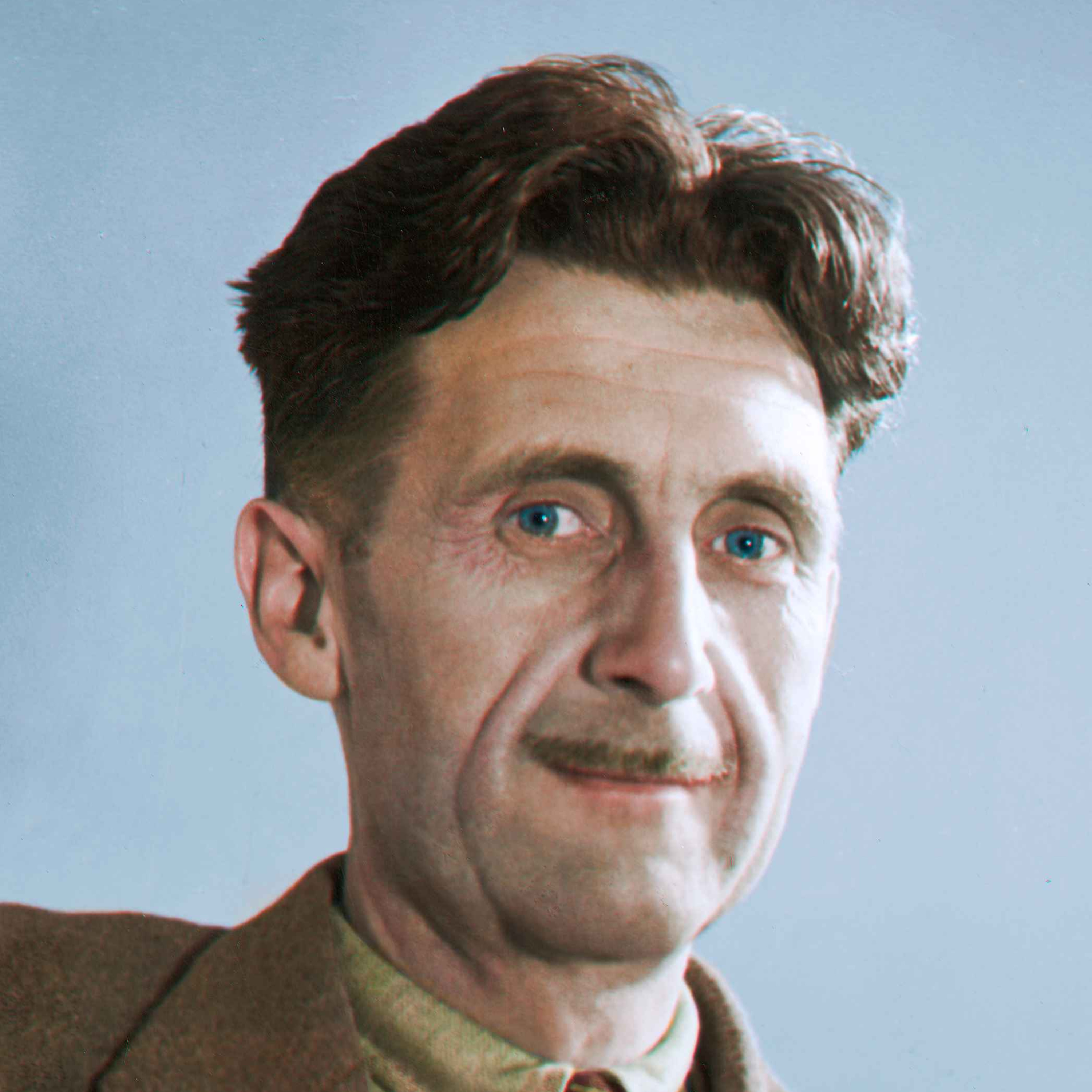
“If liberty means anything at all, it means the right to tell people what they do not want to hear.” – Teach Different with George Orwell
In this conversation, Steve and Dan Fouts explore the profound implications of George Orwell’s thoughts on liberty and individual freedom through the quote: “If liberty means anything at all, it means the right to tell people what they do not want to hear.” They discuss the claim of the quote, focusing on the importance of freedom of speech and the responsibility to critique leadership. They then unpack the counterclaim, focusing on freedom and responsibility, highlighting the ethical considerations that come with expressing one’s thoughts. Lastly, they pose some questions for further exploration of the quote.
Chapters
00:00 – The Importance of Liberty in Expression
00:57 – Understanding Orwell’s Perspective on Freedom
06:42 – The Importance of Liberty and Leadership
10:02 – Balancing Liberty and Responsibility
12:32 – The Dangers of Unchecked Freedom
15:45 – The Role of Education in Freedom
19:22 – The Ethical Framework of Freedom
20:51 – Outro
Image Source: Cassowary Colorizations, CC BY 2.0 , via Wikimedia Commons
Transcript
Steve Fouts (00:00)
Welcome everybody to the Teach Different podcast. We are here in January. We have another quote. This one is from George Orwell, who everybody associates with 1984, of course. He was an English novelist, essayist, and journalist. And believe it or not, he only lived to the age, do you know, Dan, how old he was when he passed? 47. I didn’t know that.
Dan (00:23)
No. Wow.
Steve Fouts (00:27)
But he’s had quite an impact on individual freedom and society and the drift that he saw in society where individual liberties end up going away because society becomes so powerful and it thwarts what we think of as freedom. And this quote that we have today really is related to that. It’s a really, really thought-provoking quote. Before we start the drill, we’re going to do that. We’re going to read the quote a couple of times. We’re going to do the claim, the counterclaim of the quote. And then we’re going to ask an essential question. This is the Teach different Method, which is now integrating itself into classrooms everywhere. We have a certificate program for teachers where we get teachers for eight weeks. And we call it an apprenticeship type program where we’ll work with the teacher. We actually have practicing teachers who are really good at the method, who mentor teachers that are learning it. And they actually use this method and have conversations with their classes. And we’re getting just wonderful feedback from the program. Kids are speaking up. And we see this as just the most powerful lever we can have at Teach Different to get these leaders, which we believe teachers really are leaders of the next generation, because who they have coming through their classes end up being our new generation and our new kids, basically, that grow up into adults accept the careers, become the new leaders. And if we can get teachers addicted to this method, the kids are going to expect great conversations when they get older. And they’re going to be wonderful, wonderful leaders for us.
Dan (02:28)
And many times these kids don’t have any other forum to have conversations other than their classroom. They don’t get it at home. They don’t get it at their current work and they might not get it in their future work. So if we don’t teach them this inside a safe school setting, they might not ever get it.
Steve Fouts (02:51)
Yeah, that’s always have to remember that we’d love to think that everybody has a nice, caring, nurturing conversation based home, but it just is not true. And these kids need avenues to be able to speak their truths to each other. And we’re providing that. So anyway, we’re going to talk about the certificate program for a long time. We’re just so excited. We have like 27 or so that have been through the program. And we have another 50 or so that are gonna go through the program in early 2026. So yay, yay, yay. Okay, quote for today, mentioned George Orwell. I’m gonna read it two times. Dan, you’re gonna take the claim. Here’s the quote. If liberty means anything at all, it means the right to tell people what they do not want to hear. If liberty means anything at all, it means the right to tell people what they do not want to hear.
Dan (03:52)
This is saying, my stab at the claim here, this is saying that liberty is about saying things that make people uncomfortable, that are controversial, that are not politically correct sometimes, that might hurt people’s feelings, that might be borderline inappropriate in a variety of different contexts. But liberty, if it means anything, it’s the right to tell people things even when they don’t want to hear it, discomfort.
Steve Fouts (04:31)
This is interesting, right? I’m thinking of where he was going with this. I’m thinking of the word complicity. When people don’t speak out, it’s because they’re kind of afraid of repercussions. This is how society controls thought. It scares people into silence. And so I can see how he defines liberty and freedom as something that’s based on, you know, telling someone about themselves sometimes and giving that unpleasant truth so that it’s not repressed and that it’s not this silent underneath of what everybody should be talking about when something’s wrong, when there’s an injustice, for instance, but they’re not saying anything because they’re afraid. So he’s saying, you know what, that’s what freedom is. It is.
Dan (05:35)
And this is political speech. This is criticizing your leaders. This is, if you think things are unjust, you speak out, you protest, you write your congressman, you write any government leader, anyone that you disagree with, you have the courage to say something about it. That’s true liberty. The second that you won’t express that, there’s a force that’s above you that is stronger. And that is a slippery slope to really bad things.
Steve Fouts (06:05)
It’s coercion. It’s authoritarianism. This is why people don’t speak out in certain societies. They can’t, or they feel that they can’t. But liberty is that there are some really good quotes about how important it is to be able to have liberty and how that is the survival mechanism for any society that’s trying to control the people. And this is where Orwell’s coming from.
Dan (06:42)
Yeah. And again, it’s hard to not take this into a political context because of George Orwell, that you have to have leaders who are willing to accept criticism and to allow people to speak out, hear it, disagree with it, do what they can to address it or not address it. But for a society to work, those with power have to accept people expressing their liberty in this way.
Steve Fouts (07:16)
We’re running into some real problems with that in our society today. And I always go back and I try to look for models and different leaders we’ve had in the past and how they dealt with this. Abraham Lincoln, I’ll never forget when I first read about what he called during the civil war, if you want to talk about a time when you could really, really justify holding people to account for their ideas and wanting to take away their liberty to speak their mind. He had, I think he called them public relations baths, public opinion baths, where he would bring in the South, bring in the North, let people vent. And he saw it as a key to, I always see he saw ahead and saw when the war was over, how are people gonna feel about whether or not their voice was heard during the war? Whether they had their chance to say their piece and maybe their side didn’t win, but giving people the freedom to do that, that’s great leadership, right? If you’re not allowing people to speak out against you and your government. To me, it’s a sign of weakness. I just look at it from an individual standpoint. If you’re not able to take criticism, and I’m going to blame myself on this. Sometimes I don’t want to hear it. I don’t want to hear criticism because it throws me.
Dan (08:53)
Yeah. And sticking with the Lincoln example, he also assembled a cabinet of his past political opponents, William Seward, whom he defeated in getting the nomination. And he knew immediately when he sat around that cabinet table, he was going to get criticism from a variety of different perspectives. He wasn’t afraid of it. You know, back to the quote, there was liberty to do that. He does not want to hear a lot of this, but he knows he needs to hear it to make good decisions. you know, Lincoln, remember, he also did suspend writ of habeas corpus to certain people. he, with liberty, with speaking, I think that is much truer than maybe some other due process rights where he decided, you know what? That might not be as important as saving the union. So he had to balance this is what I’m saying, individual liberty and respect for process with security of the nation. And I think he did a really good job balancing it generally.
Steve Fouts (10:01)
In the spirit of balance, I’m going to get a counterclaim to this.
Dan (10:05)
Yeah, I got one too.
Steve Fouts (10:07)
People abuse this. They abuse liberty in the following way. If they know that there are no repercussions for what they say, sometimes they’ll just say things to get people’s reactions. Yelling fire in a movie theater, okay? Saying hurtful things to people that make people feel threatened and fearful, being disingenuous.
Dan (10:37)
Launching conspiracies over social media and hiding behind their phones. How about that one?
Steve Fouts (10:47)
Yeah, because they’ll argue social media is freedom. We should have the freedom to say whatever we want and have unlimited access to everything, to everybody.
Dan (10:53)
Right. So again, he’s saying if liberty means anything at all, it means the right to tell people what they don’t want to hear. Okay, fine. But liberty also carries with it responsibility. if you, and you know, there’s all kinds of questions buried there. Because if you don’t, if you speak and you don’t have responsibility for what you’re saying, then liberty ends up becoming a danger and then it’s absolutely a negative. So yeah, that’s the counterclaim.
Steve Fouts (11:36)
I gotta drop Plato here. Plato argues that liberty is what ends up becoming so extreme in a democracy where freedom is worshipped before anything else that what ends up happening is you do get people doing crazy conspiracy theories and lying to the public and no one is able to set a criteria for that responsibility piece. And what ends up happening is the society looks to a strong man to shut the Liberty down because order is what people end up wanting after they see everybody in their ideas and they get confused.
Dan (12:20)
Sure. Sure, disinformation. Yeah.
Steve Fouts (12:32)
I mean, it’s just, it’s a dynamic that occurs.
Dan (12:33)
And the tragedy of course is that with so much liberty, people are not self-regulating. This is an ethical moral challenge that I believe our society is not confronting anymore. It’s thinking of liberty being unchecked. It’s good in and of itself in all situations when there is no ethical component to it. What is the impact that a speech is having on other people? When a population doesn’t have the ethical spirit and framework that undergirds their speaking, then you have a problem.
Steve Fouts (13:18)
Yeah, who is free? You know, I don’t want every single, I’ll be honest, I don’t want every single person to have freedom. Cause some people are up to no good. And I’m thinking of an essential question. What is, what are the responsibilities that come with freedom?
Dan (13:43)
Yeah, what responsibilities do you have with your freedom in speaking your mind? That would be a great essential question for society right now. What responsibilities do you have to yourself? What responsibilities do you have to your family, your community, and your country? That is a great…
Steve Fouts (14:06)
Yeah, your community, it’s almost like a lie detector test. You have to go through that before you’re able to freely express yourself. Go through a lie detector test. Are you genuine in what you believe or is it willful ignorance? And you’re trying to trigger other people. If it determines that you’re not, you know, saying something out of a good faith.
Dan (14:29)
Yeah.
Steve Fouts (14:37)
I don’t know, it would be hard to argue against why that shouldn’t be limited. But that’s also a slippery slope.
Dan (14:44)
Well, right, and you’ve mentioned there’s some people you would not want to have complete freedom. I didn’t know exactly what you meant by that, but I think that the more that we, that the population becomes more reasonable and able to process information in responsible ways, the less power. This extreme kind of speaking has on people because we can call out the BS. We are critical thinkers. We know it’s not this way. Then, back to this method. This method trains people to hold ideas in their head that are contradictory so that when someone says something that is extreme in speech, you are able to mentally process it and formulate a counterclaim, engage in a conversation about it, and not be manipulated by it.
Steve Fouts (15:45)
not succumb to the algorithm, which is what drives a lot of people’s opinions because we’re communicating through social media, which is so pervasive, it’s everywhere. In a way, it’s so beautiful. Now everybody can say anything to the whole world. And we see what are some downsides of that. So I’m actually kind of…
Dan (15:47)
Yeah. There’s no moral restraint. The moral restraint has to come from within the person, I think. It can’t be imposed by governments. That’s not going to work.
Steve Fouts (16:25)
Well, but who’s determining the moral constraint? Isn’t that a product of the government slash culture slash communities that they grew up in, whether they had resources? We don’t exist in a vacuum. Individuals were built through formation and education, which is again, why I think the highest priority of any society to raise people who know the balance between freedom and responsibility is a society that educates.
Dan (17:01)
Well, right, it’s the teachers, it’s the families, it’s the teachers that teach this delicate balance. And the phones though work against this. Our technologies work against our instincts to slow down, reflect and develop moral armor to how we process ideas. So it is education, it always comes back to education.
Steve Fouts (17:11)
They can.
Dan (17:29)
Okay, wait, are we off the rails here? No, we got to, well, you had the good essential question, I think, balancing freedom and responsibility. How do you balance it?
Steve Fouts (17:37)
Yeah, I like that one. This is a, it’s provocative. I do like this. And I hate admitting that I don’t want freedom for all people, because I’m a very permissive person, but I’m also seeing what that does to people, again, who are disingenuous. I use that word. They’re not. I don’t know, speaking for the right reasons. And all I care about when I say right reasons is they’re saying something that’s meaningful to them. Hopefully they want it to be something that’s good, but I don’t know.
Dan (18:18)
And I would build on what you said and say, I would want people to regulate themselves. So if I’d say, I’d rather you not speak, I don’t wanna tell you not to speak and I don’t want the government to tell you not to speak. I want you to wake up and say to yourself, maybe I shouldn’t speak. That’s what I mean by that.
Steve Fouts (18:35)
Yeah. And have that be not fear that gets them to be quiet, but it’s more of a proactive with agency, here’s the right thing to do. And I believe it. I do want them to have consensus.
Dan (18:50)
Right, introspection.
Steve Fouts (19:07)
Amongst themselves that this is the right thing to do if it’s coercion, then we run into another problem on the other side, but Yeah, I’m thinking of our quote from last week so But this was a good one ⁓ George Orwell, I have no idea that He was so young but he’s had quite a few thoughts that have influenced our society and
Dan (19:12)
Yeah, right. It can’t be coercion. Yeah. George Orwell, 1984.
Steve Fouts (19:37)
Another great quote. I’ll do a shout out again to our homeschooling program. We have a course for homeschoolers that we’re going to be releasing soon. So please, anyone who listens to these conversations has a kid. Look for this because we’re trying to teach this not only to teachers, but to parents because you want to talk about influence and engagement, how important that is with someone that you’re having so much responsibility to raise and how powerful these conversations can be to make whatever you’re trying to teach them more interesting and more engaging. We don’t talk about curriculum, we talk about things like this skill set of conversations and we’re all about bringing you to become a master of these which…
Dan (20:29)
This would be a great one in the homeschool setting.
Steve Fouts (20:33)
It would be, oh yeah, oh anything. You you think kids want freedom? Oh my goodness, you have to come up with reasons why you’re taking that from them 24 seven. everybody, thank you so much. We will see you soon.
Dan (20:47)
All right. Take care.