

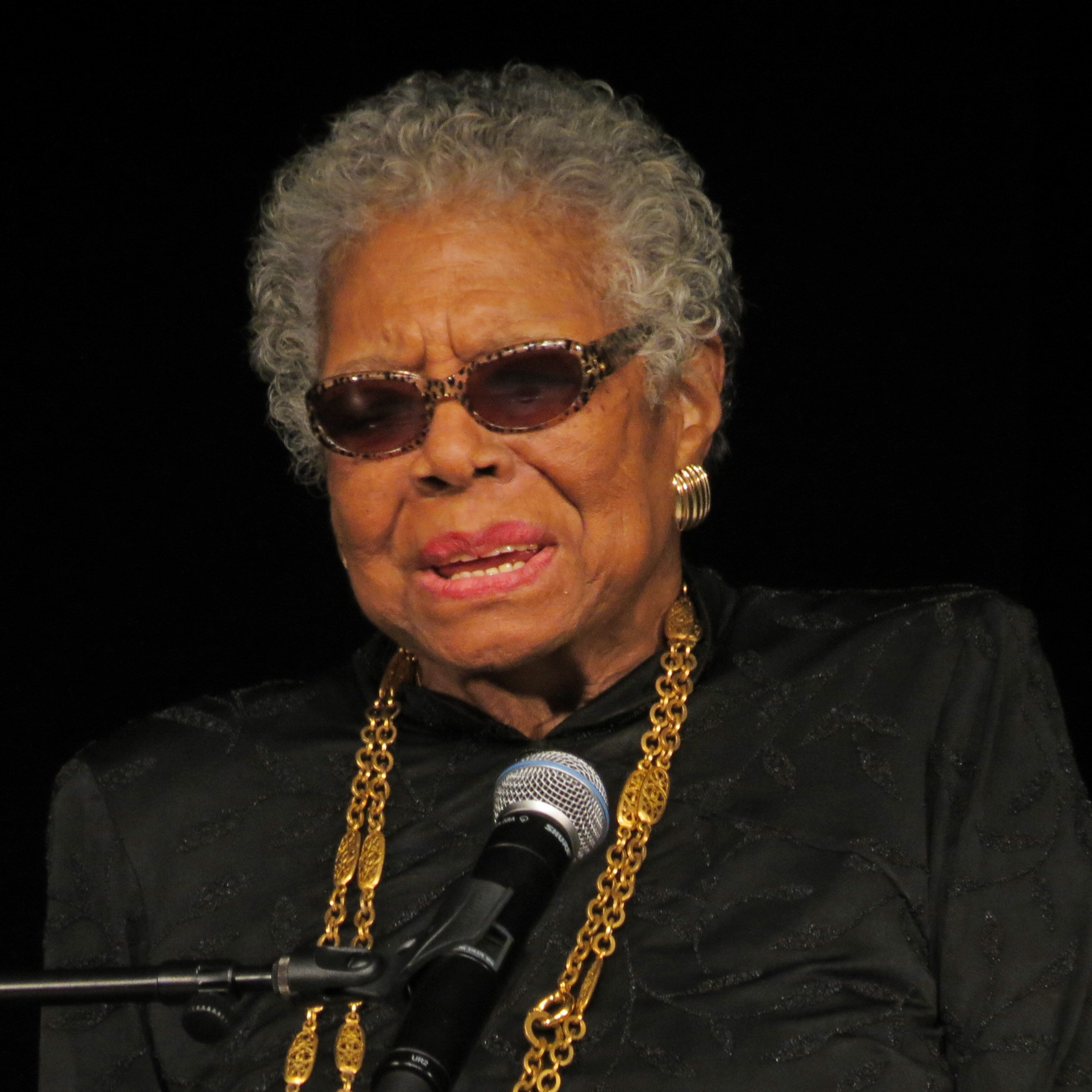
“Courage is the most important of all virtues.” – Teach Different with Maya Angelou
In this episode of the Teach Different podcast, hosts Steve and Dan Fouts explore a quote by Maya Angelou that states, ‘Courage is the most important of all the virtues.’ They unpack the claim and its implications. They discuss counterclaims regarding the nature of virtues. Lastly, they pose some questions for further exploration of some of the main ideas they’ve explored.
Episode Chapters:
00:00 – Introduction to Courage and Virtue
02:17 – Exploring the Claim: Courage as the Most Important Virtue
07:27 – Counterclaims and Alternative Perspectives on Virtue
10:44 – The Importance of Courage in Action
13:39 – Courage in Contemporary Society
14:57 – Outro
Image Source
York College ISLGP, CC BY 2.0 <https://creativecommons.org/licenses/by/2.0>, via Wikimedia Commons
Transcript
Steve (00:00)
Welcome everybody to the Teach Different podcast. This is going to be our first podcast of 2026. And we’re going to talk a little bit about an author, Maya Angelou, who we actually have quite a few quotes from Maya Angelou in our podcast library. But this is a really, really good one about courage and asks us to answer some deeper questions about actually courage and virtue. So it’s a really, really good quote. We’re going to get to it in a second. Very quickly, the drill. But even before I do the drill, let me give a quick update on Teach Different. This is going to be an exciting year for us because we’re continuing our certificate program for classroom teachers that we’ve already had a couple cohorts have completed it and it’s just really really inspiring to see teachers learn this method that we share in this podcast and then integrate it into what they’re already doing in their classrooms and getting those engaging conversations going helping the kids with academics and also just a feeling of you know having a voice and wellness. The one thing we’re getting from all of the certificate program graduates is that they’re so happy that they get kids talking in these conversations that usually don’t talk. So that’s really validating for us. We’re excited about it. We got some other things going on as well, we’re excited about 2026 and let’s leap right into this quote from Maya Angelou. Now she was a civil rights activist mainly from the century and this quote is really really engaging here it is courage is the most important of all the virtues courage is the most important of all the virtues we’re gonna do the claim first then we’re gonna do the counterclaim and then we’ll ask a few questions. I’ve already got some ideas on this. I have my brother Dan with me. So away we go. Dan, why don’t you just start with your feelings on the quote, courage is the most important of all the virtues.
Dan (02:17)
Yeah, I looked this quote up actually attributed to Maya Angelou and there’s a little short section after that that I’m going share that clarifies a little bit of what I think the claim is to this particular sentence. So courage is the most important of all virtues because without courage you can’t practice any other virtue consistently, which is really interesting. It feeds into a certain claim that to do anything, to be honest, to have virtues like honesty, self-respect, generosity, temperance, whatever, you have to take a risk. You have to get yourself out there and do something that might be uncomfortable that would require your courage to do it. And I like how she’s thinking about that. It’s hard to have any virtues if you’re not willing to take a risk. So that’s where I think the claim lives there. Courage is most important because courage is about risk taking and pushing your comfort zone.
Steve (03:36)
Yeah, courage is risk taking and we usually associate virtues, I think, in a little bit more general way. Those are the two words that are most important that I’m going to put in a couple essential questions right now because they’re so obvious. What is a virtue and what does courage mean? I would definitely wanna have those types of discussions first with whoever you’re having this conversation with and at least get some common definitions out there. But yeah, there’s a lot of things we say are good about the way we should act and you mentioned a couple of them. I’d even throw in humility. You mentioned generosity. There’s so many that you can have a virtue, I guess, but if you don’t take a risk and make sure that you project it to the world, what good is your virtue? Is it just for yourself or is virtue connected to action? Can you have virtues that are internal? I guess is another question I’ll throw out there.
Dan (04:49)
Yeah. And this is straight up Aristotle here and virtue ethics. And he speaks a lot about courage being the golden mean between brashness and being a coward. And so in life to have the virtue of courage, you have to know and be able to take a risk and act in a way that is not too brash, but is also not too cowardly. And to your question, yeah, courage, think in any virtue, it requires an action, a step in a direction. And I think that’s what Maya Angelou is getting here as it’s why it’s the most important. you have to do something that might not feel comfortable.
Steve (05:43)
And that’s understandable being an African-American, the amount of risks you have to take for speaking truth to power and knowing something’s unjust, but if you don’t do something about it, if you don’t have courage about it, you become complicit. You have to struggle to express your virtues in a system that doesn’t respect your rights, for instance. So I see where this is coming from, contextually, from her. And…You know, we can start with a counterclaim. This is where I don’t always like the word counterclaim because it’s not a contradiction, but it’s something worth talking about. I’m gonna take the word generosity and humility. If we can agree that those are virtues, I don’t know if it’s right to say that you need courage to have those. They almost seem like sentiments and internal belief systems that you can actually practice those without too much courage. Humility sometimes can be perceived as you’re fearful of repercussions. And that’s why you’re humble. You are overwhelmed by the dangers that you see and you don’t want to necessarily confront them. So I’m gonna pick at it a little bit and say, you know, some virtues, I don’t think courage is maybe the best word for it, but they’re legitimate virtues.
Dan (07:27)
Yeah. And, and again, if you drop the second half of what she said that I mentioned, because without courage, you can’t practice any other virtue consistently. If you just sort of drop that and you stuck with courage is the most important of the virtues, then you could have a lot of counterclaims there. Generosity, humility you bring up and any other virtue you could argue is the most important depending on the person.
Steve (07:53)
Introspection, self-reflection. But this is where I might even come back and rescue her quote again, because I think that looking at yourself and critiquing yourself and being self-reflective does take a lot of courage. You don’t always like what you see. And a lot of people say that they know themselves. But what does that really mean? It means that there are things about themselves that maybe they confront when it’s convenient, but what about the unpleasant truths? So I actually would say self-reflection fits her quote a little bit better if we call that a virtue. mean, Socrates would say it’s a virtue. It is the virtue.
Dan (08:39)
Humility, maybe not as much. Humility, maybe not as much. I don’t know if you have the courage to have humility. It’s more like you’re suppressing this need to be arrogant and to put yourself first. You’re being humble and you’re, I guess that’s interesting. Her use of courage is very expansive here. And yeah, yeah, really, really interesting. She’s definitely tying it to action. And it is something that you have to practice. It’s not just self-knowledge of something. It’s what does it look like when it’s put into practical action in the world? And that fits. Any other angles on the counterclaim?
Steve (09:27)
It does. I just do a Rolodex of different virtues.
Dan (09:36)
Yeah, right. If you did this conversation in a public setting, you could just poll people. What is your most important virtue and why? And that would be a rich discussion right there. You’d learn a lot about the people in front of you.
Steve (09:50)
Think of virtue as a persistence and a perseverance over time to stick with something and not let it go. That’s really important. You could argue is a virtue of character. Does it take courage? I don’t know. It takes a little bit of stubbornness.
know, bullheadedness, it’s a different part of your spirit, I think, that you’re tapping into. But anything related to your sense of justice and speaking out, speaking truth to power, I see where she’s coming from, that courage is the most important virtue to have to do the right thing. If virtues, if maybe a definition of virtue could be doing the right thing, you have to have courage.
Dan (10:44)
Yeah, to practice action even when it’s hard. Even when it goes against your instincts, when it’s your intention, when you’re doing something for the right reasons, independent of how they’re going to turn out and the consequences. That’s courageous.
Steve (11:05)
Yeah, Being more worried of the consequences of not having courage, not speaking out, and what that does to your sense of like goodness in yourself, and whether or not you see yourself as a good person. These are absolute struggles that different people experience in different ways. And I appreciate the quote. Any question that’s coming up, I have the simple ones like what is courage, what is virtue, those need to be really put out there.
Dan (11:38)
Well, what is courage? How do I, you know, what are the most important virtues of a good character? What does a good character look like? That it’s open to more of an umbrella question that includes courage, but some other things as well that you could bring up.
Steve (12:01)
Yeah, how do I know when I need courage and I need to step up?
Dan (12:09)
How do I learn it? How do I learn courage?
Steve (12:13)
Yeah, that’s a really good one. Because there are plenty of times. I can think of in my life when I wish I did speak up, you know, and I was a little bit of afraid to speak up at that moment. And I kick myself, you know, but. I also am glad that I didn’t speak up. In other areas, I think there is a pressure that you can put on yourself with courage, where you kind of set yourself up to always be trying to overcome some fear in yourself, when you really need to be a little bit more strategic and pick some battles with what it is that you’re going to be courageous about. That’s another way to look at this. But again, how important is courage when there is a wrong that needs to be righted? I’m not going to argue with anyone on that one.
Dan (13:15)
Yeah. How important is it? How important is courage to you? You know, that’s another thing you could ask of the group as well. Yeah, good quote. I like it.
Steve (13:25)
Good. This kicks us off. This is January. I mean, a lot of courage is being asked for in our society today, you know, with kind of a drift into more…I don’t know, the way our government is working and the structure of our society and how it’s getting hard to have freedom and to believe that you have rights in certain areas. And you’ve got to figure out, who are you as a person? What are you gonna stand for? What are you gonna fight for? What are your non-negotiables? These are important, you know, questions for really any society, but especially our society today. So enjoyed it. Maya Angelou, we always love her quotes and thanks for joining us on the Teach Different podcast. I was going to mention one other thing that we have in the works. And that’s a homeschooling course for parents. So that’s something to definitely look after when we get it ready, we’ll be sharing it on the podcast. And it’s just another way to learn this method that we keep using to have these hopefully engaging conversations and doing it with your kid and how powerful that can be and how that can really help you teach your kid anything. Conversations are the key. All right, take care everybody.
Dan (14:54)
Yeah, thank you so much. See you everybody.