
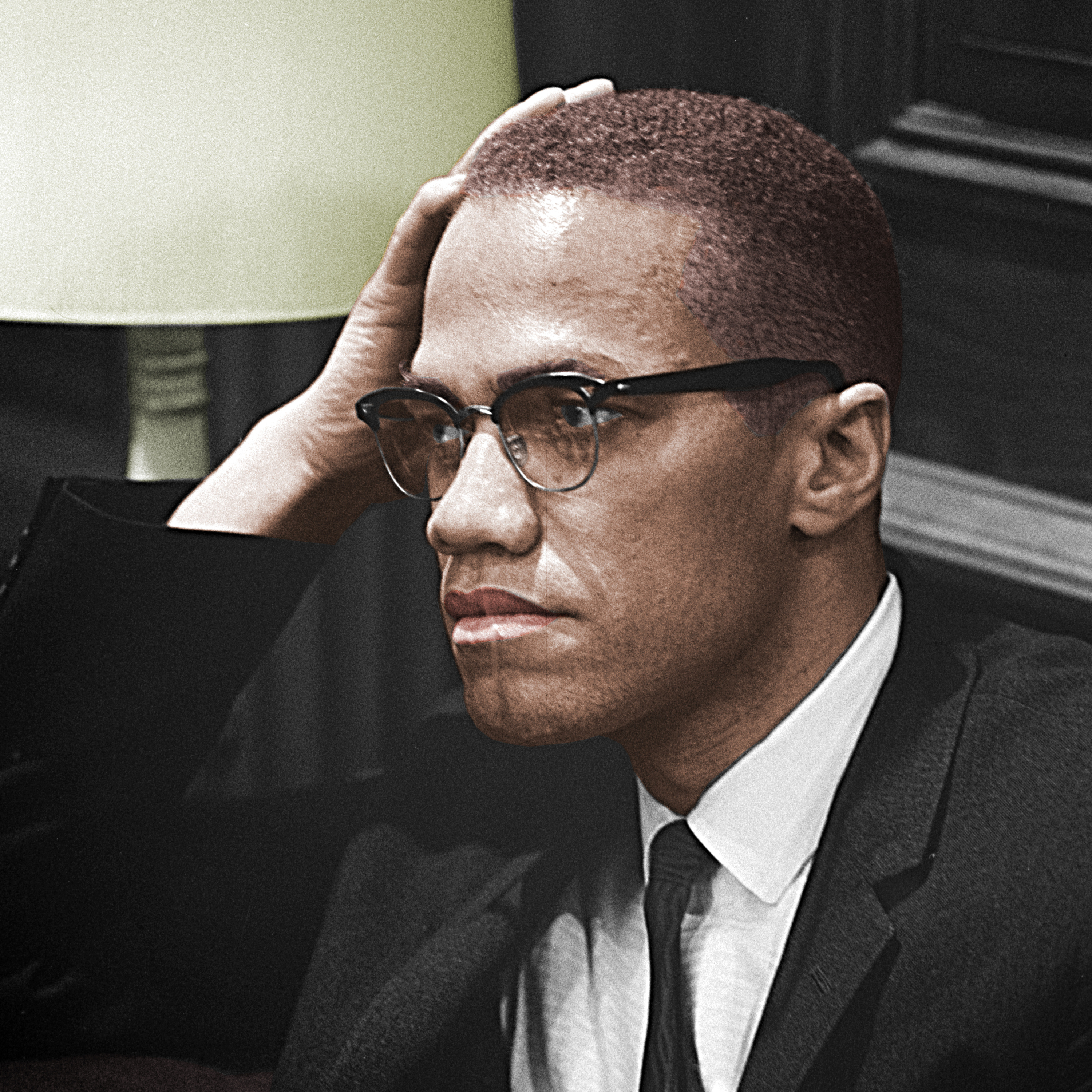
“Be peaceful, be courteous, obey the law, respect everyone, but if someone puts his hand on you, send them to the cemetery.” – Teach Different with Malcom X
In this episode of the Teach Different podcast, hosts Steve and Dan Fouts, along with guest Candace Fikis, explore a provocative quote by Malcolm X using the Teach Different Method. They discuss its implications for civil disobedience, the justification of violence, and the role of law in protests. They dive into the complexities of teaching controversial topics in the classroom, emphasizing the importance of creating a safe space for students to engage in discussions about current events and societal issues. The conversation highlights the need for educators to address these topics thoughtfully and encourages students to think critically about the methods of protest and the historical context surrounding them.
Episode Chapters:
00:00 – Introduction and Context Setting
02:07 – Exploring Malcolm X’s Quote
05:21 – Diverging Perspectives on Protest and Violence
13:06 – Consequences of Approaches to Injustice
13:34 – Exploring the Complexity of Protest and Law
16:23 – The Moral vs. Manmade Law Debate
18:21 – Student Protests: Rights and Responsibilities
22:36 – Counterclaims and Perspectives on Violence
25:07 – Historical Context of Violence in Leadership
27:45 – Current Events and the Role of Citizens
32:48 – Teachers’ Responsibilities in Discussing Controversial Topics
Image Source: Marion S. Trikosko (color by emijrp), Public domain, via Wikimedia Commons
Transcript
Steve Fouts (00:00)
Welcome to the Teach Different podcast. Hello everybody. It is what? It’s Monday, it’s President’s Day. And as always, we have a wonderful guest. And this one’s especially, we’re especially excited about because this is one of the teachers that just went through our certificate program. And I guess it was back in the, in the spring of last year. So it’s coming up actually on a year that she’s been certified in our method. And I’ve been sharing a little bit about what Teach Different has been doing lately. One of the things is this certificate program we’ve created, which is getting teachers practiced in the method we’re going to be using today in the podcast, a conversation routine that we’re helping people learn and hopefully apply as much as possible that gets really good discussions going with students about really important topics and getting the students to speak up. That’s what we’re hearing from teachers who go through the program. Kids are speaking up. Sometimes kids that don’t even you wouldn’t expect to speak up in class, but here they are. They’re somehow empowered by this type of communication. So we love that. I’ve talked about the homeschooling course that we’ve also made recently. Candace, I don’t think you know about this, but you’re going to hear about it a little bit. I’ll bring it in at the end again. But for anyone new, here’s the drill. I’ll read a quote a couple times. We have one from Malcolm X African-American history month, a really provocative quote, and we’re going to be discussing the claim that the quote is making. We’ll get into the counterclaim and the different ways to look at the same kind of piece of truth that Malcolm is bringing up. And then we’ll end with a couple questions and that’s how we roll here. And that’s how this works. So, I’ll read the quote a couple of times and then Candace, you could hopefully just kind of introduce yourself and you’ll be the first to weigh in on the claim and away we go. So here is the quote. Be peaceful, be courteous, obey the law, respect everyone, but if someone puts his hand on you, send him to the cemetery. Be peaceful, be courteous, obey the law, respect everyone, but if someone puts his hand on you, send them to the cemetery. This is Malcolm X. Candace, you are first in on this and share who you are.
Candace Fikis (02:48)
Well, thank you for letting me be with you guys today. I can’t say enough good things about your program. So my name is Candace Fikis and I teach at West Chicago Community High School, which is a Western suburb of Chicago. And I’ve been there for well over 25 years. I don’t want to age myself too much, but presently I teach economics and AP macroeconomics in government. And I’ve been able to actually use these quotes in all of those classes which has been pretty exciting. Again, thank you for letting me be a part of this. I said you picked a pretty light quote for today. Wow I mean I look at the first thing I mean I see this quote and I see definitely two different parts to it. So there’s kind of the civil disobedience part to it to kind of follow the rules and be respectful. But then you look at the second part in this, you’re kind of provoked, to kind of act with much more aggressive actions that are there, to say the least. So one of my other hats that I wore many years ago is I did teach US history and I taught an interdisciplinary American studies class too, where we were able to dive into a lot of the readings. Just study the history of the civil rights movement. So right away, this takes me to the different approaches, right. And this is Malcolm X, who does have a different perspective, let’s say than Martin Luther King, but not all the time, not all the time, right? Sometimes people want to say that they’re very different people. But I would disagree, I think they had a lot more in common than they had that were differences. But the approach on how you handle something that people are fighting for. And why I think this is also so timely is everything that we’re seeing right now with the demonstrations, for instance, with ICE and that hit home in the West Chicago community. It’s hit home in the Chicagoland area, but it’s hitting home in so many communities that kind of thought they were safe for a very long time. And we’ve seen this play out in Minnesota, for instance. So how do you protest or handle a situation you don’t agree with, especially in a democracy. So I see these two different approaches that come with some definite pros and some cons, to say the least.
Dan (05:21)
And if you could read it again, Steve, that would be great since it is long just to kind of keep it fresh in the listener’s minds.
Steve Fouts (05:30)
Be peaceful, be courteous, obey the law, respect everyone, but if someone puts his hands on you, send them to the cemetery.
Dan (05:40)
I echo what you’ve said, Candice, on this. It’s two different approaches to dealing with a situation where you’re unhappy in some way. There’s sort of an embedded patience that you should have with certain restraint that you take, but then there’s always a line that if it’s crossed, you have to try another method of getting what you want when you do that is so difficult to determine. And when it’s justified, when it’s not justified. So I think maybe one way to say the claim is whatever your strategies are in dealing with what you perceive as injustice, you have to be flexible and accepting of multiple paths to get what you want.
Steve Fouts (06:40)
Yeah, and I’m seeing the physical threat as being the red line here. We know how African Americans were treated by certain people in society and are still treated and they’re not they’re not respected in the same way that others are respected. And here he is saying be peaceful, be courteous, obey the law, respect everyone. I hear him say that even if you’re disrespected, even if people think of you in a negative light, that shouldn’t affect who you are as a person. You have a civility to you, you have dignity. There is a right way of acting that you need to stick to unless someone puts their hands on you, unless someone physically threatens you. So I’m seeing that red line and I’m seeing Malcolm just struggle with, not necessarily struggle, but just point out that don’t become your worst enemy and overreact to people. If you’re going to react and you’re going to be aggressive, make sure there’s a real good reason that you are doing that.
Candace Fikis (08:10)
I really like the point you just raised there about kind of what that line is, because I think that’s where the heart of this quote comes to, right? Because you have these two different approaches. But maybe when is that the most appropriate path to take one that is a little more aggressive, maybe even violent? And when I look at this quote, too, I think we got claims, but we got counterclaims within it because one seems to be a very different part than the other.
Steve Fouts (08:47)
For instance, if someone is trying to break into your house, that’s a red line for many people, even though they haven’t done anything to you yet. They might be breaking in to steal something. But some people I would say would say that this, they disagree with this and they’d say, no, my red line is when you’re on my property and I don’t know what you’re going to do and you weren’t invited. And I have a stand my ground philosophy this one does appear more visceral. Like, you know, if someone is gonna hurt you.
Dan (09:33)
Could you read the first part again?
Steve Fouts (09:37)
Be peaceful, be courteous, obey the law, respect everyone. But if someone puts his hands on you.
Dan (09:45)
Yeah, there’s one context, if someone is breaking into your home. And then the other is if you’re protesting an injustice, the context is important as to what the red line would be. Naturally, if someone’s coming into your home out of self-defense, would be always, it would seem, like, be justified to fight back in that sense. But if it’s protesting on the streets, then there’s a different calculation maybe that you have to make whether or not fighting back even when someone put their hands on you should be the right thing to do. This is a tough one.
Steve Fouts (10:30)
Is protesting legal? Is it non-peaceful when you protest? Can you protest peacefully? Can you be courteous as you’re protesting? Or is there something inherent about you’re a rabble rouser? You’re not being courteous. You’re not obeying the law. You’re not being peaceful. You’re out there protesting. You hear people talk like this. When we had those unfortunate deaths in Minneapolis, you have people saying, if you just would have stayed home and you weren’t out there, you wouldn’t have been hurt.
Candace Fikis (11:10)
Well, is your right to be in a car driving by? Is your right to be recording what’s going on? Is that pushing the buttons too much? I think that those are some valid questions as well.
Steve Fouts (11:27)
Yeah, are you obeying the law by recording someone? I think a lot of people would argue that that is legal. It may be a bit provocative, but it’s legal. Are you disrespecting them by recording them? And I’m saying them, meaning, let’s just say masked federal law enforcement officers. I don’t know that. Yeah.
Candace Fikis (11:59)
Well. Yeah, no, I mean, these are really, you know, gray areas that we’re trying to work through right now. And I think those are great questions. And I think another big question I have are then the consequences to either one of those tactics, if we do follow the law in a very peaceful, respectful manner, what will come from that versus using a much more aggressive approach. So I think we have to weigh those consequences. And are those consequences, which could mean the unfortunate death or arrest of people or as we saw back in the 1960s, people being beaten up very badly, even if they didn’t end up dying. Those are some big consequences, homes being attacked and so forth. So I think those are the questions too, why you might have these approaches when it’s appropriate or not, once you decide those tactics, what consequences could come from that and could that actually take away from the message you’re trying to deliver by bringing about some change through protest.
Steve Fouts (13:06)
And you’re flirting with the counterclaim. I think.
Candace Fikis (13:11)
Yes, I am. I am. I’m at it from the beginning too. I’m like, wow, there’s just like these two great different points, you know, that kind of contradict themselves already, you know.
Steve Fouts (13:24)
Yeah, it’s…
Dan (13:26)
Yeah, the counterclaim seems baked into the actual quote. I mean, it literally just says it.
Steve Fouts (13:32)
What do mean by that?
Dan (13:34)
Well, it shows one way of expressing your displeasure, but then if something else occurs, there’s another action you should take. Yet, I guess it’s not really a counter, hmm. We’ve never had a quote exactly like this. This is an interesting one.
Candace Fikis (13:55)
Yeah, I would agree, because I think it sets itself up in two different, kind of in many ways, opposing ways. And that’s what makes it kind of interesting. It would be interesting also to find out if students and people think they favor one side versus the other, because then they might end up having a claim, counterclaim discussion just by talking about what they think the claim of the quote is.
Steve Fouts (14:20)
Well, Martin Luther King Jr. instructed his protesters to get ready for the dogs, get ready for the hoses, get ready for law enforcement putting their hands on you and don’t react. Work on their conscience. He said, he had some really good quotes about that, how being nonviolent is a weapon. It’s another way to fight back. And I don’t know, I guess we could look into the protesters if they were protesting a law that was unjust in their mind, they were being, they were obeying a law, but it wasn’t a man-made law. They were obeying a moral law and they were respecting people, they would argue, I would guess. But I guess the other argument would be that at that time they were breaking the law, which would kind of dismantle the first part of this quote, be peaceful, be courteous, obey the law, respect everyone. Maybe it gets messy real quick because I think it’s the different perspective on what you’re doing and whether it’s right.
Dan (15:54)
Yeah, when Dr. Martin Luther King Jr. was breaking the law in Birmingham. He was protesting without a permit. That was the law at the time, and that landed him in jail. So in that sense, it was disobeying the law with the idea that you’re following a moral law and that its right to disobey an unjust law even if it means prison is the consequence.
Candace Fikis (16:28)
I love this idea of like what law has got higher rank, the law of morality. But you could even argue a very local ordinance for what you can do for protesting. Does that have more power than the constitution or a state or federal law? You know what I mean? Like you could really get into the hierarchy of laws and which ones matter over the others too.
Steve Fouts (16:54)
Law would be a real deep place to go in this quote. Just talk about what is a law and where do they come from? You know, federal, state, city, moral, that’s good, that’s rich. I’m just thinking of a classroom discussion. know, which think right now of what class you have right now, Candice, what would, what do you feel would resonate? Which class would this resonate with the most? What would you try it on?
Candace Fikis (17:26)
For sure in my civics class because we start with the Constitution and we start with those amendments, especially the Bill of Rights and our first unit. And then we do talk a lot about federalism and the hierarchy of the different law systems that we have and how they could contradict. You could also really get into some stuff about how the courts have made some decisions about your freedom of speech and protest too about the last few weeks in my school and many Chicagoland schools, we’ve had student walkouts and protests too. And ⁓ there was some that got a little violent there in Aurora. I’m sure you’re familiar of hearing about that too. I think like student protests and what powers they have and what they can do could be really tied to this as well.
Dan (18:21)
And if you could one more time read the first part of it again, I have an idea.
Steve Fouts (18:27)
Be peaceful, be courteous, obey the law, respect everyone.
Dan (18:31)
I mean, I was just thinking you could take just that first part and talk about student protesting and nudge them towards, well, if you’re protesting and let’s say not going to school or walking out, you’re technically breaking a law. Is that an appropriate way of doing it? In other words, if the second part of going to the cemetery is a little too dark and it would lead to some a harder discussion, even with our kids, Candace, you seniors, you do juniors and seniors too, right? You know, if we, could shave off that last part and just get into those kinds of issues with student protest. I like that angle.
Candace Fikis (19:05)
Yes. That’s a great idea. If you didn’t want to give them the whole thing or you give them one part, it might be interesting to revisit. I’ve done a couple of revisiting of quotes, which has been my favorite. So like introduce a topic and then come back to it a couple of weeks later after we’ve studied a little bit more and got more information and then looking at the quote from a different angle. That might be interesting also then to reveal the second half of the quote as well.
Dan (19:43)
That’s what I was thinking. You reveal the second half later after you, boy, that opens up some interesting opportunities.
Steve Fouts (19:52)
And we’re, one thing we didn’t mention, Candace, you’re one of our shadows in our program now, which for our listeners means that Candace is now mentoring our certificate program enrollees as they become certified and they learn how to do this technique. This quote is going to be going into the community within a week or so. So this may be something that, you know, maybe suggest it to your mentee. It may be something that they could use. But there is a lot. Like I was going to push something a little bit here. And maybe there is a counterclaim to this. I’m going to throw this out. There’s never any reason that you should use violence against someone else. It doesn’t matter how you’re treated. You need to turn the other cheek. I don’t wanna use that, but I just did. But there are people that would argue that maybe there isn’t a time when it’s justified to take anyone’s life. Or I don’t know if you could say to defend yourself, but there’s ways to defend yourself where you’re not taking someone else’s life. That’s like over the top. You know, some people might argue, how am I doing? Is there another way to protect yourself and not, you know, go that far?
Candace Fikis (21:31)
Yeah. I think that’s a great way to look at it. I think there are definitely, again, if I think about using this in a variety of classes and you can look at. civil disobedience, not just here in the United States, but around the world. And there will be individuals who will say you can’t use that violence, right? And if you do, again, I go back to the consequences of doing that, and do you then lose your message and respect? So I think there’s definitely that counterclaim to explore. It would be interesting to only give them that first part of that. a quote to see if they kind of come up with this counterclaim. And then maybe you don’t wait as long and then maybe you show them the rest of the quote that could lead the conversation almost to a second level of discussion. You know, here’s the rest of it too, if you wanted to do it all in one class period with it.
Dan (22:36)
I love it almost play a game, you know, guess the counterclaim to this. What would it sound like? And then give, give it to encourage that. Give the second part. That would be really interesting to see if they could put it together.
Candace Fikis (22:54)
I also, being a shadow has been awesome and I just, I’ve been learning from other people in some different subjects and even just how you can get kids to use vocab. I know a lot of schools work a lot on like putting vocab and curriculum vocab into those discussions. And again, I think about could you be incorporating just the use of civil discourse, for instance? Could you use some tactics or could you even using with a claim or counterclaim, have your students talk about leaders you have been looking at and how do you think they would respond to this? That could really tie nicely to specific things in your content too.
Dan (23:35)
Love it. you would, if I’m understanding you right, Candice, you would ask the kids, how would this, how would a leader respond to this quote? How would they react? That’s so good. That’s so good because then you’re getting them to interpret it in a different way through someone else’s perspective that they’ve learned about. It’s a great way to reinforce the big ideas.
Candace Fikis (24:01)
What I also like about your quotes too is I don’t always tell them who says it. And I think that’s kind of fun too because you could almost do, you know, like a little guessing game after you’ve studied some leaders and who would best have said this and who would maybe argue against it too and then kind of reveal who actually said it and gave the context to it. My students have appreciated that. It’s kind of, wow, this is interesting. I’d love to know more. You know, you don’t quite give it at all. And then the anticipation kind of builds as they do the discussion.
Steve Fouts (24:33)
great ideas. have two practitioners right now with the young minds what they would do with a quote like this. I’m thinking of a couple of central questions and we’ve already bridged some, right? And the one that’s sticking with me is. When is violence justified? Or is it ever justified? Is it ever justified?
Dan (25:03)
Is violence just ever justified?
Steve Fouts (25:07)
And what are the, what’s the criteria? If someone like punches you, you have a right to take their life.
Dan (25:19)
Is nonviolence, sorry, I had another one, is nonviolence a stronger message than violence?
Steve Fouts (25:19)
The courts wouldn’t say… Yeah, go ahead.
Candace Fikis (25:28)
It might be also interesting to ask the question of just historical context of who has been more successful, what leaders have been more respected based on the tactics that they did. Like again, the success, how do you measure the success of, in some cases it could lead to a revolution, right? Depending on what kind of actions you’re talking about.
Steve Fouts (25:53)
That question there, Candace, would, I bet you, unearth the observation that leaders that we look at in the past, the ones that have the notoriety they’re probably all over the map. We talk about leaders in a really, bad way in the sense that they used violence on innocent people, but we’re still talking about them. So they’re still in our minds. And then there’s other leaders that model the more virtuous way of doing things. And we also venerate them. But when it comes to notoriety, I can see a student saying, it’s not always the good ones that we remember. And it’s not always the ones that had the most power. And that’s just something to bring out.
Candace Fikis (27:02)
I have just one other question I would love for students to kind of digest on as you look at the current situation. Again, a lot of us teach classes with current events too, but how do we proceed? I mean, the marches and demonstrations aren’t stopping right now. It has to do with ICE. So it might even lead to some good questions on what should citizens do who have these concerns or voice? be the path forward. Not just looking back but what would be if you wanted to change something and you could change whatever that current topic is in the moment and look at the different approaches you could take.
Dan (27:45)
What are the most effective means of protest when you feel like things are not going the way that you want? Yeah.
Steve Fouts (27:54)
Did anyone else wish that Malcolm X were here? I would love to hear him process this environment. Same thing with Martin Luther King. They would be resources for everyone to just, you know, think about this in a very clear-eyed way. but we don’t have leaders yet. I mean, we have some leaders, but we are, I feel that it’s still kind of a group that’s fighting, that we don’t have that voice now that’s leading the resistance or whatever you wanna call it. We have a very divided, you know, society. I think about that a lot. Like it would be so great to hear their advice. Here’s how you need to deal with Minneapolis.
Candace Fikis (28:54)
Yeah, some really good points to think about how leaders do emerge in these situations and why haven’t, it’s been very localized, right? As you said, because of, mostly because of where the protests have been happening and the events that have been happening. So it’s not like a national rollout, I think. But yeah, like who is the voice, who is deciding that? Or maybe is it okay that it’s more localized, that the local community reacts based on what they want. mean that’s kind of your grassroots democracy action right there.
Steve Fouts (29:29)
His name is escaping me, but he’s at the University of South Denmark, and he’s an expert on resistance, American resistance. And he was actually reassuring in that he said, don’t become frustrated that there’s no leader. There’s not supposed to be a leader at the beginning. It’s supposed to be a local effort and a frustration on the part of so many people all at once. And it takes a while before someone’s able to articulate it and become that person that embodies the frustration. So he said, don’t, if you look at American history, it didn’t happen immediately that you had these leaders, there were the things that happened first and then the leaders emerged. So that’s natural that it hasn’t happened yet. And of course you got plenty of people that just say, why don’t you just obey the law? Respect. Let ice do its thing. And don’t get in the way. bad because you’re making it bad. I’m just in the mentality that on some level just does seem rational. Why don’t we just let it happen? We have an immigration challenge in this country. We have undocumented people. We have, we pushed it aside, both parties for so long. We haven’t really addressed the problem and it’s creating some other problems for us. And you know, this is not a very nice way to deal with it, but it’s a way to deal with it. And if we just go along with the program, everyone, everything will be okay. Okay. How did I do with an opinion I don’t really share, but I’m just trying to be balanced.
Candace Fikis (31:35)
I think you said it, that’s what the other side has said for a long time. And you actually hear a lot of individuals say, well, this is why we have elections and why elections matter. It is a slower process, though. Obviously, we have a general election this year, but it’s still far off while this is going on, but no, I think that’s what some of the other side says. And they would look at individuals being here who are undocumented as breaking the law already. So shouldn’t they be handled with law enforcement that way?
Steve Fouts (32:11)
I feel like this is the beginning of another conversation, but we’re going to wrap it up. yeah, did you have something to add?
Dan (32:14)
Yeah. Here’s a quick little spin-off essential question directed towards Candice. What responsibilities do teachers have to bring these issues up in class? Because there are a lot of faculty, I know, who won’t touch these issues. They think they don’t belong in the classroom. And I tend to disagree. I think that if we as teachers don’t create a space to talk about these things with young people, where are they gonna be able to do it? I don’t know, what are your thoughts there? I don’t wanna lead your opinion, I’m just giving mine first, but how do you, I’m sure you think about this, right?
Candace Fikis (33:05)
Well, yeah, but you know, the Illinois state standards also have us talking about current and societal issues, right? So, and the thing about the social studies standards is there’s a lot of skill based of making claims and counterclaims and evidence, but it’s also really clear about presenting different sides. And that’s where you get into the claim and counterclaim. And covering movements, whether you’re teaching world history and you’re covering revolutions from, you know, France or African nations in the 1960s or something like that. I think there’s a lot that you can tie to it. you’re not, know, I don’t, while they’re they’re very, you know, controversial topics, I think we’re covering what the standards are asking us to do. But I think you also have to know the your group, your audience, your age that’s appropriate, and your students. And so teaching in a community that has a long history of immigration dating after World War II, immigration has always been a big part of the topics that we have studied. And I also don’t think you want to lay this on day one. The biggest thing is setting up your classroom for an environment that’s safe for any type of discussion, any type of current or controversial topic, whether it’s your questions or it’s something else. You could be talking about the death penalty, for instance, or you could be talking about charging young people for crimes and adult crimes in many ways. You can even talk about burning a flag in protest. That’ll get you the flag code that you have to cover as well in the state. I mean, there’s ways to definitely do that, but you also as a teacher have to feel comfortable. And sometimes you don’t necessarily feel comfortable your first couple years trying it out or you’re trying to find ways to work it into your curriculum. But students want to talk about current stuff. I mean, what’s all the research telling us now that young people are still paying attention to the news. They’re just not getting it from traditional news sources like we would be watching our NBC Nightly News or ABC or whatever reading the Chicago Tribune. They’re getting it on social media and they’re getting exposed to it in quick little increments of maybe a minute or two or on some reel. How do we not ⁓ kind of talk about some of those things but also give them the context in our history? So it’s kind of a long-winded answer but I think gosh there’s so many importance to doing this.
Dan (35:33)
You I very much agree with what you’re saying. And the kids are getting a diet of news that is scaring them. I mean, I have kids now coming into my room in the beginning of the day and after school saying, I’m concerned, I’m scared. I don’t think, I mean, this is my 33rd year, my final year. I don’t think I’ve ever had kids ever come into my room and say that they’re frightened by what they’re seeing on their phones. So I guess I’m going back to answer my own question. I have a moral obligation to create spaces where they can talk about these things and not feel afraid. And that’s important, you know? It’s unfortunate that it’s come to that, but it’s important.
Candace Fikis (36:27)
Yeah, and I think that’s what these conversations can create is that space that they know that they’re safe to share. I think what’s also important is we’re not giving them a right or wrong answer. Look at this quote. You’ve got two different approaches to how you can handle a situation. And out of all the conversations I’ve done, we’ve never really fully agreed with one another. And we’ve seen the world in gray, in different shades of gray. But if we don’t start talking about these things, there’s going to be fear, there’s going to be misinformation, but how does our democracy not move forward if we don’t have the tough conversations and figure out if we can find some common ground, some consensus? I mean, that’s where true change happens.
Steve Fouts (37:17)
Well said. And I’m glad you bridge the topic of current events and just societal things that are going on and how they affect young people. Candace, after this podcast, I want to talk to you about another opportunity in Teach Different that we’ve conceived of that is going to create some pathways to make some inroads into the community itself potentially with these conversations. I mean, we work with kids, right? But everybody needs these and everyone’s feeling unsafe and communities are hurting because of this and people feel isolated. Imagine people in the community who aren’t in school every day with humanity around them, but they have their phones too and they’re seeing this and they got no one to talk to. So I think it’s affecting obviously much more than just the young people. But we will definitely do that. But for now, thank you for coming on. I knew it was going to be a good conversation. It always is. And you’re an awesome shadow for these mentees. And we’re so happy that you’re staying with us and just helping keep people inspired to do this in their classes. So we really appreciate it. This Malcolm X quote, be peaceful, be courteous, obey the law, respect everyone. But if someone puts his hand on you, send them to the cemetery. Teach different conversation. We hope everyone enjoyed it. Thanks again for coming everybody.
Dan (39:06)
Thanks, Candace.
Candace Fikis (39:07)
Thank you.